


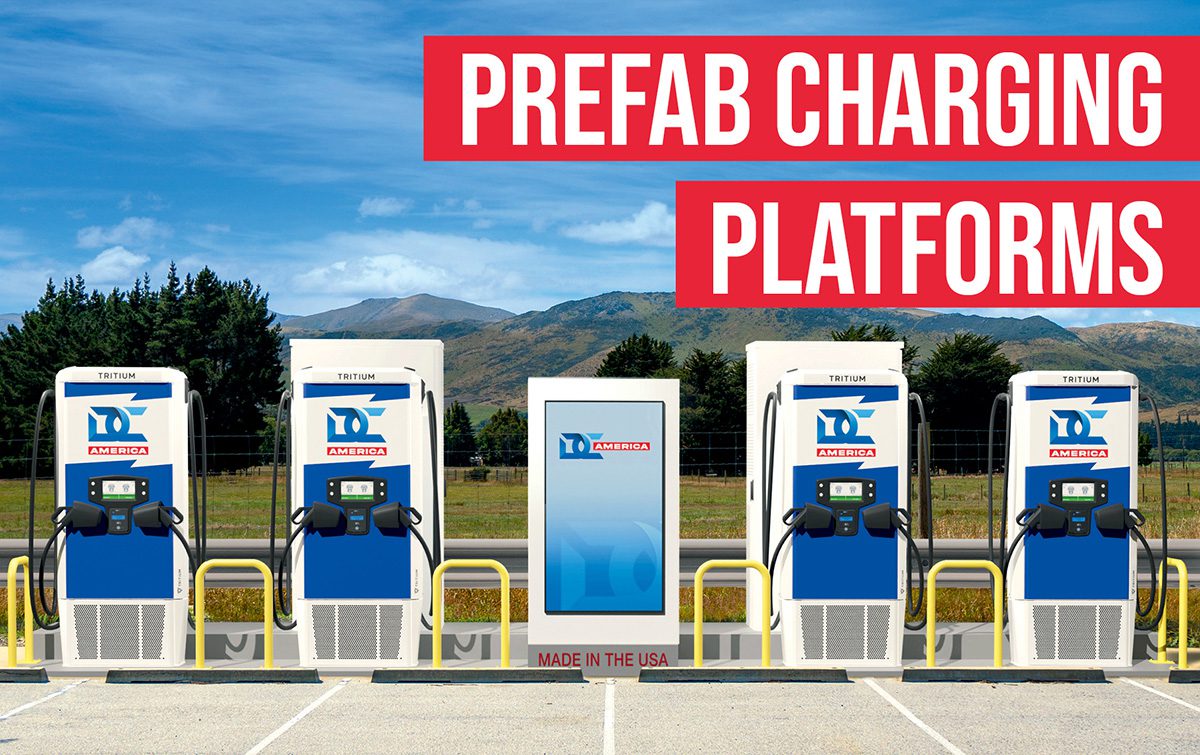
A modular approach to solving EV charging’s installation bottleneck.
At the moment, the big bad bottleneck for commercial EV deployment is charging infrastructure. However, the problems don’t generally have to do with the hardware or software—EVSE manufacturers offer a wide selection of AC and DC chargers, functionality and reliability are steadily improving, and sophisticated software tools are available for managing charging networks and optimizing energy use.
No, the real stumbling block is charger installation. Site preparation, trenching, etc is expensive and time-consuming, and installing and commissioning chargers in the field can be an onerous task. Furthermore, companies often face the dilemma of installing permanent hardware in a changing business environment. Fleets grow, use cases change, and the charging setup that took months to install may prove not to be suitable for a company’s needs a couple of years later. And of course, technology is evolving at a frantic pace, and no one wants to rip and replace functionally obsolete EVSE after only a few years.
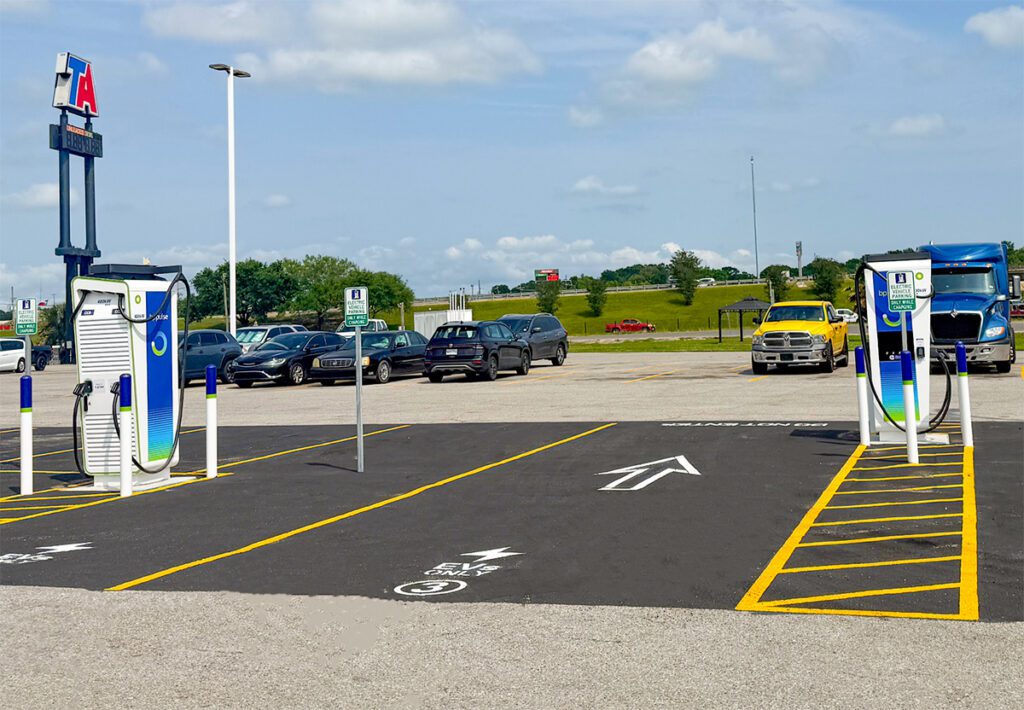
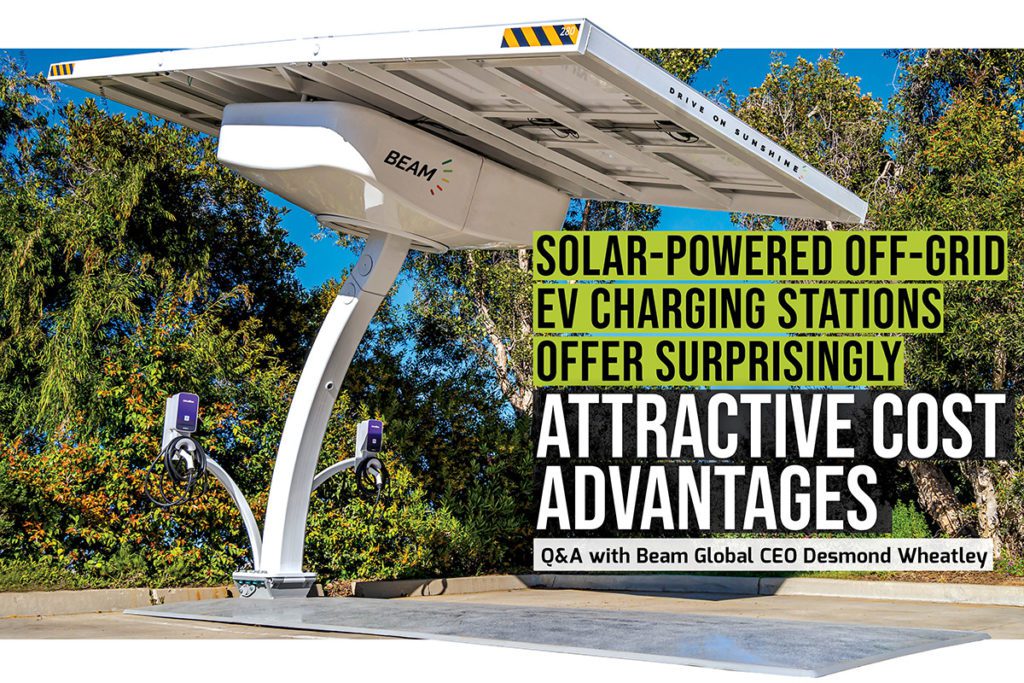
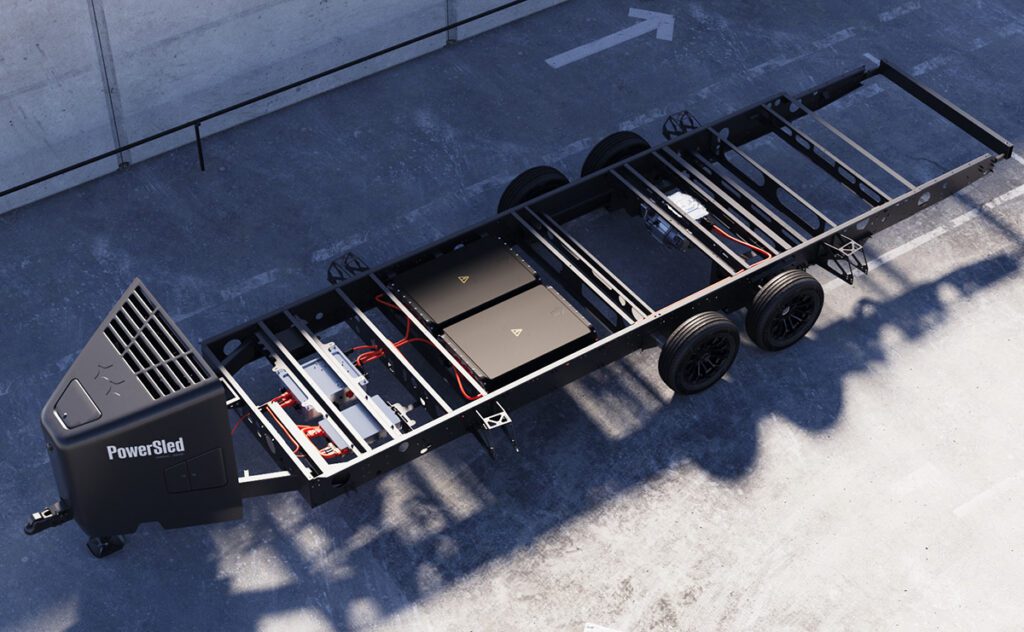
To work around these issues, some companies turn to mobile charging solutions, such as Soneil’s trailer-mounted chargers, or Beam’s self-contained solar-powered charging stalls. DC-America offers a more permanent, but extremely flexible, solution. The company manufactures and installs turnkey charging stations with all the necessary components—transformers, switchgear, power cabinets, dispensers and more—mounted on a metal skid, which can be connected to the electrical service at a single point. All welding, assembly and commissioning is done at the company’s Huntington, West Virginia facility.
How does this solution save time and money, and future-proof a charging installation? We’ll let DC-America President Nathan Bowen explain.
Charged: Let’s start with a brief history of the company and your background.
Nathan Bowen: I was building prefabricated skids for the energy industry—natural gas compressor stations, or stuff that would go at a power plant. My background’s in the electrical field, so my aspect of it was doing the wiring, commissioning, pre-wiring sensors.
“We can deploy these in less than four hours in most cases.“
About 2021, the NEVI funding came out. We had been watching the EV market, and we applied our knowledge of building prefabricated infrastructure to charging infrastructure.
Basically any component that you see on a charging site—electrical switchgear, panel boards, transformers, any combination of Level 2 chargers and DC fast chargers—we can mount it on a skid and pre-wire it and commission it before it leaves our facility. We can even put light poles, cameras, or any electrical component that you can think of on the skid. In most cases, this greatly reduces the amount of trenching. We can deploy these in less than four hours in most cases.
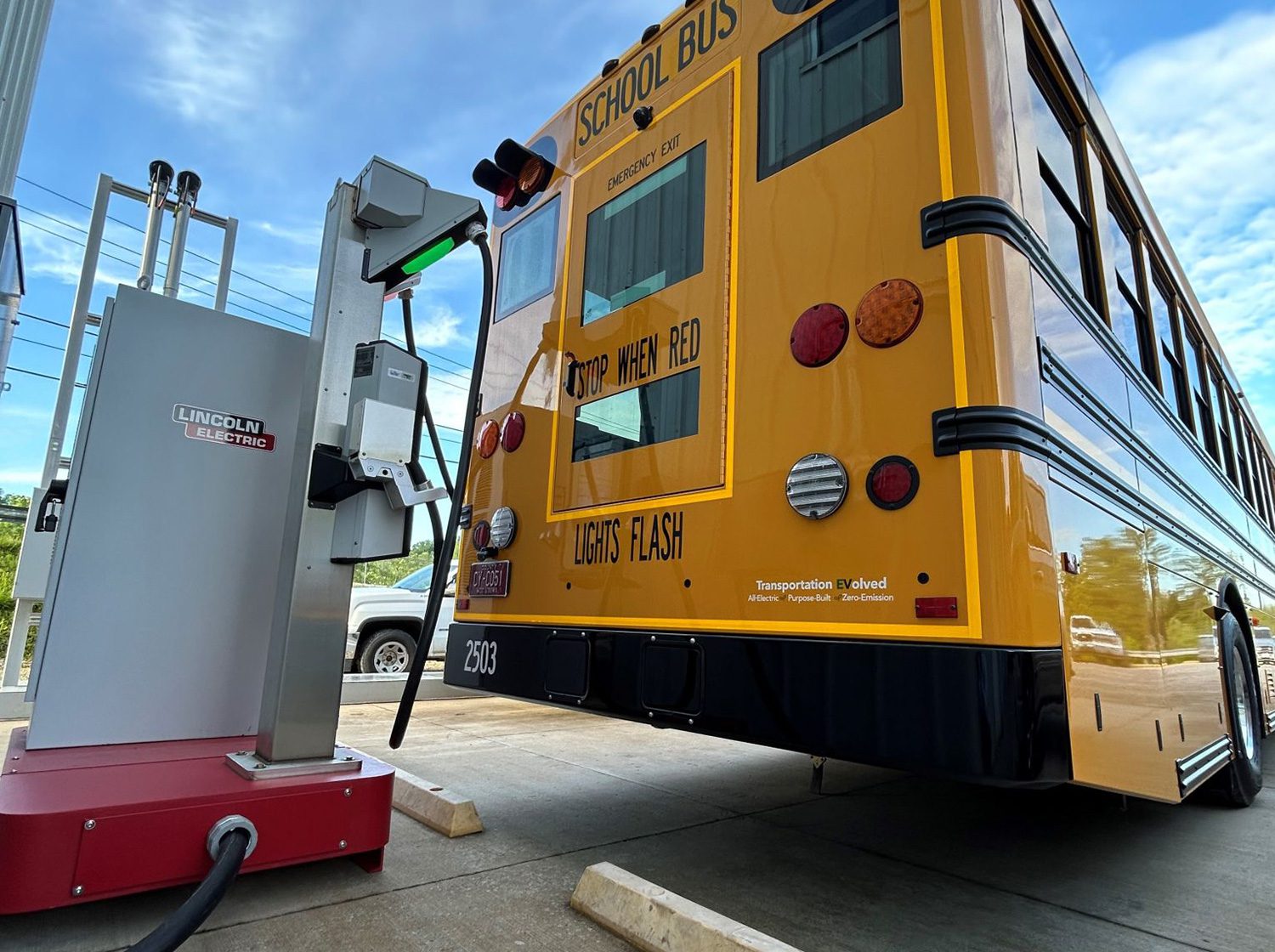
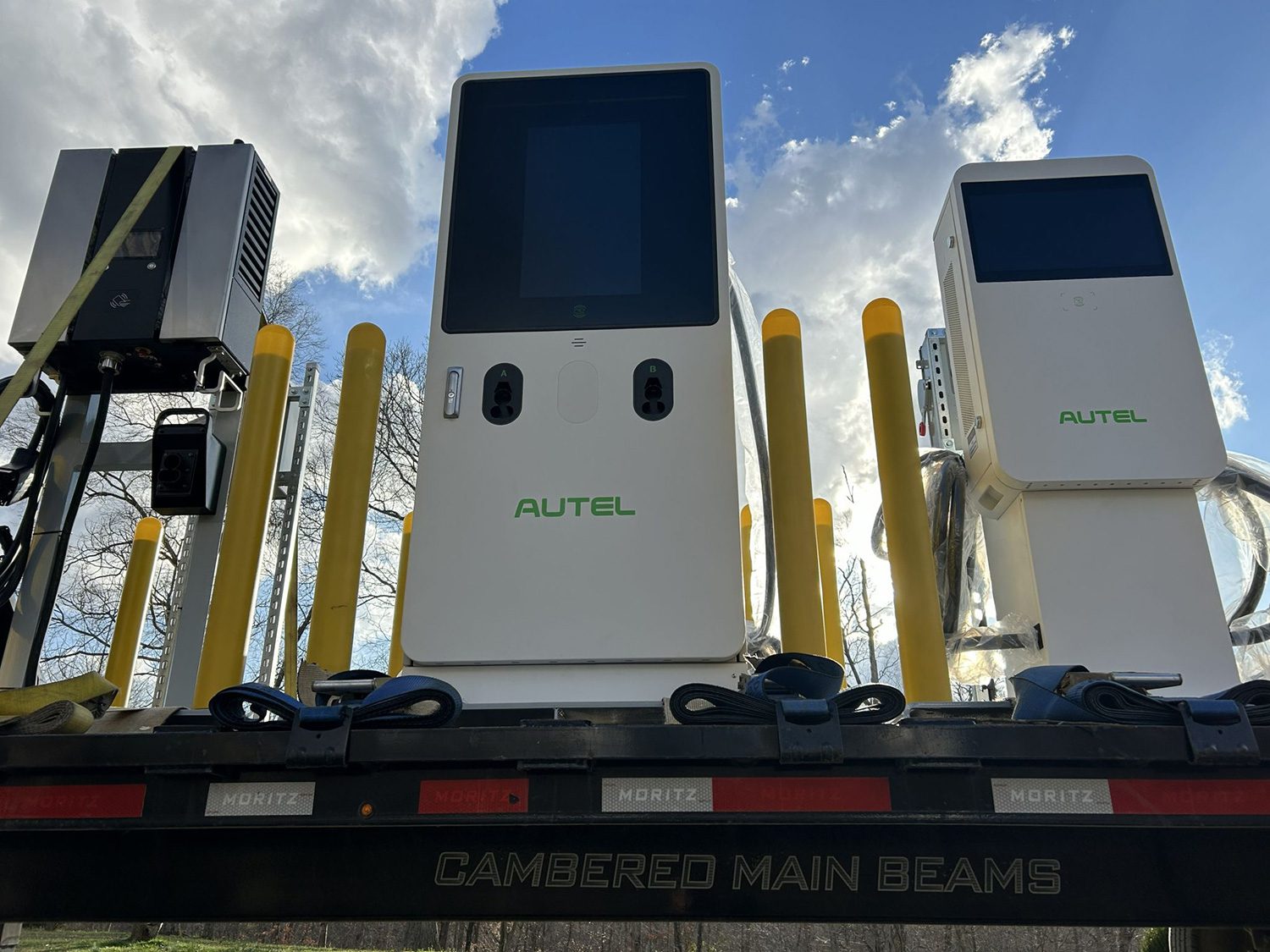
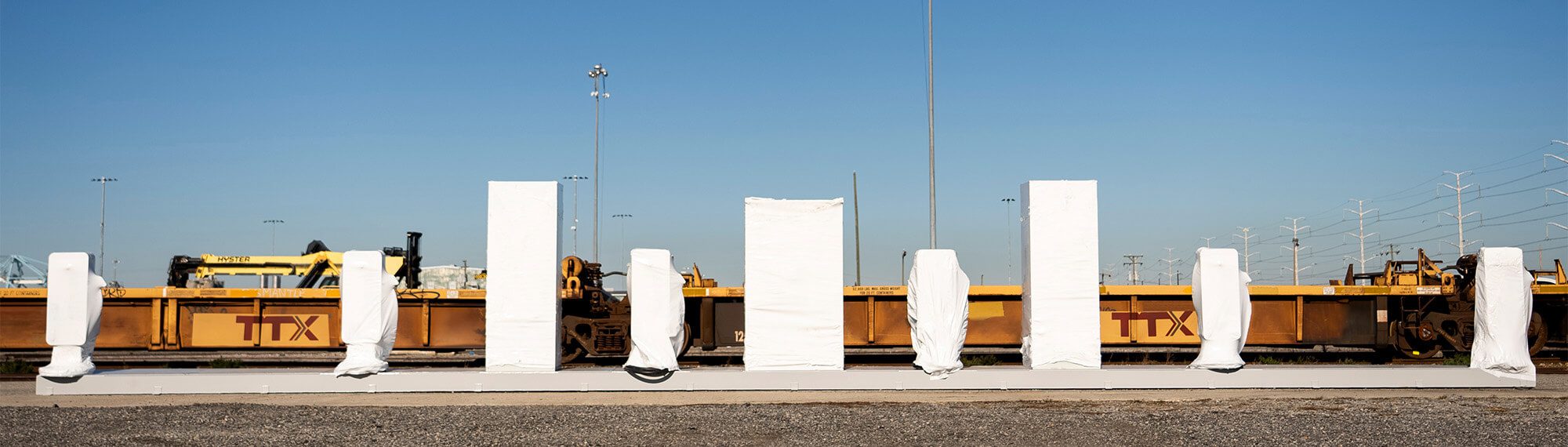
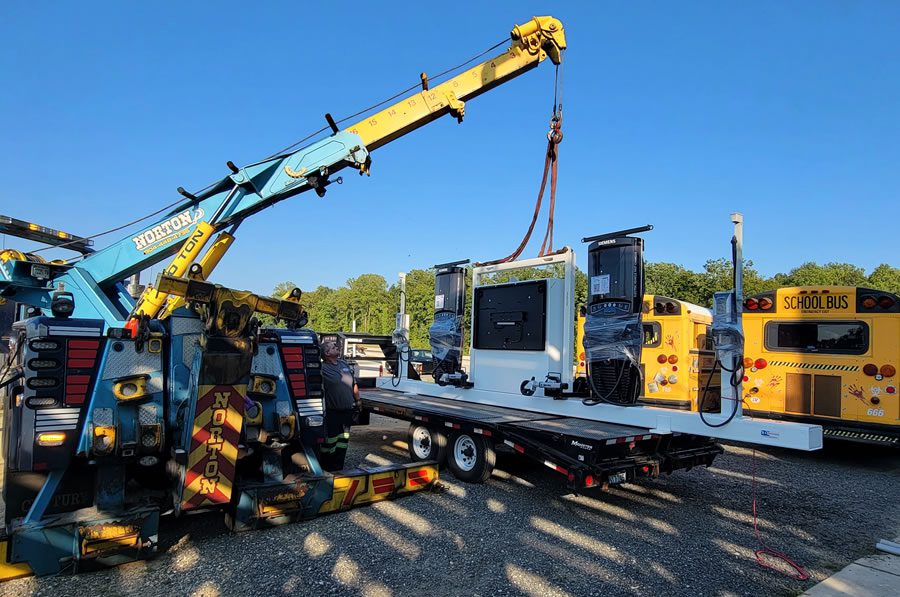
It took a couple years to get the marketing out, but in the past year, it’s really taken off, and we’re getting a lot of traction in the fleet behind-the-fence space. We also do public charging stations for some CPOs—any companies that want to take advantage of prefabricated infrastructure.
There are many advantages to it: quick deployment obviously, but in a lot of cases, especially in fleet behind-the-fence, what we see is either that folks are leasing their space, or they’re potentially interested in redeployment. Things change, and they want to have the ability to move infrastructure to where they need it without losing all that underground infrastructure investment. As quickly as we can put it in the ground, we can disconnect it, put it on a truck, and send it down the road.
Charged: There are several different flavors of mobile charging out there. Might we call your product a semi-mobile solution?
Nathan Bowen: It’s more of a permanent/semi-permanent solution, and we cover both ends of that spectrum. We have stuff that’s been out there for several years and they have no intention of moving it, but we make single chargers on a small platform that could be put in the back of a pickup truck with quick connections, and they’re 100% intended to be mobile.
We’ve tried to be flexible. We’ll work with any charger manufacturer (customers can provide their own chargers, or we will), and we do custom designs, depending on what the needs are. We worked with one particular client that was trying to deal with single-phase situations where the utility doesn’t provide three-phase power, so all the components that it takes to deliver three-phase 480 VAC to a DC fast charger, we combined that into a mobile unit.
“This skidded infrastructure gives you a good base for keeping up with technology advances because you can change hardware after the fact.“
“We worked with one particular client that was trying to fill a need with single-phase situations where there’s no three-phase power, so all the components that it takes to create (from single phase power) for a DC fast charger, we combined that into a mobile unit.”
We’re currently looking at more and more stuff with battery energy storage. Especially for public charging, when you look at demand fees, it may make a lot of sense to use energy storage to buffer that power. However, once utilization gets to a certain point, the energy storage may not have as much of a positive effect as it would at another location, so having the ability to move infrastructure around and redeploy can play a big role in the success of public infrastructure, and even fleets for that matter.
Also, I’ve seen over the past couple years how much technology’s changed. This skidded infrastructure gives you a good base for keeping up with technology advances because you can change hardware after the fact. If you put conduit in the ground, you’re stuck with the conduits you roughed in, whereas if you’ve got a completely open raceway that’s accessible from the top, you can switch technology in the future—if you’re starting with an all-in-one charger and you’re going towards a distributed DC system, you have the capability to switch those components out later.
Charged: To be clear on the terminology, the skid is the structure that the equipment sits on and the raceway is what the electrical wires pass through?
Nathan Bowen: Yeah, so that raceway system would be within that skid. The size of the structure is somewhat dictated by the size of the chargers, distance between chargers and equipment—the switchgear, panel boards.
Charged: Let me go down the list of components that a customer might have mounted on that skid: chargers, dispensers, power cabinets, transformers, panel boards, battery storage, accessories like lights, security cameras. What else?
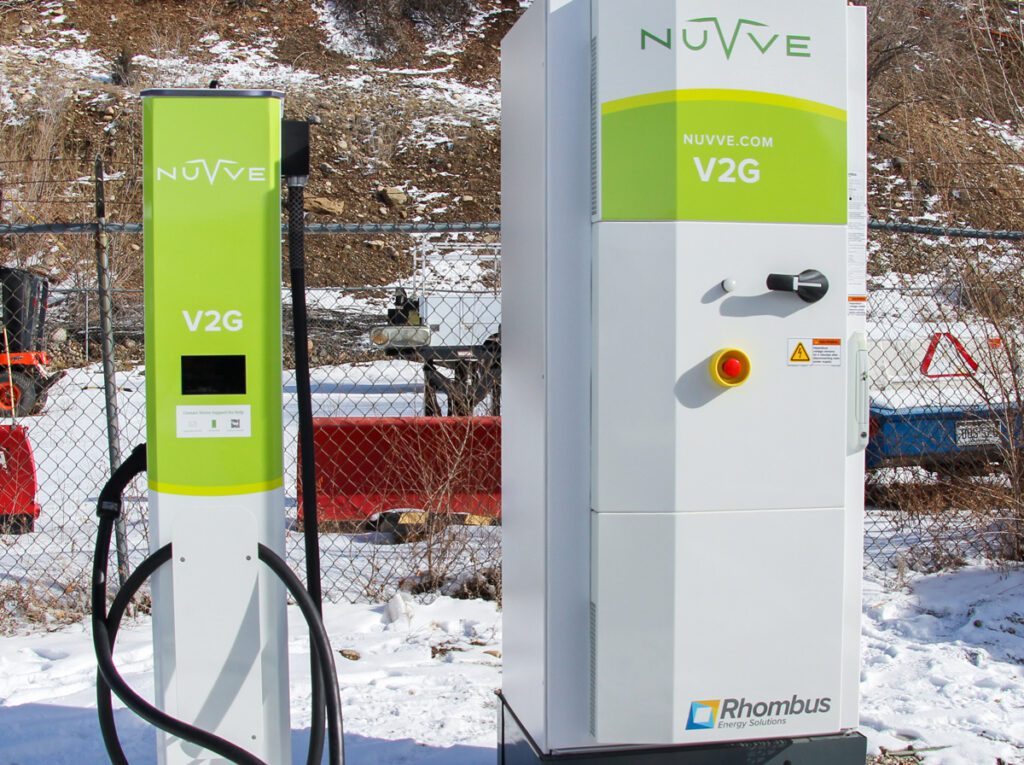
Nathan Bowen: Emergency shutdown (ESD) buttons, multiple power sources, canopies, bollards, tire filling stations, vacuum cleaners…
Charged: As everybody in the charging business tells me, one size does not fit all. Do you have a standard skid, or do you sit down with customers and discuss exactly what they need?
“We’ve sized our standard to fit the footprint of probably 80% of equipment that’s out there.“
Nathan Bowen: Some of the stuff we do try to standardize on. If you’re prefabricating something, to save money you need to keep it as standard and production-oriented as possible. We’ve sized our standard to fit the footprint of probably 80% of equipment that’s out there. We’ve looked at standard parking stall widths that keeps us to certain dimensions with our skids. But absolutely, there’s some one-off stuff that people do, and we’re happy to take that on.
Sometimes we get customers that want a very wide parking spot—maybe it’s a fleet application with large trucks. Maybe you have shrubbery or something in the way. Sometimes you have to modify things to get around 90-degree turns or something like that. We can handle the non-standard stuff, but it’s a big advantage to prefabricated infrastructure to try to replicate it and build it over and over the same way.
Charged: You make the hardware, but of course, deploying charging also involves a stack of software and services, and some fleets choose to go with a turnkey company that offers charging as a service. Do you work with some of those companies?
Nathan Bowen: Yeah, probably 90% of our business is for charging as a service, trucks as a service, CPOs. On the other hand, just out of trying to be a good steward towards the EV industry here in West Virginia, we’ve offered turnkey stuff to some of the school districts and the local turnpike authority. We did some jobs where we basically did turnkey, but that’s not our business model. I’m trying to manufacture a product to make these charging providers as successful as possible. I don’t want to compete with them.
In some cases, we provide chargers. We have relationships with the major charger manufacturers, but probably the majority of our customers want to provide the chargers themselves. We install their chargers and typically commission them.
Charged: Commissioning is a term I hear a lot, but what does that mean exactly?
Nathan Bowen: It starts at the panel board. There’s a lot of settings, especially on higher-amperage breakers, that should be engineered and set up prior to use. Commissioning includes setting up overcurrent protection—anytime you’re over a thousand amps, you have to have LSIG [an advanced system used in modern circuit breakers that protects against overload, short circuits and ground faults], arc flash remediation, so there’s settings that go along with that, depending on the particular circuit from the utility.
The first thing we do is set up the breaker to be able to turn the power on to the chargers themselves. We test the wiring, check that everything was put in properly. You want to confirm that you don’t have any insulation breakdown in the cabling. Point-to-point check: is everything wired correctly for communications, whether it be CAT5 or CAN bus. The DC side, the AC side, make sure all those terminations are good. And then firing up the charger—depending on who the charger manufacturer is, sometimes these come with SIM cards for communications.
Charged: It sounds analogous to when you buy a new computer—you have to go into the settings and set everything up the way you want it.
“I think it’s a huge selling point to have the chargers pre-commissioned. When I roll out there, I’m charging a vehicle within a few hours, I’ve already worked out all the bugs.”
Nathan Bowen: Yeah. It depends on who we’re working for—sometimes we’re coordinating the charge management software with the hardware, making sure that’s all talking before it goes out. And payment terminals, that’s another biggie. Sometimes it doesn’t get to that point in our facility because of security issues—some folks want to set it up themselves—but in some cases we end up making sure the whole thing works and can charge vehicles before it leaves our facility.
I think it’s a huge selling point to have the chargers pre-commissioned. When I roll out there, I’m charging a vehicle within a few hours, I’ve already worked out all the bugs. I would want to see that because usually you’re on a site, a site host is watching you, and they either see you do really well or they see you fumble. I like the first scenario.
Charged: There are a few—I won’t say controversies, but discussions—about different technologies that I hear a lot about. First, distributed charging versus standalone units. Are there advantages to both, or is distributed the coming thing?
Nathan Bowen: I think there’s advantages to both, but if you’re going to oversubscribe a site, distributed makes a lot of sense.
Charged: Can you clarify what you mean by oversubscription?
Nathan Bowen: Let’s say you have a site where the utility will only give you 1,000 amps, but you have enough chargers out there that you could potentially utilize 1,800 amps. One advantage of a dynamic system is that you can still have high-power chargers connected to a 1,000-amp service, but through software, you’re able to smartly shift this power around. So oversubscription means that the nameplate power capacity of your chargers is more than what your input power from the utility is.
You could somewhat do that with all-in-ones as well—there’s software that lets you peak shave and keep the total amperage under 1,000 amps, for instance. It’s just that, with distributed, you’re able to shift it around based on the state of charge of the vehicles. As a vehicle increases its state of charge, obviously the output of the charger is going to decrease, so you’re able to reallocate that power to another charger and keep them all at the highest rate possible.
It’s a little more complicated installation, but with our system, we do that really well because we have a wide-open raceway and we can separate AC and DC cabling. There’s a lot of conduits that have to be roughed in right to make that happen. If it was a stick-built site, it’s a little more complicated install.
All-in-ones have their place. They’re easy to install. It’s typically less conduits to install it. Ultimately, dynamic, in my opinion, wins. That’ll probably make some people mad, but I personally think that oversubscription of power is probably not done as well with all-in-ones as it could be in the dynamic world of being able to shift power around where you need it.
Charged: Another discussion I’ve heard is onsite vs cloud-based processing for things like energy management. You can have a processor on site to do that, or you can send everything off to the cloud.
Nathan Bowen: I’m a fan of onsite hardware. Especially if you’re wanting granular information, there’s nothing like having a hardwired input into a controller rather than going up to a cloud and coming back down and getting delayed information. Probably the majority of the industry doesn’t do it that way. I’m not necessarily saying it’s a bad thing, but hardwired onsite equipment is hard to beat. Let’s say you lose 5G connectivity—in most cases, those systems are still able to work.
Charged: What are your thoughts on credit card readers?
Nathan Bowen: It’s a tough integration. That’s been my experience. In my opinion, that’s one of the tougher things to do with public charging—payment processing and authentication. I’m no expert at that, but I’ve dabbled in payment processing enough to know that I don’t want to do that for a living.
Charged: I’ve heard people say that credit card readers aren’t designed to work outside in the rain and the snow.
Nathan Bowen: But you see them at gas stations all the time.
Charged: Tell me more about microgrids. There’s all kinds of components you can put on your skids—not only batteries, but solar panels, propane generators or other energy sources for an off-grid location.
Nathan Bowen: Yeah. Any of those items, I can put it on a skid and connect it. I don’t see it a lot right now, but I think in the future, you may see that more. I’ve had a lot of people ask about solar canopies, and we can build them, but the scale of that is not doing much for DC fast charging. You would have to have something larger-scale, but absolutely, it can be integrated into what we’re doing.
Charged: What about vehicle-to-grid? You work with some school districts, and school buses are considered an ideal use case for V2G.
Nathan Bowen: There’s people doing it, but I wouldn’t say it’s large-scale yet. For us, it’s just another electrical item. I think it’s great technology. The school bus is the perfect application for that. I’ve seen some companies that advertise that battery life is actually better when controlled with their software as opposed to normal day-to-day use of that electric bus. They have the technology to maintain the integrity of the battery itself with all the discharge cycles.
Charged: What’s going on with the NEVI program? It was going great guns, then they said, “No, we’re going to shut this down,” then they said, “We’re going to start it up again.” I think a lot of people got burned committing to investments, then having to start over.
Nathan Bowen: Yeah. I live in a rural state, and non-Tesla infrastructure is fairly infrequent. Probably the majority of the Tesla infrastructure is not compatible with the CCS adapters. I drive a GMC Sierra EV, and the Supercharger here in town, I can’t use it. Down the road in Charleston, I can’t use it. There’s only a few stations in the state I can use—there’s very little CCS infrastructure.
Now, we did have the privilege of putting some in on the West Virginia Turnpike, which really helped EV travel, especially coming into the state from the south. But it’s very difficult in a rural state like this to put in what NEVI was speccing out: four 150-kilowatt chargers, every 50 miles. Some people are going to disagree with me on this, but it’s difficult for that to make sense in every location. There’s just not enough utilization. It’s not going to make money.
I like the idea of giving the states a little more latitude. I would put more emphasis on sizing infrastructure for growth, and having the ability to grow later.
Charged: That sounds like a good selling point for your products, because you can put in a small installation today and easily expand it in a few years.
Nathan Bowen: Yeah, I think it’s perfect for it, but I want to see public charging be successful everywhere, even without my product. I think real conversations need to be had—especially in underutilized areas, do we force a certain size station on everyone? I think we ought to avoid a one-size-fits-all solution.
This article first appeared in Issue 75: January-March 2026 – Subscribe now.

















 Webinars & Whitepapers









 EV Tech Explained