

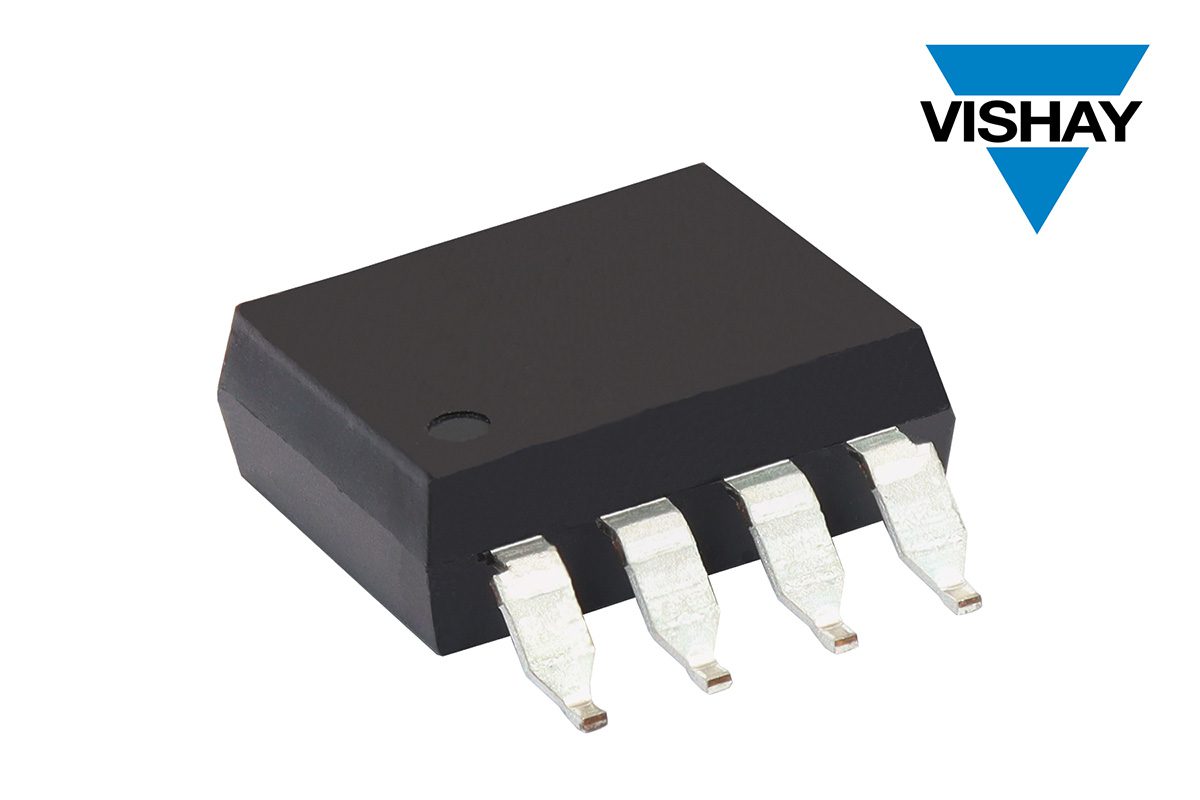
Vishay Intertechnology has introduced two AEC-Q102-qualified optocouplers designed for galvanic isolation in high-voltage EV applications—on-board chargers, DC/DC converters, and battery management system isolation stages. The VOWA617A and VOWA618A come in a widebody SMD-8 package and are built around the combination of high creepage distance and a high comparative tracking index (CTI) that grid-connected automotive isolation stages require.
Creepage distance (the path length along a surface between two conductors) directly determines how much voltage a component can withstand without surface arcing or tracking. At ≥11 mm, these devices offer 38% more margin than the typical 8 mm found in competing solutions. The CTI of 600 gives them a Material Group 1 rating, the highest insulation category; standard optocouplers typically come in at CTI 175. Together, the two figures determine whether a component meets reinforced insulation requirements for grid-connected equipment—and these exceed them.
| Parameter | VOWA617A / VOWA618A |
|---|---|
| VIORM (working, peak) | 1500 Vpeak |
| VIOWM (working, RMS) | 1060 VRMS |
| Isolation voltage | 5300 VRMS |
| VIOTM (transient) | 8000 Vpeak |
| Creepage / clearance | ≥11 mm |
| CTI | 600 (Material Group 1) |
| Collector-emitter voltage | 80 V |
| CTR range | 50%–600% |
| Input current (CTR spec) | 5 mA (617A) / 1 mA (618A) |
| Operating temp | −40 °C to +125 °C |
| Junction temp | +145 °C |
| Package | Widebody SMD-8 |
The VIORM and VIOWM represent increases of 6% and 19%, respectively, over Vishay’s cited competing devices. The −40 °C to +125 °C operating range and +145 °C junction temperature capability exceed typical consumer-grade optocouplers, which top out at +85 °C.
Samples and production quantities are available now, with 8-week lead times.
Source: Vishay




















 EV Engineering Webinars & Whitepapers










 EV Tech Explained