

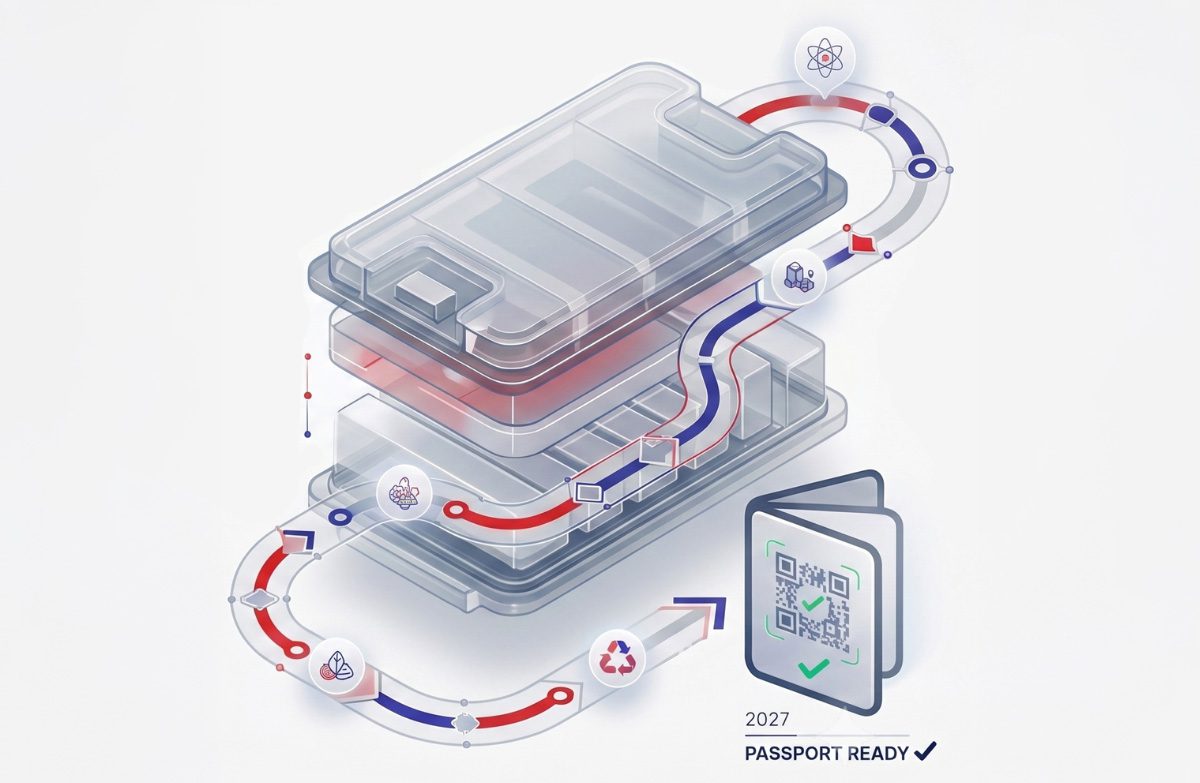
Honda Motor Europe and Dutch traceability platform Circularise are collaborating on battery passport infrastructure ahead of the EU Battery Regulation’s February 18, 2027 deadline, when certain batteries placed on the European market will be required to carry a digital passport.
The work focuses on the operational layer of battery passport compliance: how data is structured, governed and disclosed across supply chains without forcing companies to expose commercially sensitive information. The two organizations are building battery data flows that remain accessible to authorized stakeholders—regulators, recyclers, fleet operators, second-life processors—while maintaining controlled access at each level.
That balance is technically complex—battery passports require verified data from suppliers multiple tiers deep, and the governance architecture determines whether the system produces audit-ready output or just a documentation exercise.
“Battery passports will only create real value if companies can share the right data with the right stakeholders at the right time, without forcing unnecessary disclosure of sensitive information,” said Jordi de Vos, Founder of Circularise.
“Our work with Circularise is helping us shape how relevant battery information can be structured and disclosed in a way that supports trust, usability and future scalability,” said Richard Knowles, Deputy General Manager, Certification & Regulatory Affairs at Honda Motor Europe.
Source: Circularise



















 EV Engineering Webinars & Whitepapers









 EV Tech Explained