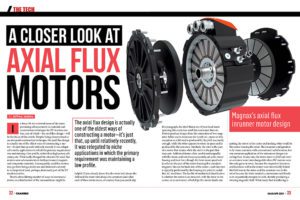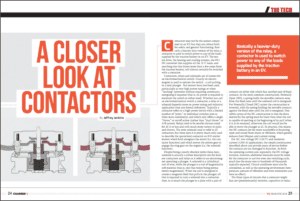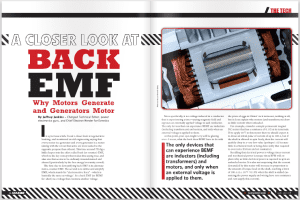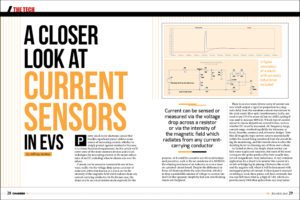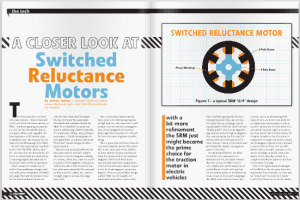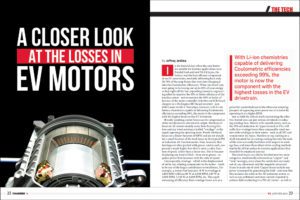




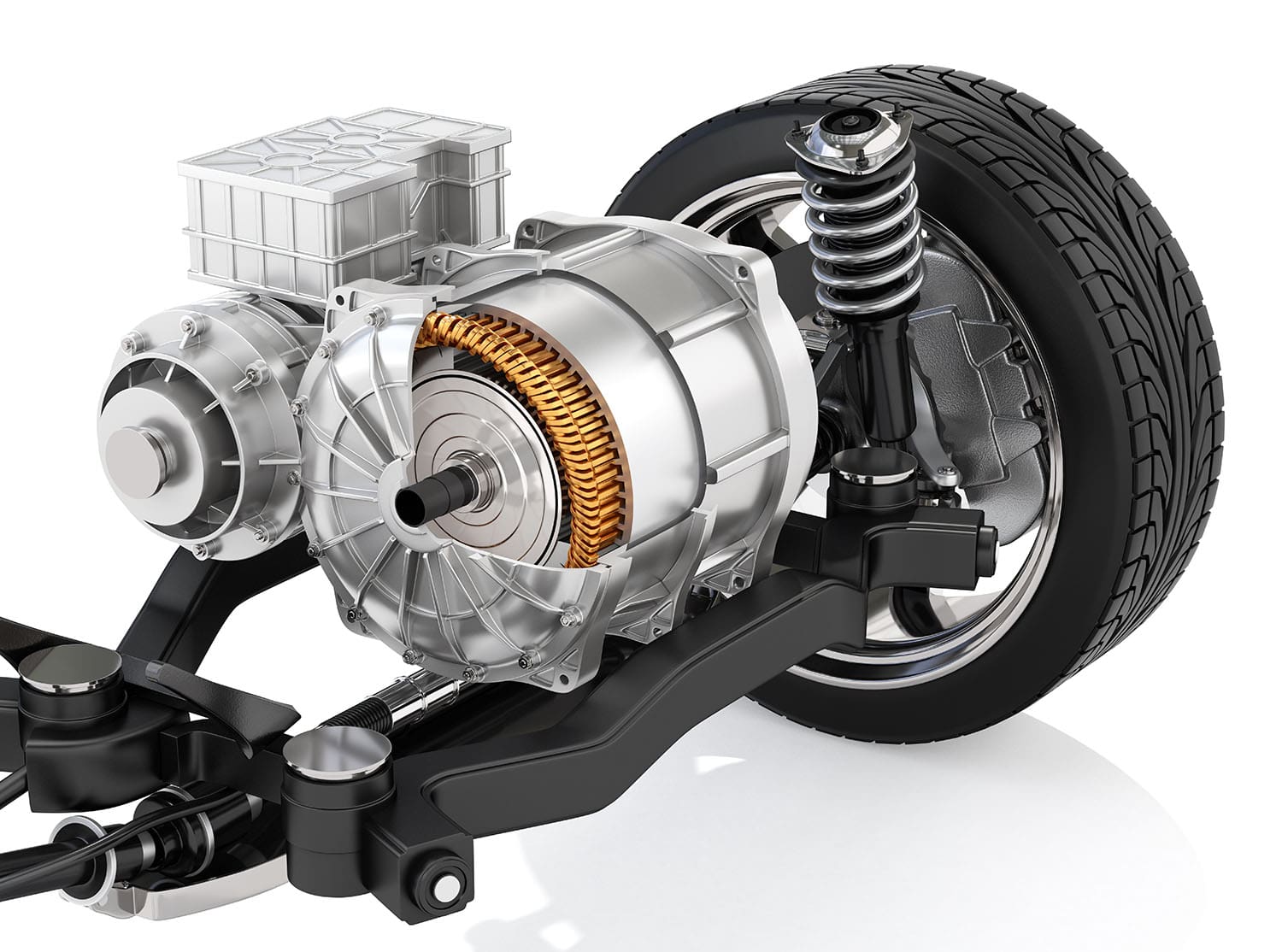
Researchers at Tokyo University of Science have developed a computational model that can trace how intricate “maze domain” structures in soft magnetic materials reverse their magnetization—and identify the energy barriers that drive that process. The goal is to understand the phenomenon of iron loss in electric motor cores. Repeated magnetic field reversal is one of the primary sources of energy dissipation.
Soft magnetic materials used in motor cores organize into magnetic domains—small regions of uniform magnetization. In some materials, these form complex zigzag patterns called maze domains, which exhibit abrupt, temperature-dependent reversal behavior that is difficult to predict with conventional models. Understanding the mechanism matters because the structure of those domains directly controls hysteresis loss, and hysteresis loss directly affects motor efficiency.
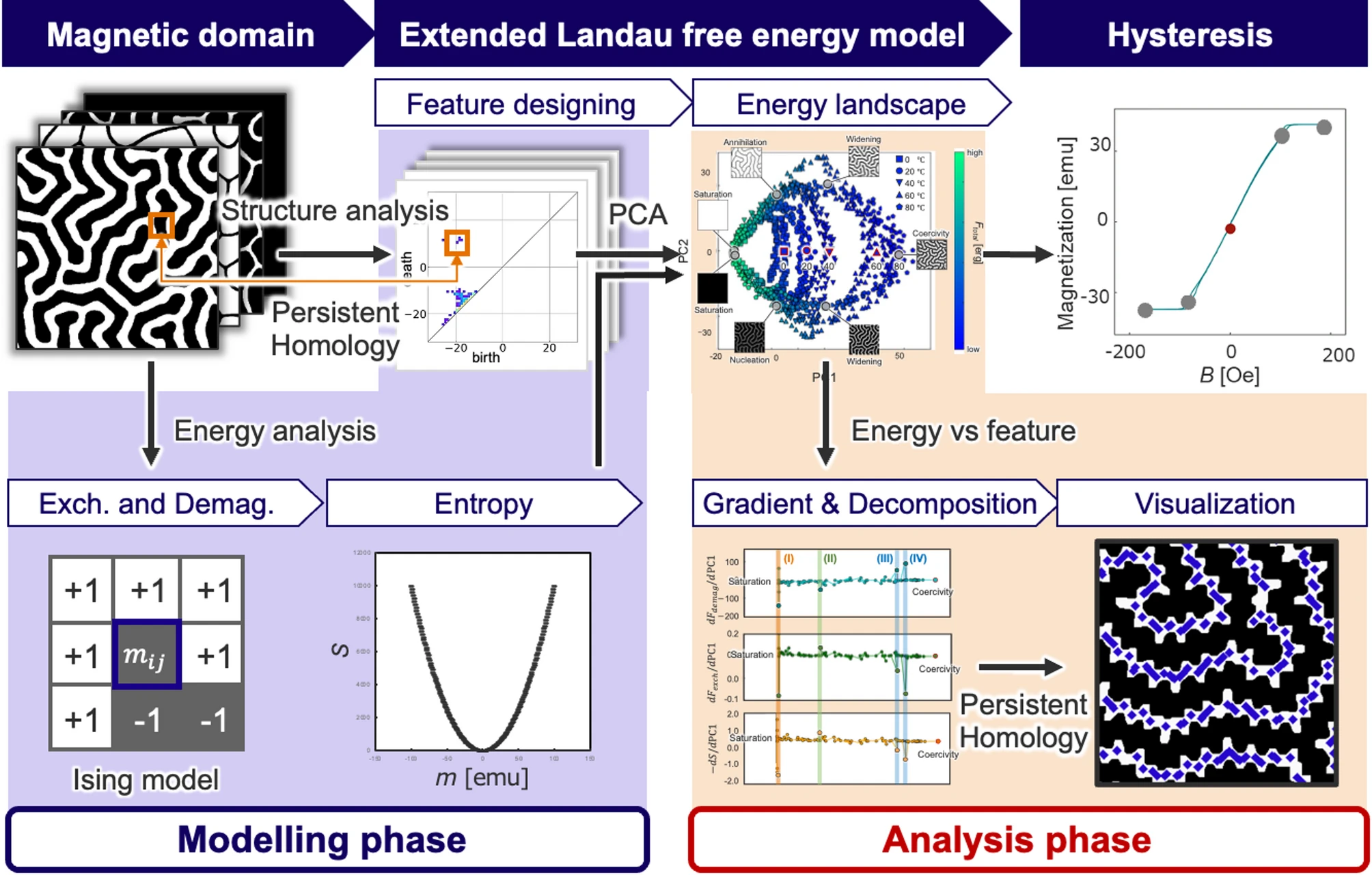

Published in Scientific Reports in February 2026, the model, called eX-GL (entropy-feature-eXtended Ginzburg-Landau), combines persistent homology—a mathematical tool that extracts topological features from data—with machine learning and physics-based free energy calculations.
Applied to microscopic domain images of a rare-earth iron garnet sample at different temperatures, the model identified four key energy barriers governing the magnetization reversal process, and traced how exchange interactions, demagnetizing effects and entropy interact to drive domain behavior. The team found that, as domain walls lengthen, maze domains grow more complex—a process driven by the coupling of entropy and exchange energy.
Source: Tokyo University of Science




















 EV Engineering Webinars & Whitepapers











 EV Tech Explained