

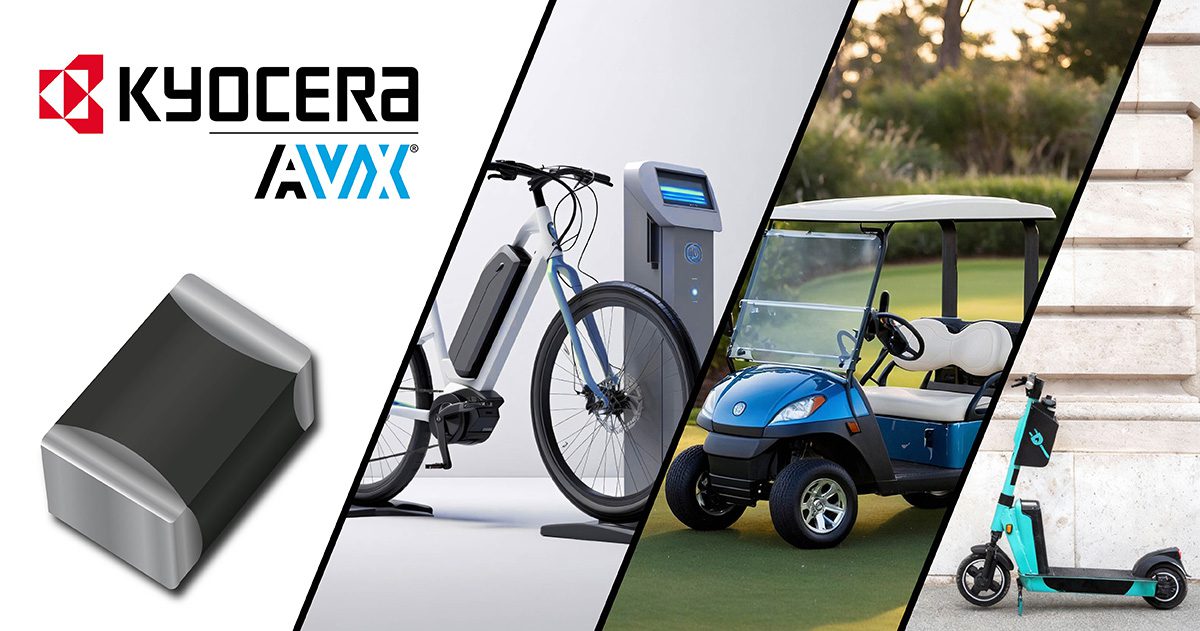
KYOCERA AVX has extended its TransGuard VT series of zinc-oxide multilayer varistors with a 48 V system subset for automotive power electronics, EV charging stations and light electric vehicles. The new parts are now available from Mouser and DigiKey.
The 48 V System VT Series MLVs are rated for 56 VDC or 40 VAC working voltage, 100–110 V clamping, 48 V jump start, 30–1,500 A current handling and 0.2–9 J transient energy. Capacitance spans 80–2,800 pF. Operating temperature is up to 150 °C, and the parts are qualified to AEC-Q200, IEC 61000-4-2, ISO 10605 and VDA-320.
The new components come in five EIA chip sizes: 0805, 1206, 1210, 1812 and 2220. Selected part numbers are available with KYOCERA AVX’s FLEXITERM terminations, which are rated for up to 5 mm of mechanical board flexure and 3,000 temperature cycles to 150 °C—three times the AEC-Q200 requirement of 1,000 cycles at 125 °C.
The broader VT Series—which the 48 V parts extend—runs from 0603 to 2220, covers working voltages from 12 to 56 VDC and 4 to 40 VAC, and is available in 150 °C and 175 °C temperature grades. The 175 °C-rated variants (VTA7) carry zero derating across the full -55 °C to +175 °C range. All VT Series parts carry HBM ESD Class 6 ratings, meaning that they can withstand over 25,000 V of ESD, and MSL 1 moisture sensitivity, which indicates unlimited floor life without dry pack or pre-bake requirements.
The devices combine bidirectional overvoltage protection and EMI/RFI attenuation in a single SMT package, which reduces the need for separate MLCCs for filtering and separate TVS devices for clamping.
Source: KYOCERA AVX




















 EV Engineering Webinars & Whitepapers







 EV Tech Explained