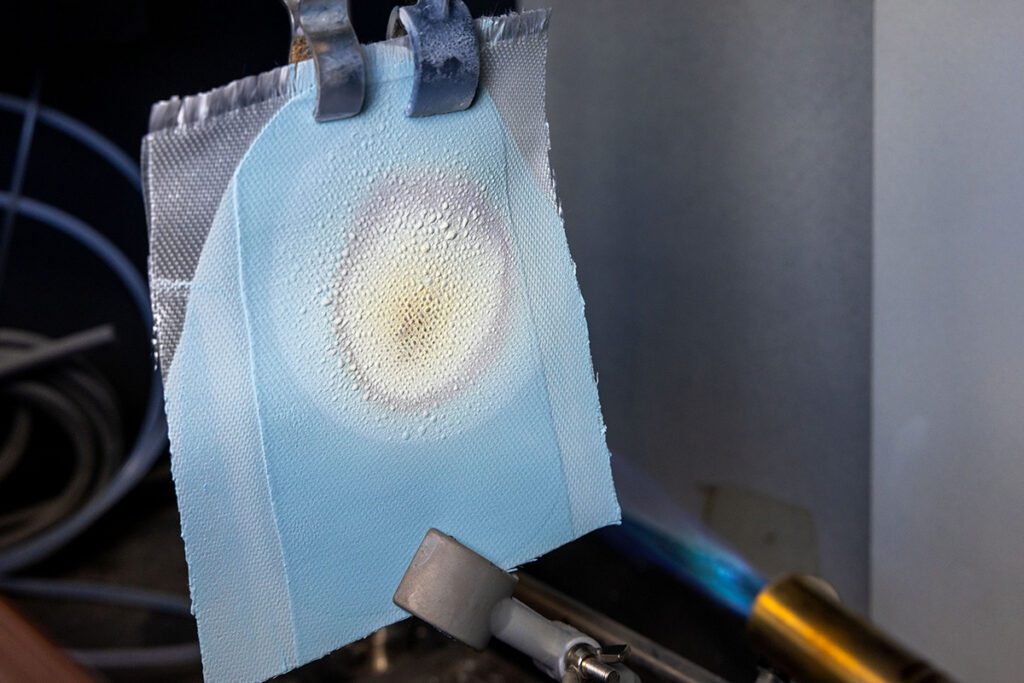


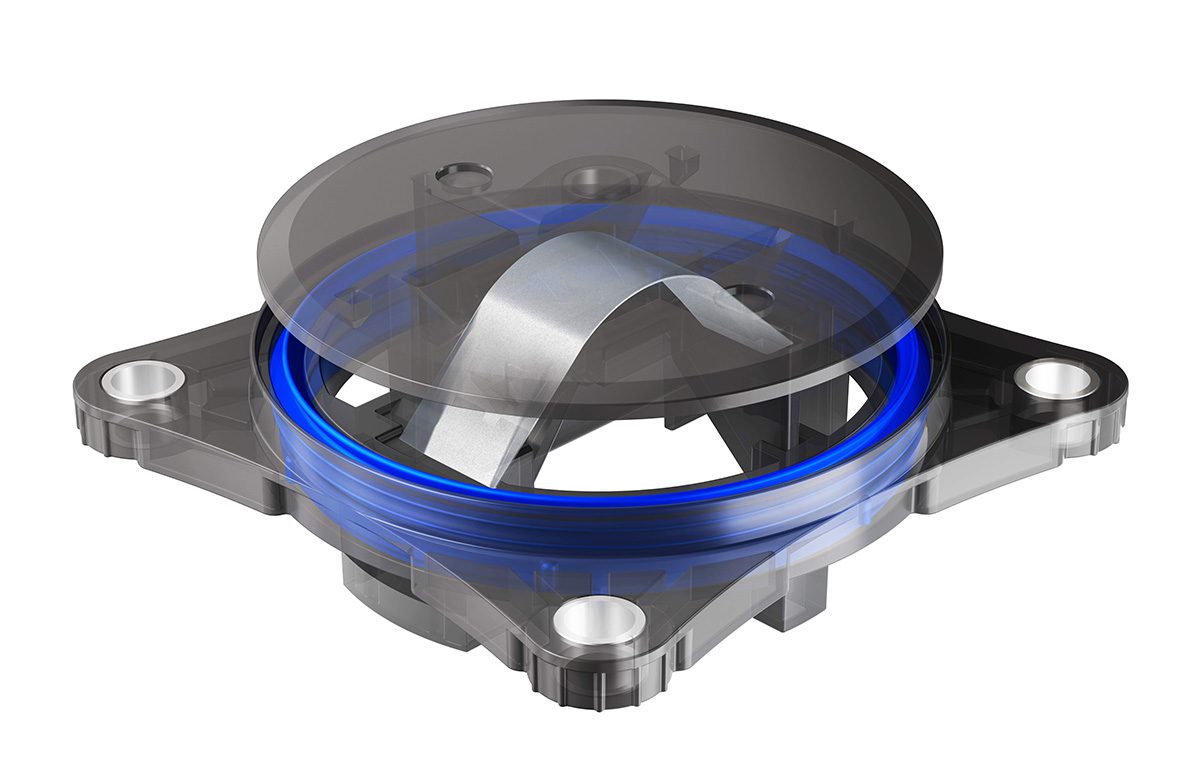
Freudenberg Sealing Technologies has released full specifications for the DIAvent maxFlow, a thermal runaway degassing element for lithium-ion vehicle batteries that delivers more than 190 liters per second at 300 mbar differential pressure—2.5 times the flow rate of the previous DIAvent HighFlow.
The design replaces the rubber umbrella used in earlier DIAvent generations with a profiled metal spring. The difference matters in a runaway scenario: instead of opening gradually as pressure builds, the spring snaps fully open the instant the trigger threshold is reached, which gets hot gases out faster and reduces the risk of cascade failures spreading to adjacent cells. Once pressure drops, the spring closes the valve autonomously, sealing the battery against oxygen ingress—relevant both for limiting further combustion and for the safety of first responders who arrive after the event.
Trigger pressure is adjustable between 50 and 200 mbar with low tolerance, a precision that burst disks—the conventional alternative—can’t match. Burst disks also can’t reclose after opening and can’t be tested non-destructively once installed. The maxFlow’s reversible mechanism allows end-of-line testing of fully assembled battery packs without destroying the valve, which is a meaningful quality control advantage in production.
The package is compact: 86 × 86 × 12.1 mm overall, with a 12.1 mm installation height. Protection ratings reach IPX9K and IP6KX; the valve carries UL94 V0 flame-retardancy certification and is 100% tested before delivery. An M6 bolt handles standard fastening; clip and bayonet mounting options are also available. An integrated PIP seal tolerates up to 0.2 mm of housing unevenness.
“With the DIAvent maxFlow, we have addressed the disadvantages of previous venting solutions with a single product,” said Daniel Uhl, Head of Product Management at Freudenberg Sealing Technologies.
Source: Freudenberg Sealing Technologies



















 EV Engineering Webinars & Whitepapers













 EV Tech Explained