

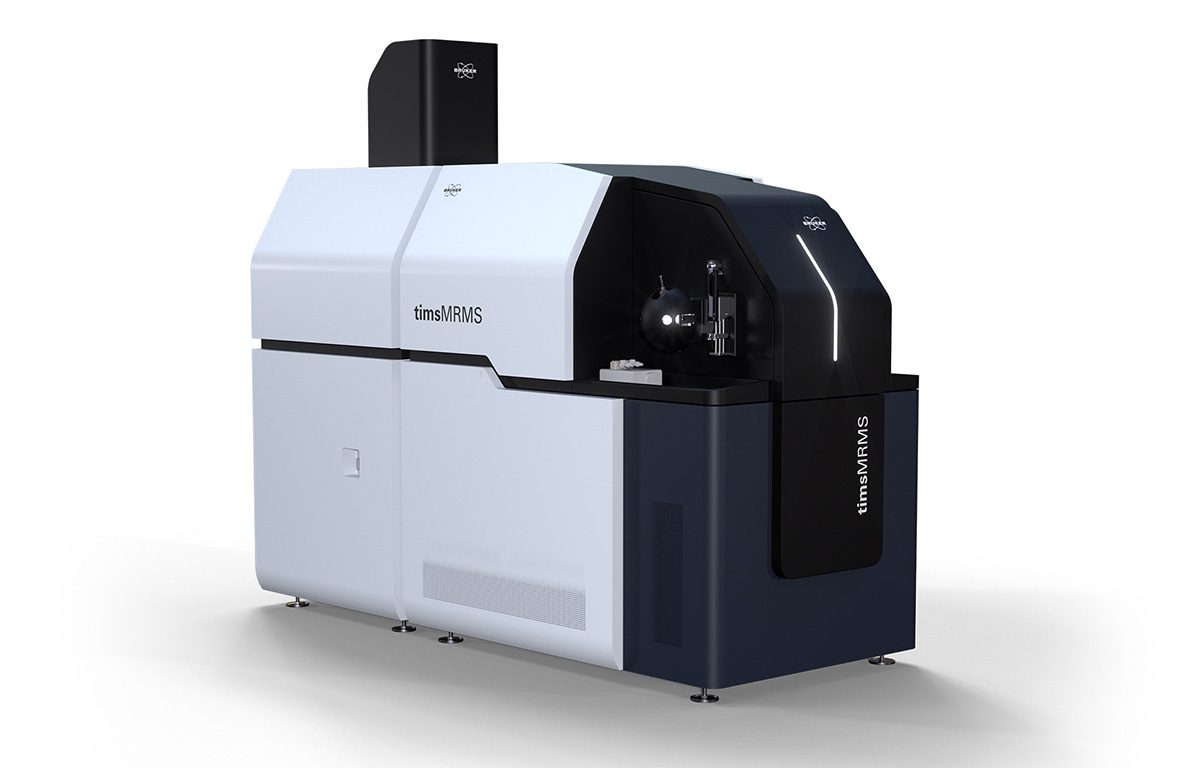
Bruker has launched the timsMRMS, a mass spectrometry platform that combines trapped ion mobility spectrometry (TIMS) with magnetic resonance mass spectrometry (MRMS) to characterize the ultra-complex molecular mixtures found in next-generation battery materials.
For battery researchers, the timsMRMS enables molecular-level analysis of electrolyte formulations and degradation of the solid-electrolyte interphase (SEI)—the thin layer that forms on the anode surface during early charge cycles and has an outsized effect on capacity fade, safety and lifespan.
Understanding exactly what the SEI is made of and how it changes under cycling conditions has been difficult with conventional mass spectrometry tools due to the extreme chemical complexity involved, Bruker explains. The system boasts a resolution of greater than 10 million (with sub-parts-per-million mass accuracy) and isotope fine structure identification.
“Many application areas in energy research present extreme levels of chemical diversity that are incredibly challenging,” said Dr. Paul Speir, Senior Vice President, Global MRMS Business at Bruker. “With the timsMRMS, we are equipping energy researchers with a complete unique tool that provides greater clarity and confidence in characterizing the extreme chemical complexity of next-generation batteries and alternative fuels.”
Source: Bruker




















 EV Engineering Webinars & Whitepapers










 EV Tech Explained