

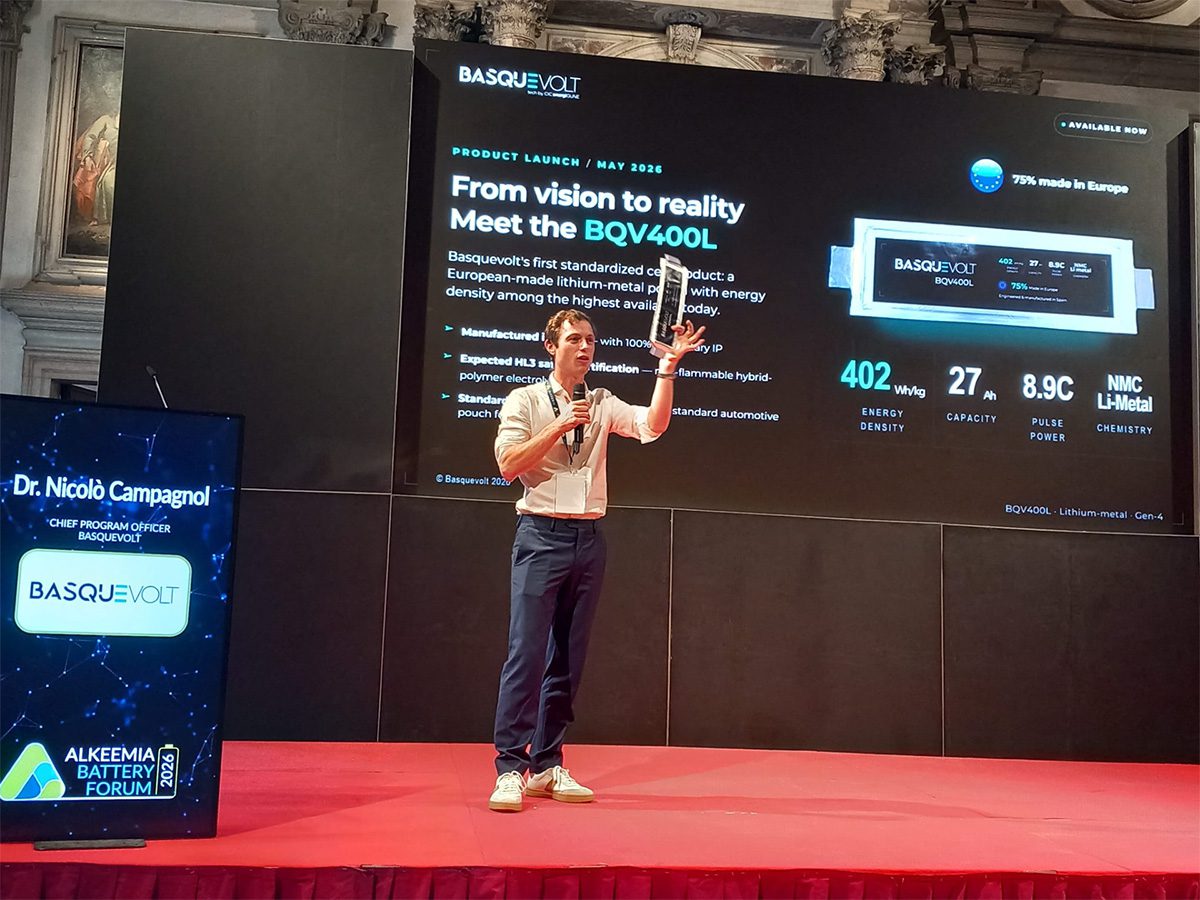
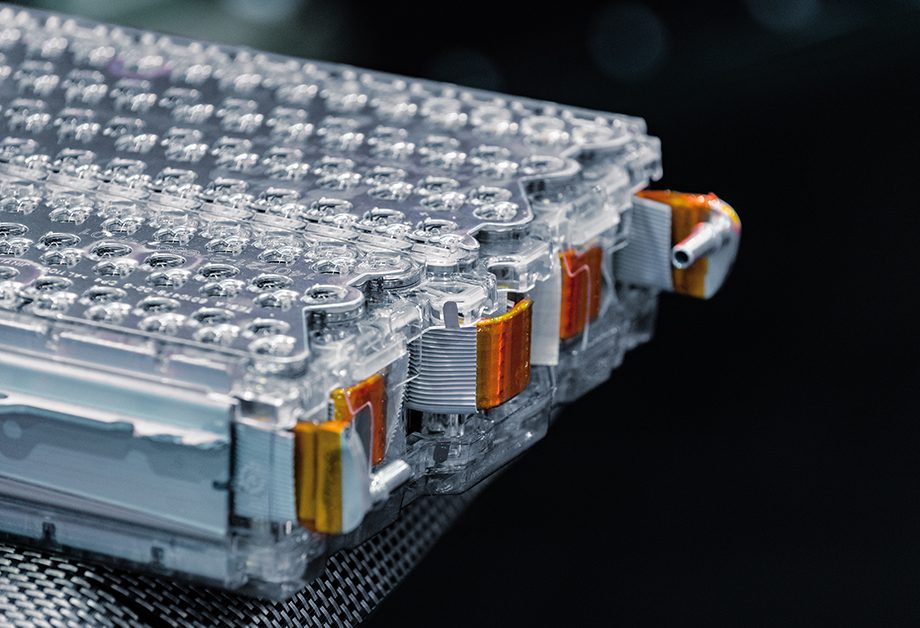
BASQUEVOLT has launched the BQV400L, its first standardized commercial battery cell—a 27 Ah, 402 Wh/kg Li-metal NMC cell with 8.9C pulse power capability produced in Spain, with 75% of its components sourced within Europe.
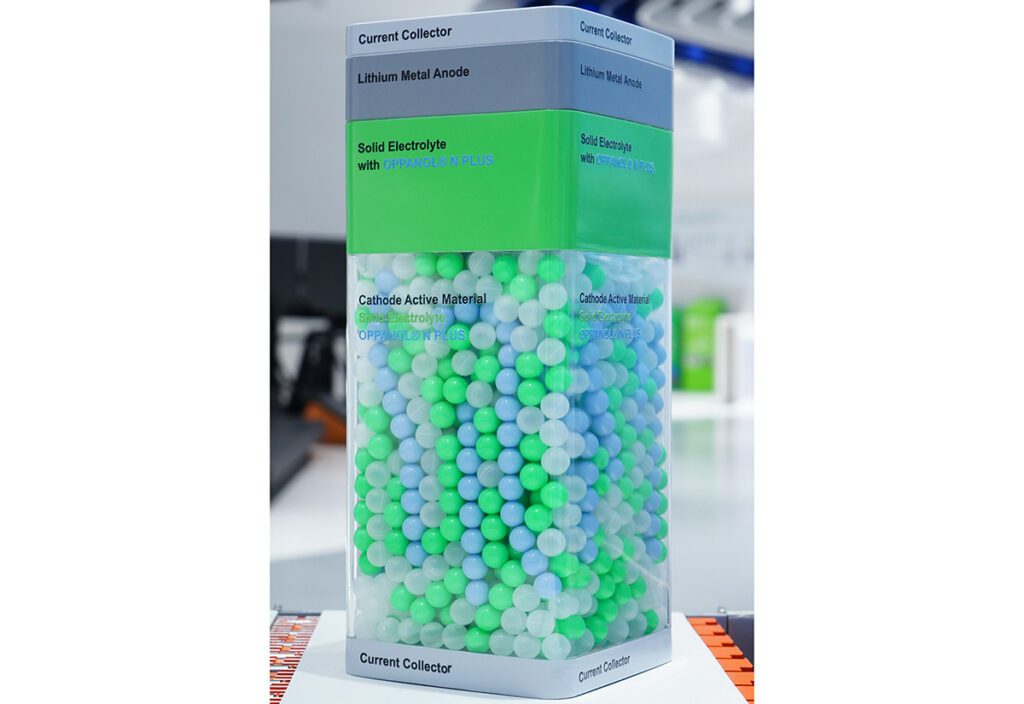
The chemistry is lithium metal with an NMC cathode and BASQUEVOLT’s proprietary polymer electrolyte, which the Basque Country-based company describes as a transitional step toward full solid-state architecture. Lithium metal anodes offer significantly higher theoretical energy density than graphite but have historically posed challenges around cycle life and safety—the polymer electrolyte approach aims to manage the latter while the technology matures toward full solid-state industrialization. BASQUEVOLT claims the BQV400L is compatible with existing gigafactory manufacturing infrastructure, requiring no major additional capital investment to produce.
At 402 Wh/kg, the cell is competitive with the most energy-dense commercially available cells globally. The 8.9C pulse capability means the cell can deliver roughly nine times its rated capacity as a short burst, relevant for performance applications and regenerative braking.
The company says an HL3 safety certification is expected, with results currently being independently validated by a third-party testing laboratory.
BASQUEVOLT has signed a Joint Development Agreement with Ampere, Renault Group’s EV arm, to validate the lithium metal cells under automotive conditions. EDF has also conducted safety and performance tests on BASQUEVOLT’s cells alongside an unnamed OEM.
“Reaching over 400 Wh/kg in a commercially available, European-made cell is something we have worked toward for a long time,” said Nicolò Campagnol, Chief Program Officer. “The technology roadmap ahead of us is the most compelling it has ever been.”
The BQV400L is available now.
Source: BASQUEVOLT




















 EV Engineering Webinars & Whitepapers






 EV Tech Explained