






As regular Charged readers know, most of the legacy auto and truck OEMs follow a dualistic approach when it comes to EVs. When speaking to pro-EV media outlets, they tout their newest electric models, and wax poetic about sustainability. Away from the headlines, they lobby, litigate and maneuver to slow down the EV transition.
At Daimler Truck’s recent annual general meeting, a group of activist investors challenged this strategy. The Association of Ethical Shareholders Germany presented a countermotion that raised concerns that the company’s lobbying against climate regulations “jeopardizes progress in Daimler’s most important market [the US] and threatens global electrification efforts and the competitiveness of the enterprise.”
At the meeting, the gadflies highlighted the recent start of Tesla Semi mass production in the US and the advent of Chinese EV manufacturers in Europe. Daimler execs gave evasive or non sequitur answers. “We do not currently see Tesla as a relevant competitor in the European electric truck market,” said one. (But what about the US market?) Another said, “If the customer does not want it, then one must accept that there are only limited options.” (But regulations like the Endangerment Finding, which Daimler and other OEMs are helping to dismantle, are intended to create customer demand.)
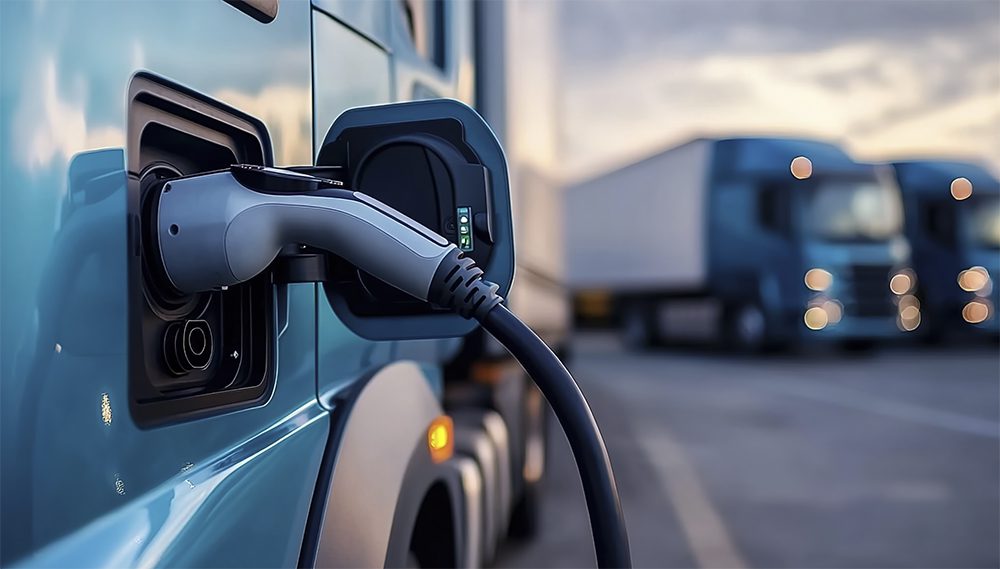
The activist investors aren’t talking climate change, they’re talking dollars and cents: Daimler Truck’s 2025 financial results show a 34% plummet in profit compared to the previous year, and a 26% slide in sales in North America. Daimler controls over 38% of the US diesel truck market—the biggest share of any manufacturer—but just 18.9% of the electric truck market.
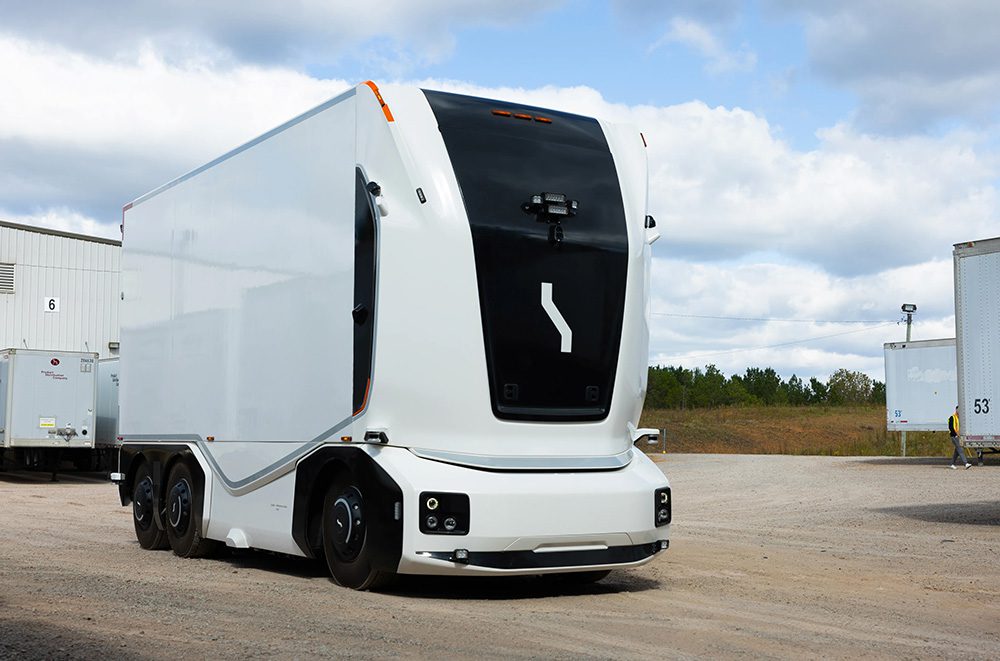
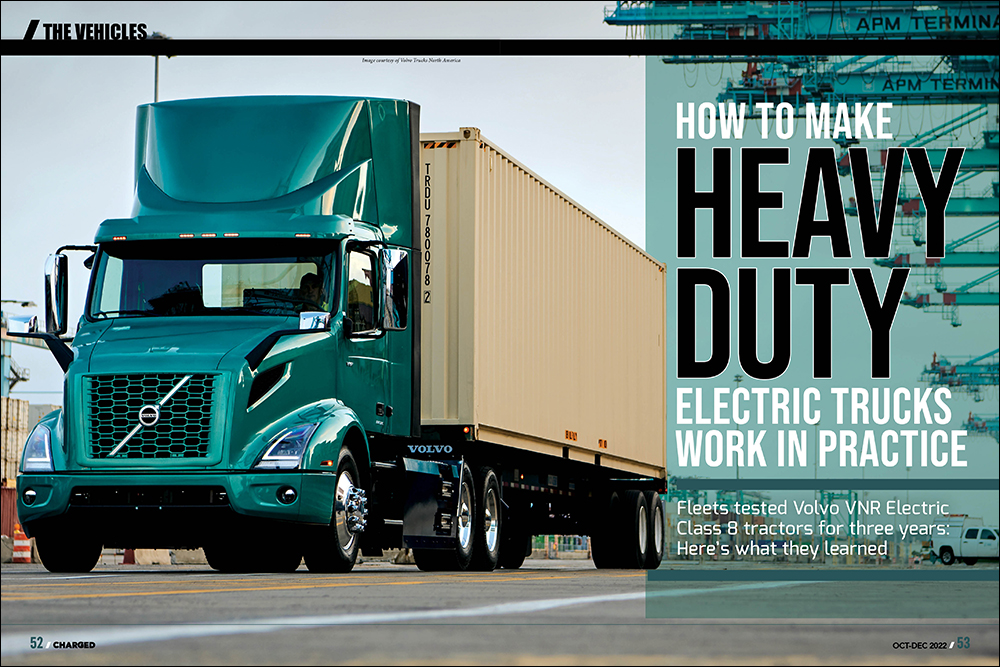
The Tesla Semi, which recently began volume production in the US, is already stealing customers from Daimler. In the latest round of applications for California’s vouchers for Class 8 tractors, covering January 2025-February 2026, the Tesla Semi received 90% of the applications (965 of 1,067), while Daimler, PACCAR (Peterbilt and Kenworth) and Volvo combined received fewer than 100 applications. This represents a turnaround from 2024, when 61% of the funding went to buy trucks from legacy manufacturers such as Daimler.
Investors questioned Daimler about its “aggressive steps to slow down or reverse regulatory controls in the US to accelerate the transition to cleaner trucks.”
These include:
- Suing California to block to block the state from enforcing truck emissions standards.
- Intervening on the side of the Trump administration against a lawsuit aiming to protect the EPA’s Endangerment Finding, a policy that underpins US air pollution law.
- Publicly supporting the repeal of the Endangerment Finding.
- Lobbying the EU to weaken rules on CO2 emissions, which the EU member states recently signed off on.
In 2025, Daimler Truck CEO Karin Radstrom said, “We are the heavy-duty diesel champ!” and unveiled a new strategy that pivots away from electric trucks.
Unsurprisingly, environmental groups have made some scathing comments about Daimler’s anti-EV strategy. (To be fair, such remarks could apply to a greater or lesser extent to just about any of the US, European or Japanese OEMs.)
“It is a masterpiece of strategic incoherence to pledge carbon neutrality in a press release while your lawyers argue in court that no climate action should be required,” said Craig Segall, a former exec at the California Air Resources Board. “While Daimler fights for diesel, its own US electric market share is slipping and competitors are already on the road winning on economics.”
“Weakening regulation while trying to scale electric trucks competitively is a contradiction. Investors are right to ask whether prioritizing short-term diesel profits over long-term success risks undermining the transition, the company’s competitiveness, and ultimately the future of its workforce,” said Merlin Jonack, Project Lead Heavy-Duty Vehicle Decarbonisation, NABU Germany.
“With Chinese OEMs entering the EU market this year, the luxury of ‘wait and see’ has expired. Daimler leads the race to electrification in Europe today, and slowing down now is not an option,” said Stef Cornelis, Fleets and Freight director at Transport & Environment. “Any weakening of transition goals would be a self-inflicted wound.”
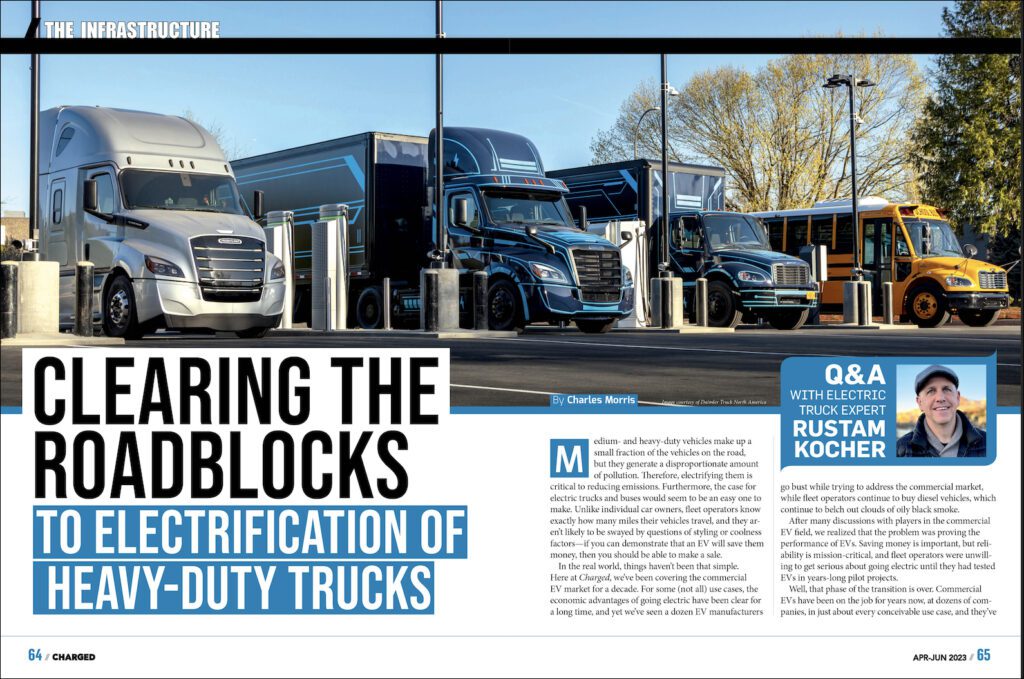
“Daimler is acting like a dinosaur in a digital age, clinging to a legacy business model while the meteor grows ever closer,” said former Daimler Truck exec Rustam Kocher. “By starving its electric transition of necessary resources and lobbying aggressively against the regulations that incentivize adoption, the company is leaving the door wide open for Tesla and other electric entrants to seize its throne.”
“Daimler’s recent anti-climate lobbying surpasses even many of the largest global emitters, including many oil majors, in its ambition to completely stop the US government from regulating greenhouse gases,” said Leo Menninger, Analyst at InfluenceMap.
Sources: The Sunrise Project, Idle Giants



















 Webinars & Whitepapers


















 EV Tech Explained