






Hundreds of new electric buses coming to Sweden
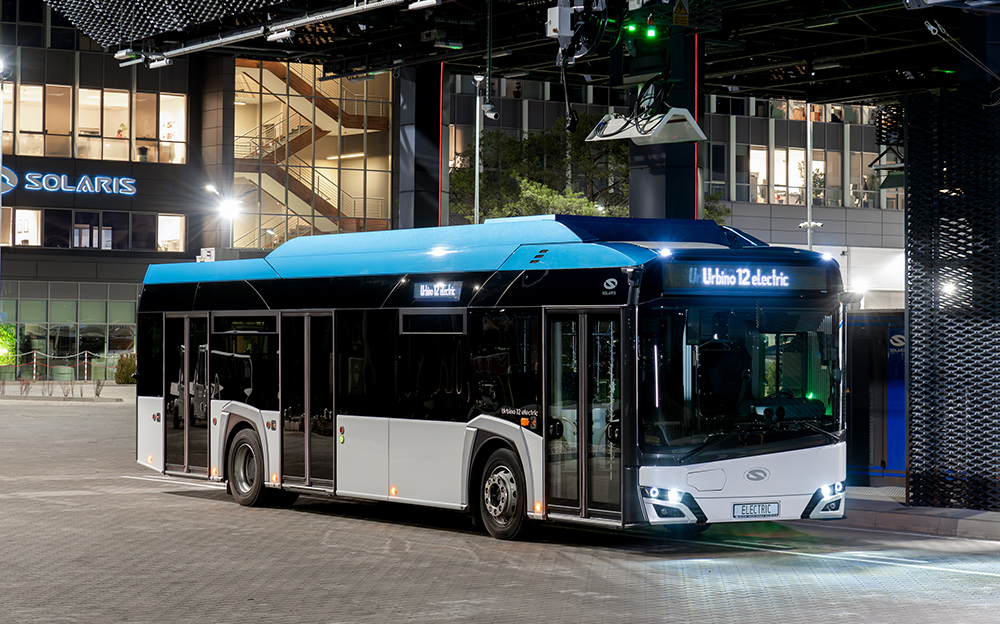
Scandinavian public transport operator Nobina has ordered 103 Urbino 15 LE electric buses from Solaris Bus & Coach. The new e-buses will be delivered in 2027, and will be deployed in the cities of Stockholm, Skåne and Göteborg.
Solaris also recently secured an order for 101 electric buses from operator VR Sverige, for operations in in the Stockholm area.
Solaris says it has sold nearly 300 electric buses to date in Sweden. Adding pending and newly awarded contracts, Solaris says its total deliveries in the market will exceed 550 units.
Italian bus OEM to launch new electric bus, and develop an electric intercity coach
Italian bus manufacturer Menarini is expanding its presence in European markets, while preparing to launch a new electric bus and advancing a Class II battery-electric project.
“Our sales network is expanding with direct entries in target markets,” said Head of Sales Andrea Lamonaca. “It is no longer about following occasional opportunities, but about continuously covering territories, especially Germany, France and Eastern Europe.”
At the upcoming Next Mobility Exhibition in Milan, the manufacturer will introduce updates to its electric product line, including “new models and evolutionary updates on existing ones.”
Menarini has a Class II battery-electric vehicle, suitable for intercity bus operations, under development. Lamonaca says: “Historically we have been very focused on urban buses [but] electric technology for Class II is now more mature and infrastructure is growing.”
Battery-electric buses in Brazil
Brazil’s public transit fleet now includes around 1,500 battery-electric buses across some 30 municipalities, CleanTechnica reports. The majority of the e-buses are in São Paulo, but eight cities in various regions of the country are planning to commission 600 additional electric buses over the next year. The federal government has set a target of deploying 38,000 renewable-energy-powered buses by 2035. This would represent 35% of the nation’s transit stock.
As in other countries, Brazilian transit agencies are running into a bottleneck: high upfront costs for electrical upgrades and extensive lead times to boost grid capacity at bus depots. The International Council on Clean Transportation (ICCT) is providing technical support for 20 Brazilian municipalities. The organization offers modeling tools such as the E-Bus Energy Sizing Tool, a simulation framework that allows planners to determine the power capacity required at a depot level.
Uganda launches locally manufactured electric buses
Uganda has fielded a fleet of locally manufactured electric buses in the capital, Kampala. Local newspaper The Independent reports that E-Bus Xpress Kiira, a subsidiary of state-owned Kiira Motors, has officially launched electric mass transit operations in the city.
The new e-buses are operating along high-demand commuter corridors in the central business district. The company expects to expand its electric fleet in Kampala to 300 buses by mid-2028.
At the national level, Uganda plans to deploy 1,500 electric buses across 14 cities, supported by 260 charging stations.
In eastern Uganda, electric buses have been serving routes linking Jinja and surrounding towns since 2024.
“This initiative demonstrates our commitment as a government to modernize mobility, reduce reliance on fossil fuels, and support locally manufactured solutions that create jobs and drive economic growth for our country,” said Minister of Works and Transport Edward Katumba Wamala.
First Bus pilots managed charging at UK bus depots
UK transit operator First Bus, in partnership with Optimo Energy, is piloting managed charging at its electric bus depots.
The First Bus depot in Glasgow, and soon the Great Yarmouth depot in Norfolk, will be enrolled in the National Grid balancing mechanism, which balances electricity supply and demand. By controlling the e-buses’ charging schedule, the depots can increase demand at times when there is excess renewable energy on the system—particularly wind power in Scotland—and reduce demand during peak periods.
“We’ve built significant electric capacity across our depots, and the next step is using it more intelligently,” said Isabel McAllister, Chief Sustainability Officer for First Bus. “By charging when the grid needs us to, we can help reduce wasted renewable energy, support system stability and improve the overall economics of electrification.”
First Bus has over 1,400 zero-emission vehicles in service, approximately a quarter of its fleet. The company operates 20 electric depots across the UK, and several more are due to be completed by the end of the year.
First Bus has also opened up its depot-based charging infrastructure to third parties via its First Charge offering.


















 Webinars & Whitepapers











 EV Tech Explained