





Australia-based Altech Batteries has announced that its CERENERGY sodium nickel chloride prototype battery cells have completed more than 650 charge-discharge cycles without any detectable capacity loss.
For stationary energy storage systems (ESS), this translates into fewer battery replacements, lower lifetime operating costs, and increased reliability for users, according to the company.
The cells also delivered nearly 100% Coulombic efficiency alongside an energy efficiency of up to 92% across 650 cycles. This high efficiency demonstrates that the cells are not expending energy on unwanted processes such as electrode degradation, the company said.
The cells achieved a nominal capacity of 100 Ah and 250 Wh, maintaining reliable performance at higher discharge rates. A key feature is their ability to support multiple daily charge-discharge cycles within the 20-80% state of charge (SoC) range at 25 A.
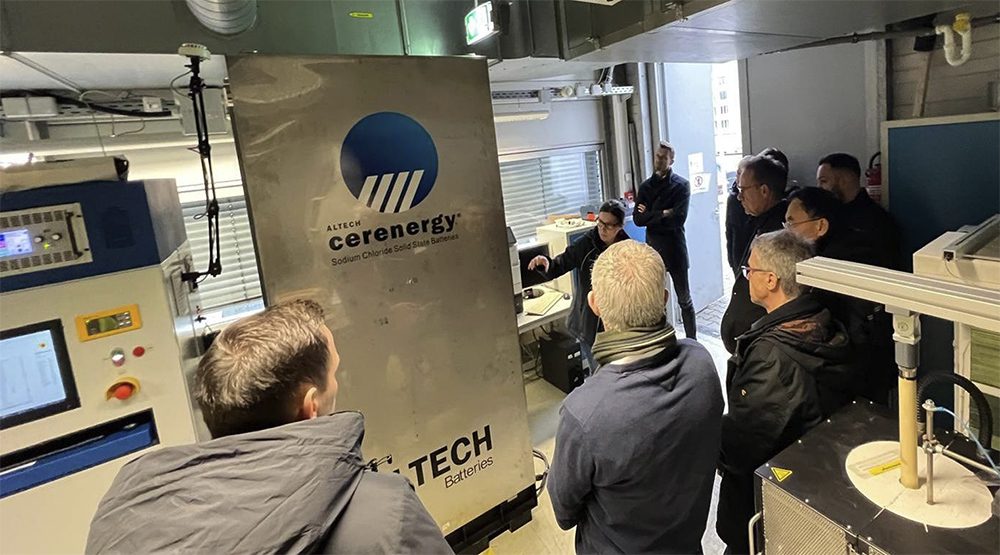
The first ABS60 battery pack prototype has been validated under real-world operating conditions, marking a major step forward in product readiness.
Testing included diverse load profiles, continuous discharges at 25 A (equivalent to C-rate of C/4 or one-quarter of the pack’s rated capacity per hour) at 80% depth of discharge, short-duration high-current pulses up to 50 A and carefully controlled thermal variations.
The pack demonstrated stable performance, achieving around 88% round-trip efficiency while maintaining reliable thermal management. Over more than 110 cycles, results showed no observable capacity fading and only a slight increase in internal resistance, Altech said.
“These results confirm CERENERGY’s robustness and readiness for market adoption. Demonstrating long cycle life, high efficiency, and unmatched safety, we are now strongly positioned to deliver a competitive and sustainable alternative for grid and industrial energy storage,” said Iggy Tan, Group Managing Director at Altech.
Source: Altech Batteries


















 EV Engineering Webinars & Whitepapers









 EV Tech Explained