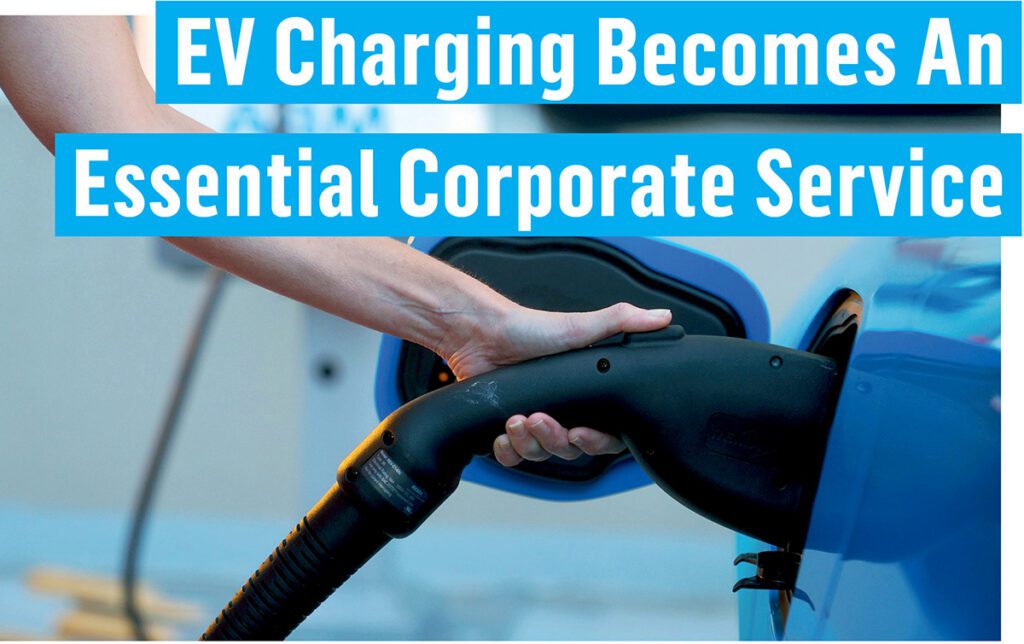






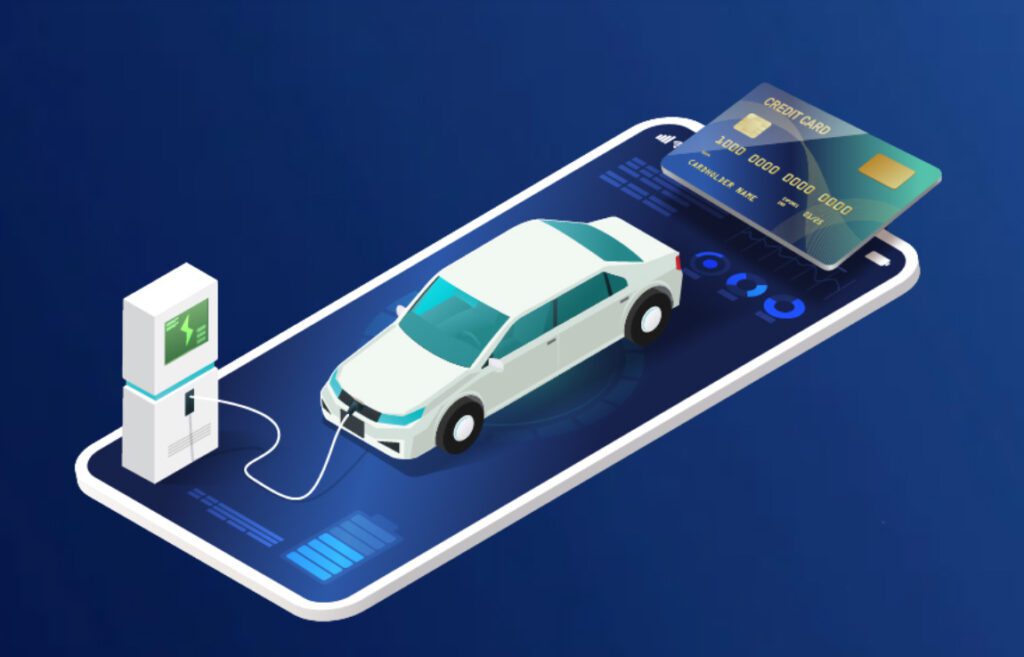
Every year, technology makes it easier to spend money—except when it comes to EV charging. We can buy a candy bar or a car with one tap of our credit card, but charging on the highway (for non-Tesla drivers) requires dealing with a phoneful of often poorly-designed apps.
Plug & Charge, a system based on the ISO 15118 standard that handles user authentication and payment automatically, has been in development for several years, and it’s starting to catch on. The system is already widely used in Europe, and starting in 2027, support for ISO 15118-20, the latest version of the standard, will be mandatory in the EU. (To the best of our knowledge, there is no regulatory obligation or timeline mandating ISO 15118-20 support in the US.)
EVSE supplier and charging network operator ChargePoint recently announced that its entire current hardware portfolio supports Plug & Charge. A growing number of other CPOs also support the system. (“Plug & Charge,” with the ampersand, is the official form of the name. Some in the industry also use “PnC” for short.)
However, implementing a new standard can be slow, and while waiting for Plug & Charge to gain more widespread adoption, some players have deployed a separate system called Autocharge, based on DIN Spec 70121. EVgo was one of the first to embrace Autocharge, and the company says that 30% of its charging sessions are now initiated using its version of the system, Autocharge+. Meanwhile, charging provider Emobi is touting its own ISO 15118-based system, which it calls JustPlug.
Is a standards war brewing? Sorry to spoil the fun, but no. Vehicles and chargers can simultaneously support both Plug & Charge and Autocharge. In fact, both ChargePoint and EVgo, among others, support both systems. Furthermore, Tesla’s system is also based on the ISO 15118-2 standard. Some fine day, all the seamless charging systems should be able to work side-by-side without drivers having to worry about it.
It’s also important to note that Plug & Charge and Autocharge are not standards—they are sets of features that are enabled by standards. As CharIN Project Manager Semih Tetik explained to me:
- DIN 70121 provides the baseline DC charging communication protocol that essentially every DC-capable vehicle supports.
- ISO 15118-2 builds on this baseline and introduces advanced features including Plug & Charge.
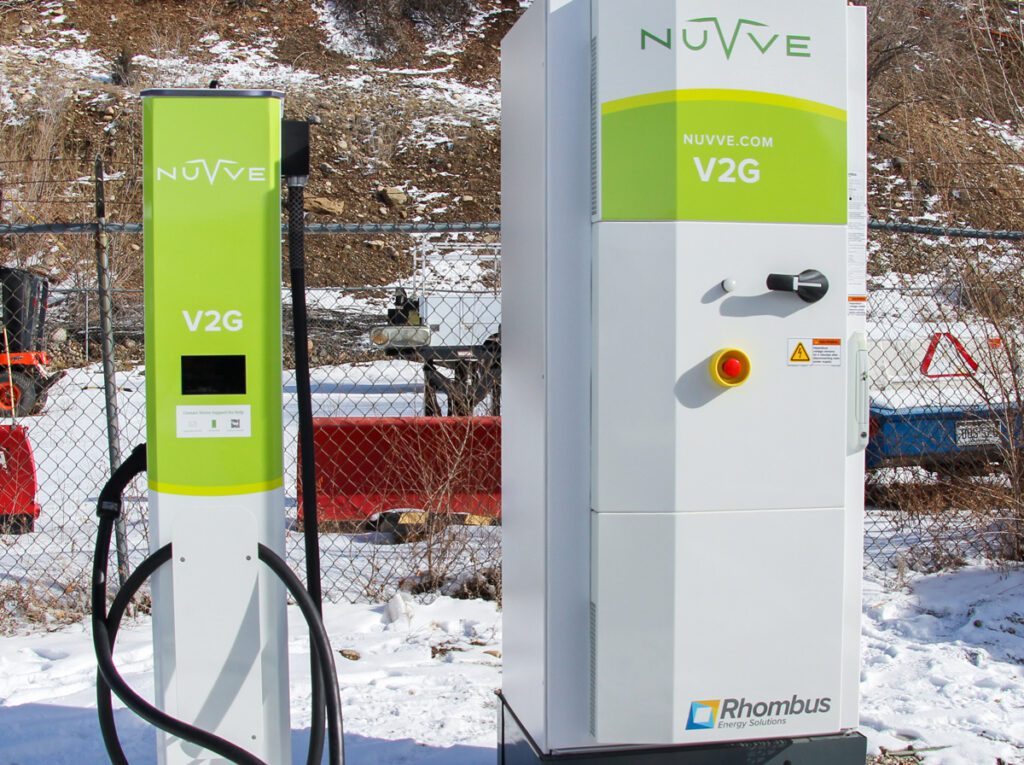
- ISO 15118-20 extends the framework with more capabilities, such as bidirectional charging (V2G) and wireless charging.
The EVSE experts I’ve spoken to seem to agree that Autocharge is an interim solution that will eventually be replaced by the more secure Plug & Charge. However, “eventually” is a key word here—the gurus also agree that much work remains to be done to enable wide adoption.
Tritium CEO Arcady Sosinov called Autocharge “very rudimentary.” He told me, “All you’re doing is registering the MAC address of your car with the network’s backend, and they link it to an account. But it’s insecure, and it’s sort of a hack. Autocharge has to go away, but the issue is that most vehicles on the road today are not Plug & Charge capable.”
“We are committed to rolling out the Plug & Charge standard once the intricacies around certification and implementation have been addressed, [but] in the meantime, we continue to support Autocharge+ as our current solution to offer seamless session initiation,” an EVgo spokesperson told Charged.
Juha Hytönen, Senior Director, EVs at security specialist Irdeto, told me: “AutoCharge was developed to address one narrow use case. It’s great because it showcases how simple charging an EV can be, and it has proven the potential for Plug & Charge. However, AutoCharge doesn’t provide the security foundation. I think there is a place for AutoCharge for a few years until ISO 15118 is fully deployed, but Plug & Charge is eventually going to replace it.”
ChargePoint is using Plug & Charge in North America and Europe, but has said that scaling it up to encourage widespread adoption will require overcoming “complex technical, commercial and regulatory hurdles.” Daniel Brown, Senior Director, Product Management at ChargePoint, said: “The consumer demand for Plug & Charge is clear, but scaling access to drivers is a complex exercise in global alignment across hundreds of market players in four key areas.”
To wit:
- CPOs need to source hardware and backend software that is Plug & Charge-compatible.
- E-mobility service providers, which manage user-facing data and process payments, need to align their offerings with backend providers that manage chargers.
- OEMs must enable their vehicles for Plug & Charge, and prepare their backend software for certificate management by a certification authority.
- Certificate authorities must oversee authentication to ensure a trustworthy process.
CharIN’s Semih Tetik: “Autocharge is inherently less secure, as it relies on identifier-based mechanisms rather than cryptographic authentication. Many OEMs have already implemented ISO 15118-2 and therefore have the technical foundation to support secure Plug & Charge using PKI-based authentication. From this perspective, implementing Plug & Charge is not fundamentally complex. ISO 15118-20 introduces additional complexity, [but] it represents a long-term unifying communication protocol, capable of supporting both current and future charging use cases. With advanced features such as V2G, increased complexity is unavoidable, but this is accompanied by higher security, including TLS 1.3 and comprehensive certificate handling.”
CharIN is actively supporting the development and deployment of Plug & Charge through its periodic Testival events. “ISO 15118-2 interoperability testing is already part of our test scope, and PKI-related tests, which are essential for Plug & Charge, are conducted in cooperation with our partners,” Tetik told us.













 Webinars & Whitepapers













 EV Tech Explained