





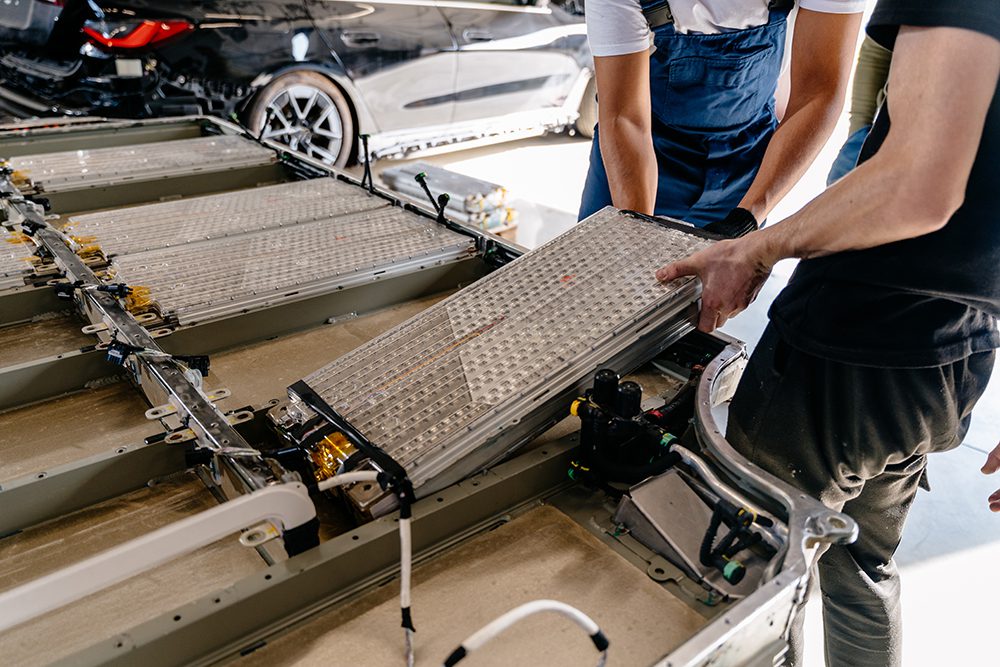
Most experts agree that frequent DC fast charging can shorten EV battery life, but detailed data about the phenomenon is scarce. How often can one use DC fast chargers before one sees increased degradation, and how do different charging speeds, climates and use conditions affect battery life?
Connected vehicle specialist Geotab has added some data to the conversation with an updated EV battery health study.
The company analyzed real-world battery health data from more than 22,700 EVs across 21 makes and models, drawing on several years of telematics information. The updated analysis shows an average annual battery degradation rate of 2.3%, compared to 1.8% in Geotab’s 2024 findings.
The increase reflects changes in how EVs are being used, notably a growing reliance on high-power DC fast charging.
“EV battery health remains strong, even as vehicles are charged faster and deployed more intensively,” said Charlotte Argue, Senior Manager, Sustainable Mobility at Geotab. “Our latest data shows that batteries are still lasting well beyond the replacement cycles most fleets plan for. What has changed is that charging behavior now plays a much bigger role in how quickly batteries age, giving operators an opportunity to manage long-term risk through smart charging strategies.”
The analysis found that charging power is the strongest operational influence on EV battery health. Vehicles that relied heavily on DC fast charging at speeds above 100 kW experienced faster degradation, averaging up to 3.0% per year, compared with around 1.5% for vehicles that primarily used AC or lower-power DC charging.
Geotab’s researchers split the vehicles into two groups based on how often they used DCFC as a portion of all charging sessions (AC and DC). They found that vehicles that used DCFC for less than 12% of total charging sessions experienced an average annual degradation of 1.5%, whereas vehicles that exceeded 12% DCFC usage saw average annual degradation of 2.5%.
High-power DC fast charging (over 100 kW) was found to be the single largest battery stressor, leading to degradation rates up to 3.0% per year, compared to 1.5% per year for EVs that charged at less than 100 kW.
“For fleets, the focus should be balance,” says Argue. “Using the lowest charging power that still meets operational needs can make a measurable difference to long-term battery health without limiting vehicle availability.”
Climate showed a smaller independent effect. Vehicles operating in hotter regions degraded around 0.4% faster per year than those in mild climates.
The data also challenges the need for strict day-to-day charging constraints. Vehicles that regularly used a wider state-of-charge range did not show meaningfully higher degradation unless they habitually spent prolonged periods near full or near empty charge levels.
Geotab’s data shows that while degradation rates vary by model, charging behavior, and usage patterns, the majority of modern EV batteries remain fit for purpose well beyond typical ownership and fleet replacement timelines.
Source: Geotab











 Webinars & Whitepapers




























 EV Tech Explained