





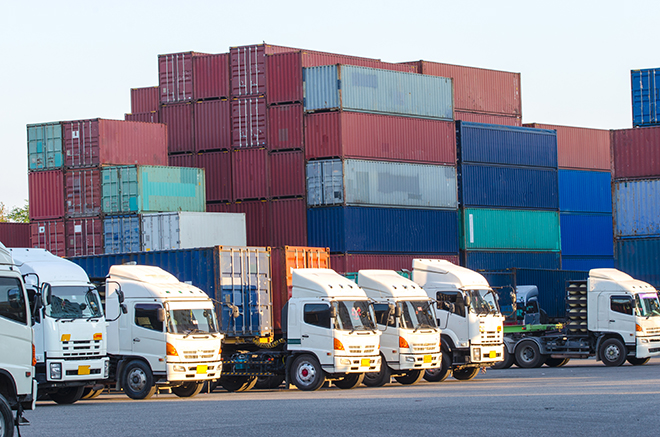
Port facilities represent a grove of low-hanging fruit when it comes to emissions reduction—ports are potent sources of local air pollution, but many classes of equipment and vehicles used in and around ports (including, as regular Charged readers know, terminal tractors) present near-ideal use cases for EVs.
Port electrification can also deliver substantial economic benefits, as detailed in a new report.
Powering Florida: Port Electrification as a Pillar for Global Competitiveness, produced by engineering firm AECOM for the Environmental Defense Fund (EDF), finds that electrifying port equipment and infrastructure in the Sunshine State can improve operational efficiency and long-term cost performance. The study evaluates the cost-effectiveness and feasibility of electrification across Florida’s port sector.
Florida is home to 16 seaports, including the world’s 3 busiest cruise ports. Collectively, Florida’s ports contribute over $117 billion per year to the state’s economy, and represent about 13 percent of the state’s GDP.
The study found that, while some electric cargo-handling equipment carries higher upfront costs, lower fuel and maintenance expenses can result in meaningful long-term savings. For example, electric rubber-tired gantry cranes (eRTGs) cost about 30 percent more than legacy diesel models but deliver average annual savings of more than $60,000 per unit over a 20-year lifespan. Electrified equipment also enables ports to stack cargo higher and use limited space more efficiently.
Shore power infrastructure allows ships to plug into the electrical grid while docked, reducing fuel use and improving local air quality. Seven Florida ports have already installed shore power, or have projects underway. Some 72 percent of cruise ships are anticipated to be shore power-capable by 2028.
“Modernizing equipment and infrastructure helps ports attract customers, improve efficiency, and reduce long-term operating costs,” said Rohemir Ramirez Ballagas, Director of Shipping and Transport at EDF. “This report demonstrates that leadership in electrification delivers clear business advantages.”
“EDF’s report on electrification at Florida’s ports highlights the significant benefits—ranging from improved efficiency to modernization—of technologies like shore power and electric cargo-handling equipment,” said John Bressler, VP of Government Relations for the American Association of Port Authorities (AAPA). “AAPA was pleased to help support its development, and we look forward to seeing the state’s maritime industry continue adopting cutting-edge technology, while also strengthening supply chain reliability.”
“To remain competitive with other major cargo ports along the Eastern Seaboard, Florida ports must increasingly focus on terminal optimization and densification to expand capacity and improve throughput,” says AECOM VP Philip Hadfield. “In today’s maritime industry, this evolution is most effectively achieved through the electrification of container yards and cargo-handling equipment.”
Source: Environmental Defense Fund











 Webinars & Whitepapers





























 EV Tech Explained