



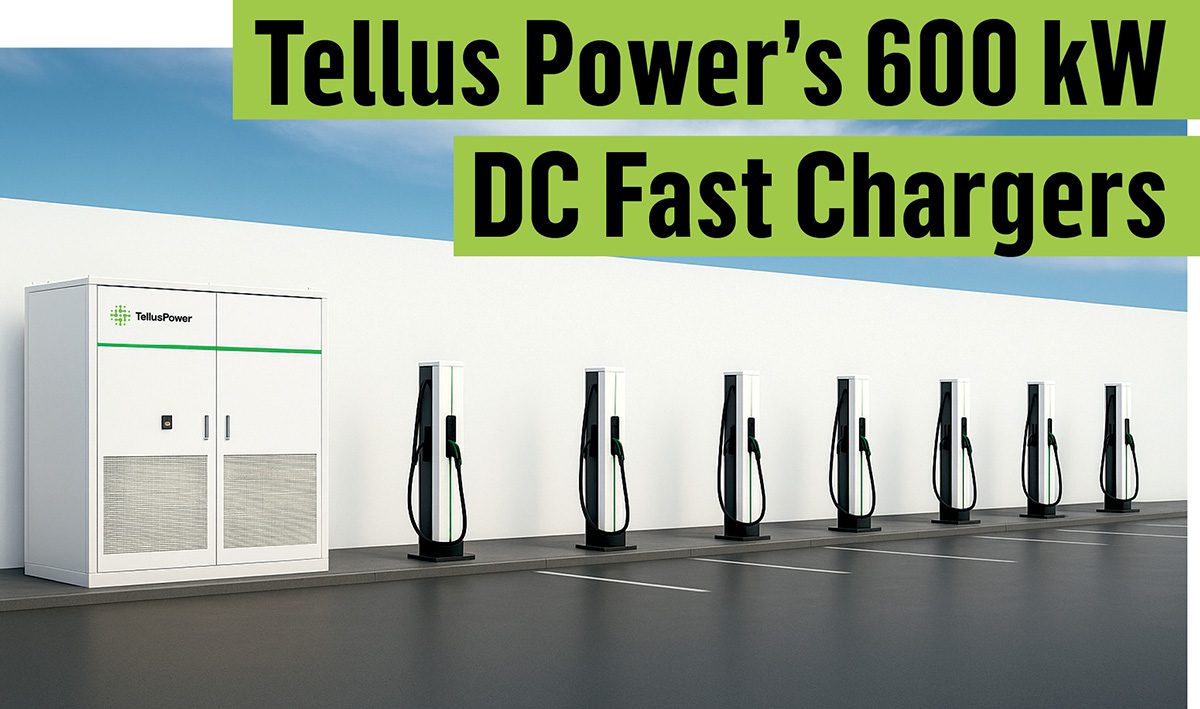
Tellus Power aims to deliver the features customers need today, while preparing for a massive scaling up in the future.
It’s tough to keep up with the latest developments in the EV fast charging industry these days. Charging providers are rapidly rolling out fast charging stations around the world, with ever-larger numbers of individual charging points.
At the same time, technical innovations are moving fast, and operators and hardware manufacturers don’t necessarily agree on the most cost-effective and customer-friendly ways to scale fast charging.
Everyone agrees that the industry needs cost-effective ways to scale up to larger sites and more coverage, but is it better to use standalone chargers that incorporate the customer interface and the power supply in a single unit, or to use a distributed system with a central power supply and satellite dispensers?
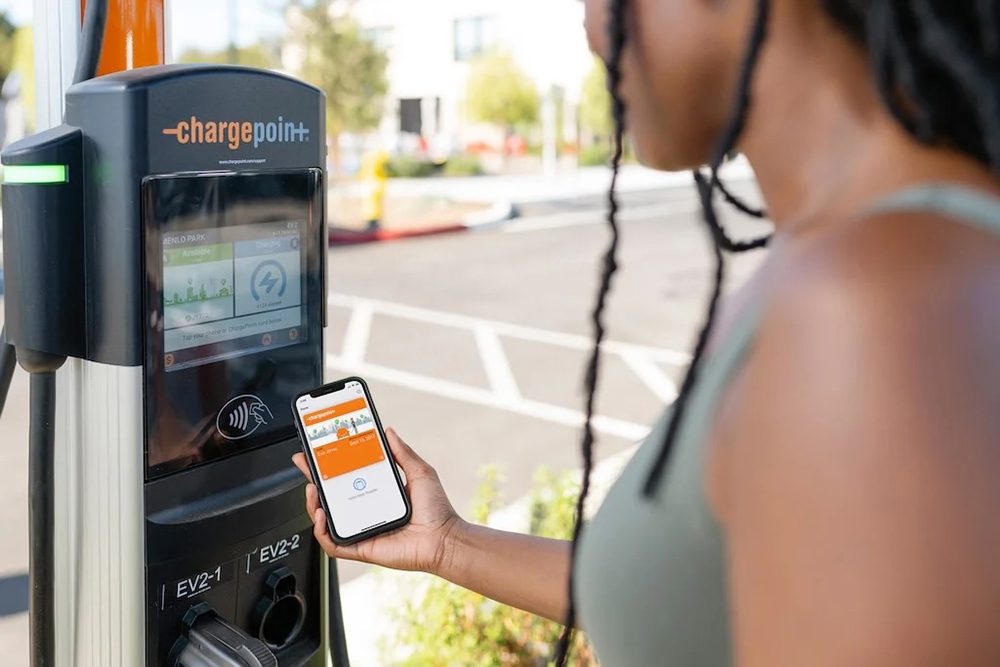
Everyone agrees that user interfaces need to be better—we’re all sick and tired of the proliferation of proprietary, poorly-designed apps. But are credit card readers (mandated in some jurisdictions) the answer, or are they anachronistic devices that introduce another point of failure? And why is it taking so long to get Plug & Charge rolled out?
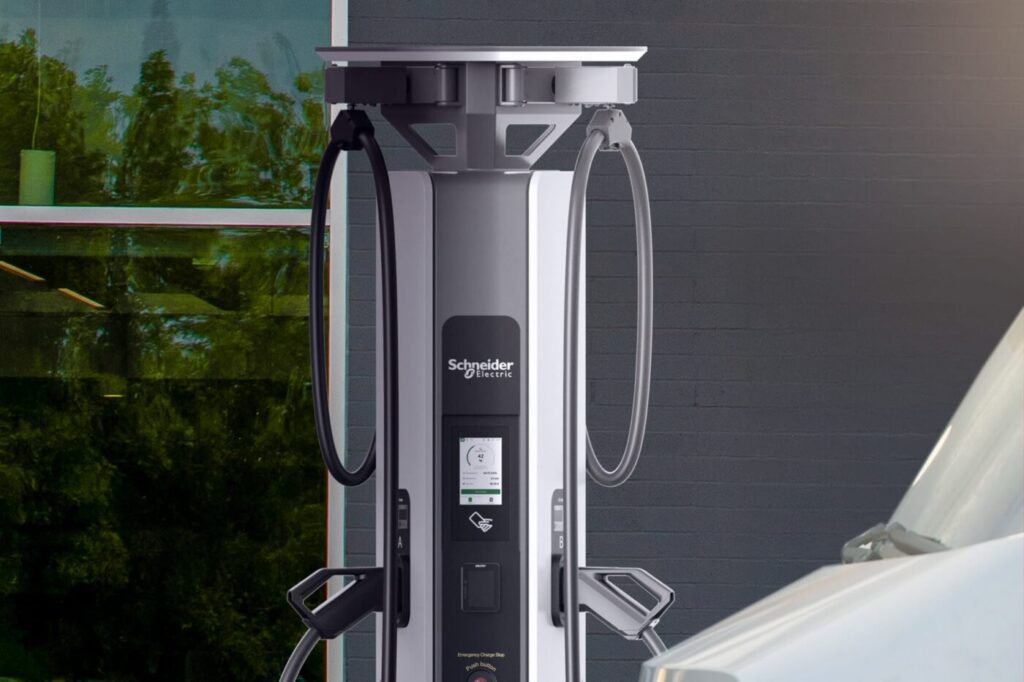
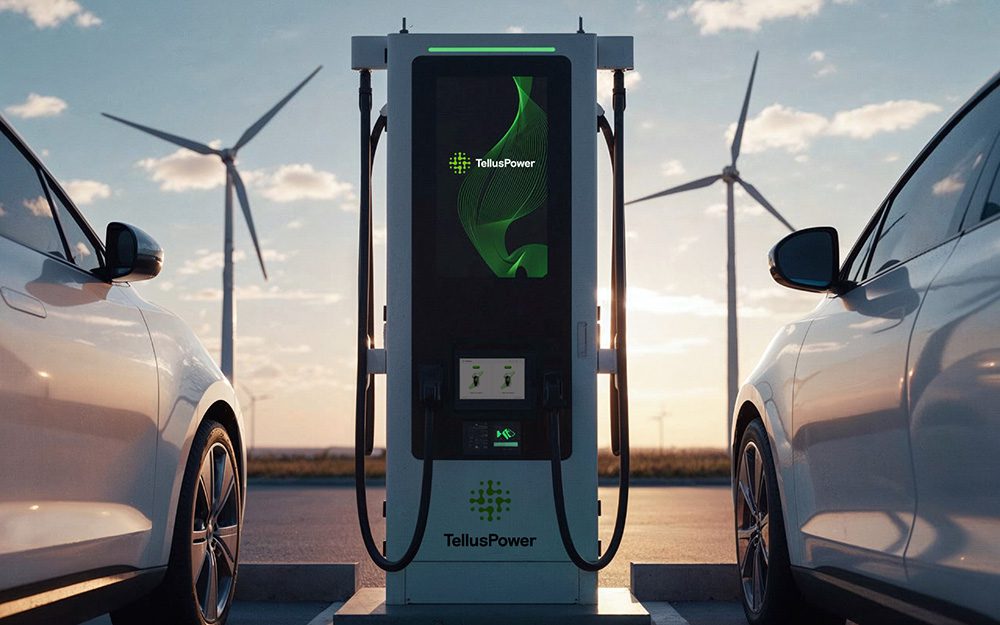
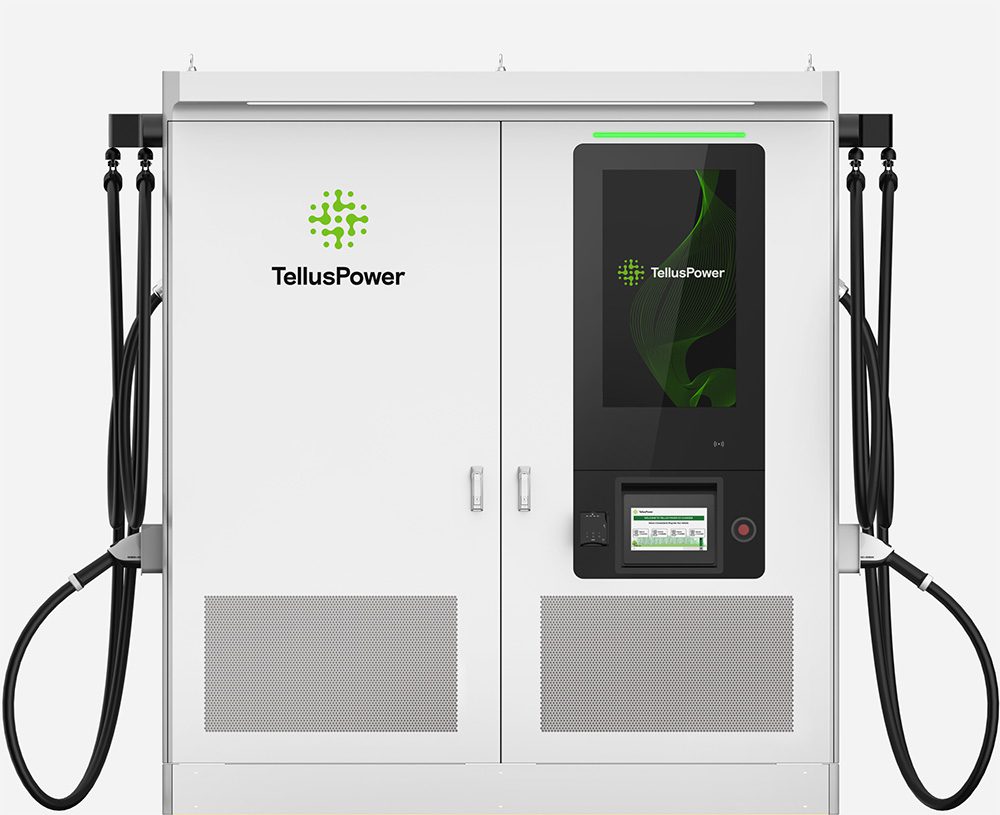
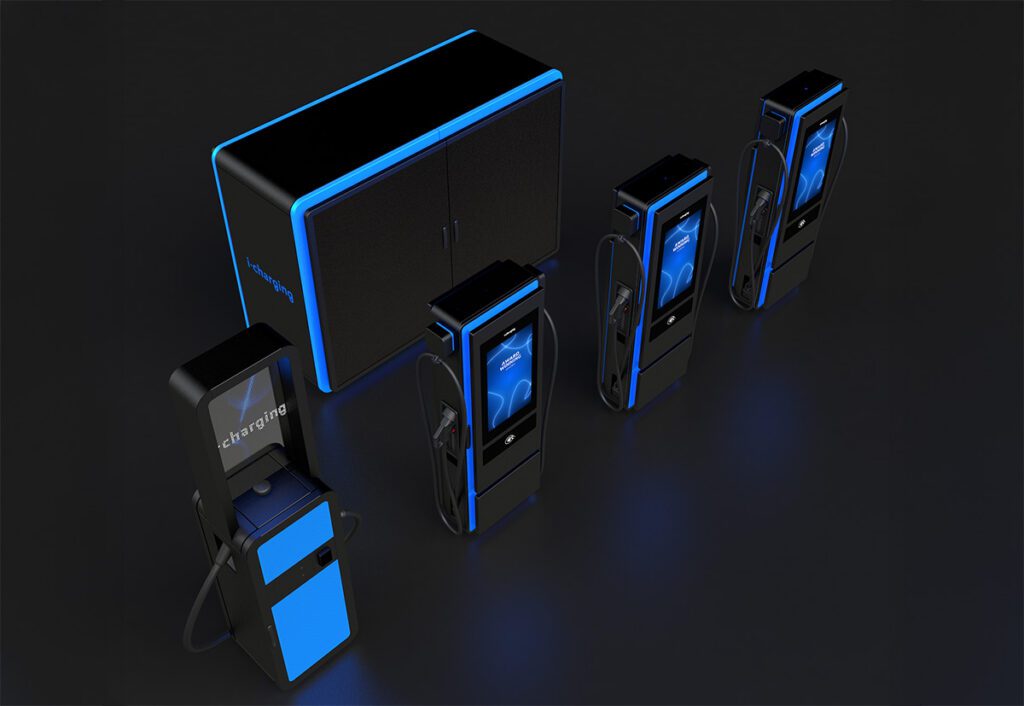
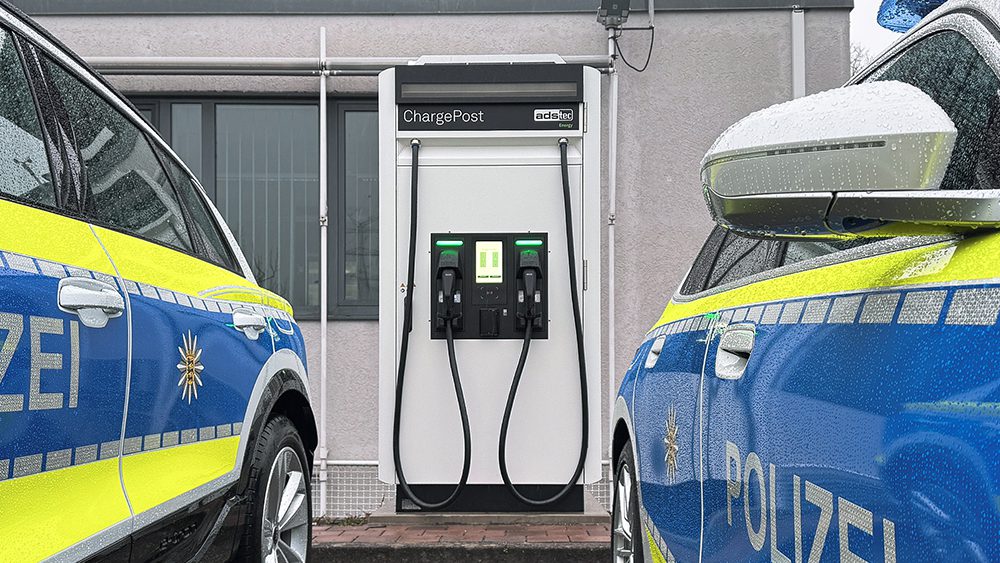
Tellus Power is attempting to cover all the bases. The company recently unveiled two new 600 kW DC fast charger systems: a distributed system and an all-in-one unit. Both configurations support 800-volt architecture, and both are compatible with NACS, CCS1 and CCS2 standards.
Charged spoke with Tellus Power CEO Mike Calise, who has been running the company since the beginning of 2025.
Charged: Let’s start with a brief history of the company and an overview of what you do.
Mike Calise:Tellus Power is a manufacturer of DC fast chargers and vehicle-to-grid hardware, and a supplier of software and storage products, which are critical for grid-friendly infrastructure.
“We are in a record time for DC fast charging deployments. The opportunities are exceptional.“
We have our roots in Shanghai, so world-class, low-cost global manufacturing. We have our headquarters in Irvine, California, where we also manufacture DC fast chargers. We manufacture what’s required for Build America, Buy America products—55% US content delivering to the US market. We also have offices in India, Europe, South America and the Southeast Asian market.
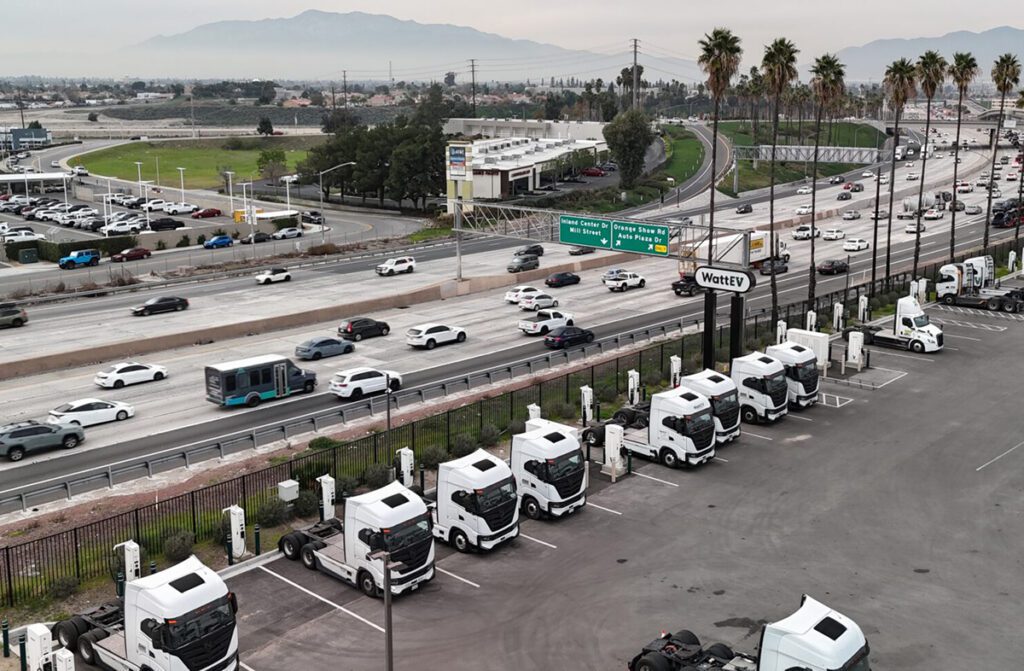
We are in a record time for DC fast charging deployments. The opportunities are exceptional. We see Uber and Lyft requiring very fast in and out times, we’re seeing last-mile delivery fleets electrifying, we’re seeing the advent of medium-duty and heavy-duty electric trucks.
Our mission is to be number one, two or three in all our markets.
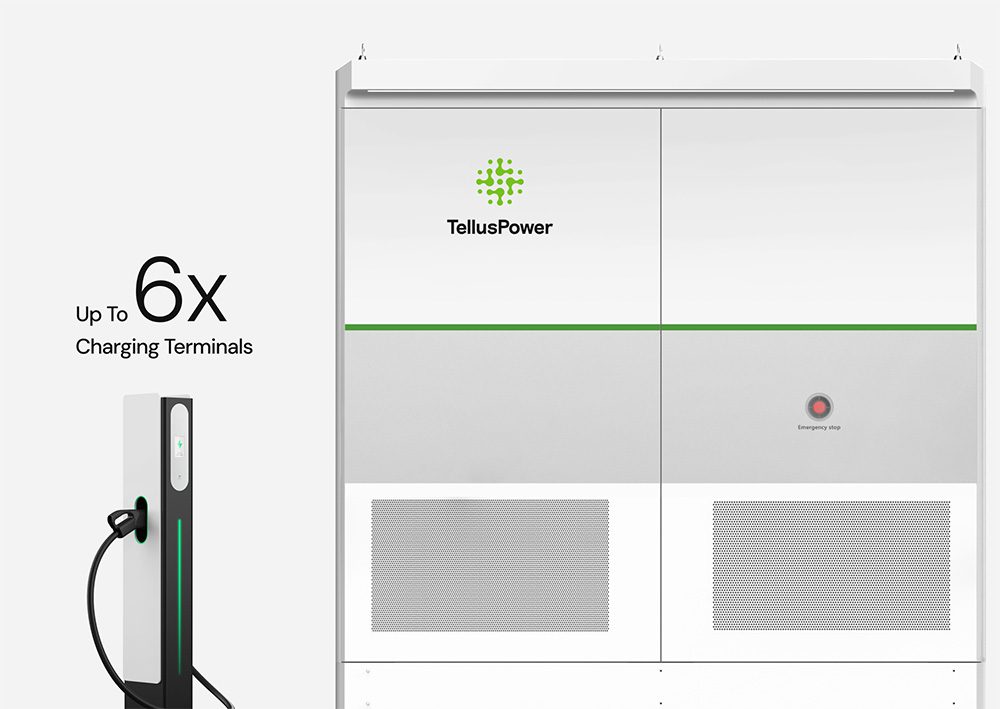
Charged: You have a pair of new products—a distributed charger and a standalone charger. I recently spoke with a couple of people who say that distributed chargers are the future, but you see good applications for both formats. Where would you want a distributed setup and where would you want a standalone?
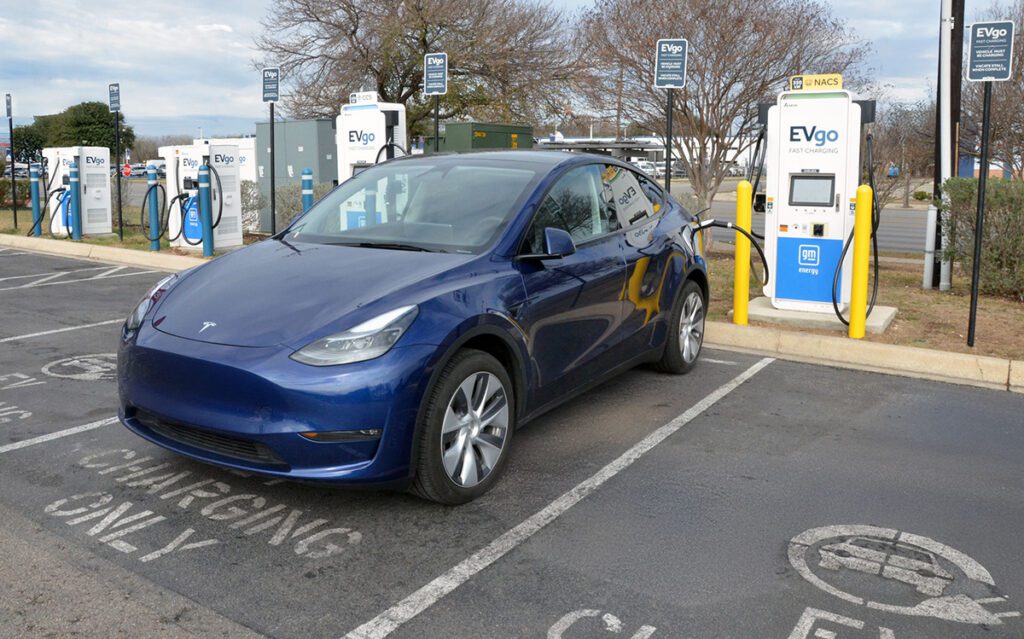
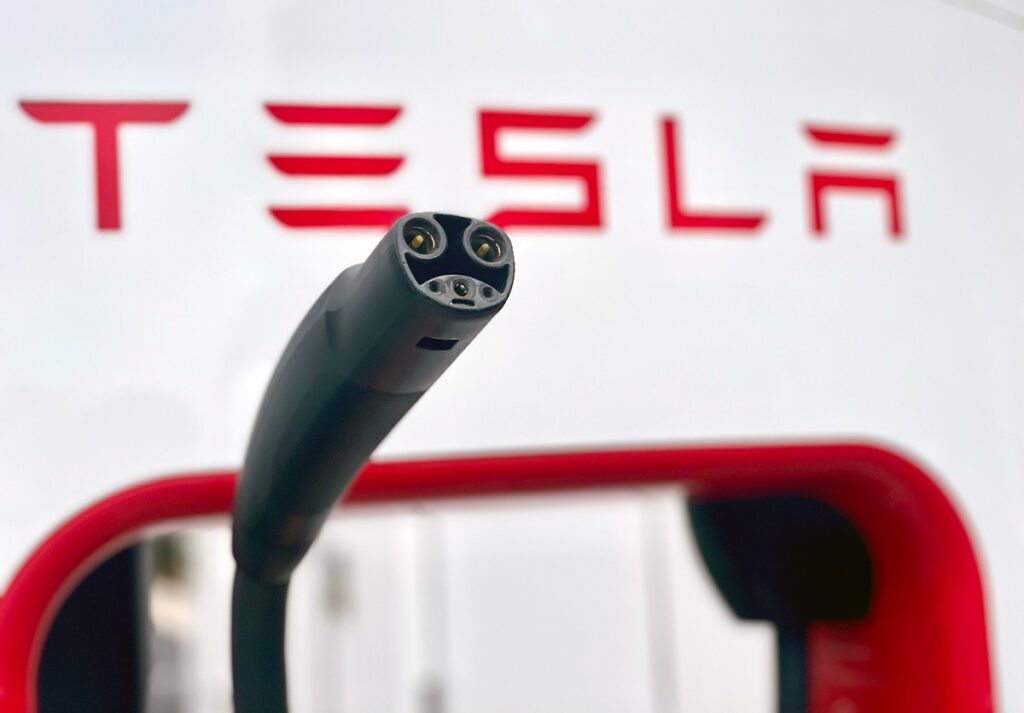
Mike Calise: I love the question, and they are correct to say that distributed charging is the future. Well, it was the early present too. Think about Tesla. Tesla was such a streamlined experience. You show up, you plug in and you walk away. You don’t see any big unit, you don’t see a big screen, you don’t see a credit card reader.
But we as a nation went with CCS1, so you have to meet the needs of every EV owner. You need to put a credit card reader on there. Obviously, you need a display to interact. We needed to put those units in to meet a large cross-section of the population’s different driving habits.
“Distributed charging is the future. Because ideally, everybody is feeling that Tesla experience. You show up, there’s a little pedestal, you plug it in, you walk away. “
Sometimes bigger is better. If you can physically see a unit that’s lit up, you can clearly see where you can get your charge. The trick with standalone integrated solutions is make them with a small enough footprint that they’ll fit behind the parking stall. Then you just plop them down—easy to install and easy to maintain. You got one down, electrician shows up, opens up the cabinet, everything is there—the power, the DC, the AC, the rectification, the cable.
So, there is practical benefit to the all-in-one. And if you look at us and our competition, we’re still selling a lot of all-in-one units. But is distributed charging the future? We believe it is. Why? Because ideally, everybody is feeling that Tesla experience. You show up, there’s a little pedestal, you plug it in, you walk away. The car transacts using Plug & Charge, your credit card or your loyalty program. It’s seamless. No displays, no credit card swipes. Who doesn’t want to streamline?
If you think of the old mainframe businesses and computers, distributed processing is where everything eventually went to. You could say, well, that big power cabinet with those little terminals, that’s almost like a mainframe, right? But the bottom line is the processing—it’s all in the cloud. It’s all in the car. And we’re already there with Plug & Charge.
There are advantages to that sweet, small pedestal—no display that went bad, no credit card reader that got jammed. A lot of the downtime in these units is not charge-related, it’s display-related, it’s modem-related, it’s credit card-related. The charging isn’t the problem. Every now and then you’ve got to repair it, sure. But the things that fail are those human interface things—displays, buttons.
When we go to this distributed system, here’s another advantage. You’re distributing over a DC bus. If you go AC grid, rectification, AC to DC, then DC to DC in the car, you’ve got some hops there. When we distribute to pedestals, all of that is DC, so the cost of installation goes down dramatically.
And if one of these units goes down, you just pop open the cabinet and replace an AC-to-DC module or a DC-to-DC module. You deal with the power conversion back at the cabinet, and that’s transformer-like equipment. That back-of-the-fence grid equipment, you don’t have to make it pretty, so you can keep the cost down. Then you make nice, streamlined, aesthetically pleasing pedestals to plug your car into.
“We appreciate the well-intended nature of California’s requirement for credit card readers, but actually the credit card readers are a mess. They weren’t designed for abusive outdoor use. “
Charged: Someone was telling me the other day that the credit card readers are the biggest point of failure, but aren’t they required in California and some other states?
Mike Calise: Mary Nichols [Chairwoman of the California Air Resources Board from 2007 to 2020], who drove the most EV-friendly policy in the country, said EVs cannot be just for the wealthy. EVs need to be accessible for everybody. We’re going to require a credit card. You can’t have someone show up and not get a charge because they weren’t sophisticated enough to get the app and put in a QR code. And she made a lot of sense. Who’s going to argue the equity? But we did, and here’s why. Turns out more people have cell phones than they do credit cards. From the disadvantaged neighborhoods all the way up, everyone has a cell phone. Not everyone has a credit card.
So, we appreciate the well-intended nature of that policy, but actually the credit cards are a mess. Credit cards are not as reliable in outdoor applications as they are in indoor applications. Those credit card readers, the modems, the SIM cards and the connectivity and the displays, they take a beating in the wild. They weren’t designed for abusive outdoor use, and they’re not even always covered. I believe California recently reversed the requirement.
[Editor’s note: Authority for EVSE standards is being transferred from CARB to the California Energy Commission. A CEC spokesman told Charged that a recently-passed bill, AB 1423, “authorizes the CEC to modify requirements for EV charger payment options in light of changing technologies or cost impacts,” and that the CEC is “exploring a process for new regulations.”]
With Plug & Charge, you don’t even need a credit card, an app or a cell phone. You just plug in, and your car does it all. Yes, you have to have a credit card account or some bank account—you can’t pay cash.
Charged: How far away are we from seeing widespread implementation of Plug & Charge?
Mike Calise: The Plug & Charge concept and the 15118 standard have been around for several years. It’s not that far out. It’s being used daily today.
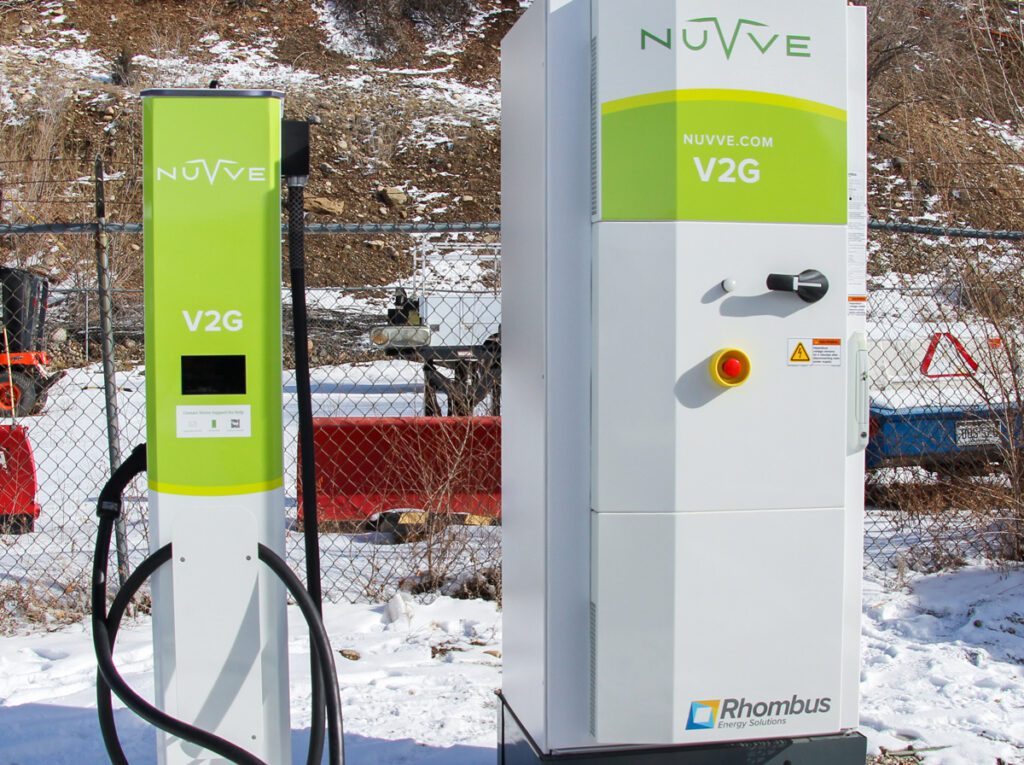
Charged: I’d love to hear some more about V2G. Is V2G still a pilot-level technology, or are there some real commercial applications going on?
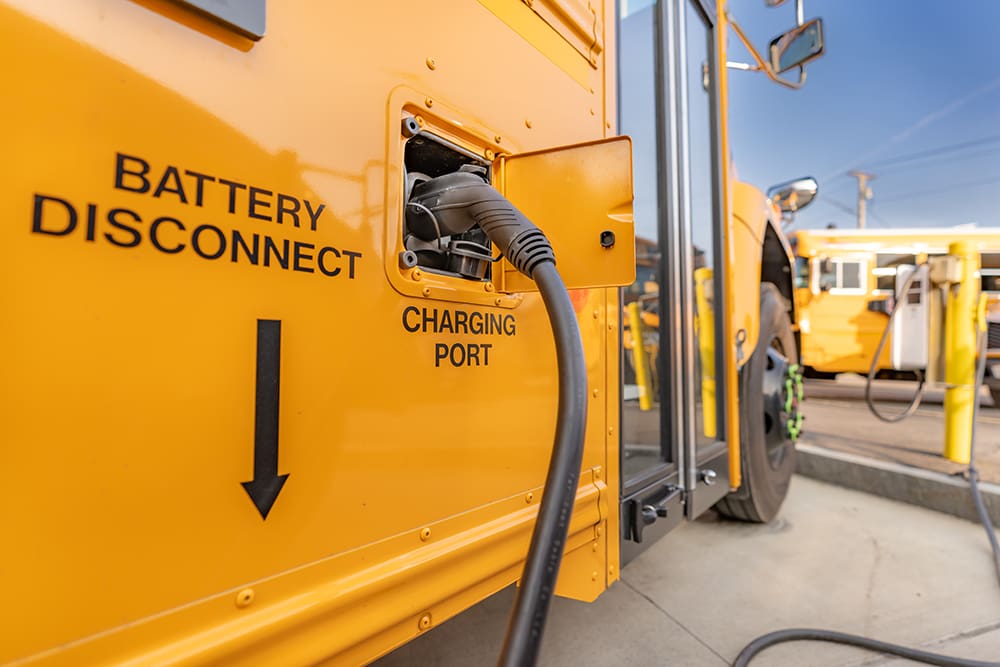
Mike Calise: There are some real useful projects going on today, so it’s no longer pilots only. We have Oakland Unified School District and Fremont Unified School District right now, using battery storage within the school bus, going back into the building and into stationary storage, which is awesome.
“V2G is a complete transformation for the school districts and a positive impact to their communities. It’s a killer application.“
Check this story out, we’re very proud of it. They have very expensive petroleum in California that they have to purchase for these buses, making their operational costs prohibitive. Their utility bills are through the roof. They have energy-inefficient buildings, and some of these school districts are operating in the red due to high costs of operation.
The Oakland and Fremont school districts got local municipal funding for a V2G project. They put solar canopies on their parking lots, producing their own energy. Their energy bills went down a little bit. They deployed V2G-capable electric buses, and their overall utility and fuel bills went down dramatically. Now they’re operating in the black. They charge these buses during the nighttime when energy is cheap, then discharge the batteries from the vehicles to the building during times of peak energy costs.
It’s a complete transformation for the school districts and a positive impact to their communities. That’s a model that can be scaled across a massive number of public school districts.
Charged: So these school districts are not only paying for all their energy costs, but they’re actually generating a surplus that they can use to pay for other things? Why isn’t everybody doing this?
Mike Calise: You need a lot of stakeholders. You need the utility—they’re critical because they’re going to transact the deal. You need a technology provider like Tellus Power. You need the bus company to say, we’re okay to run these batteries back and forth all day long, not just one way. And when you get all that, it happens. School buses are still the best application, but then you go to transit buses and last-mile delivery vehicles with known routes. If there are known routes, a known time, you can effectively manage it because you know when the sun will shine during the day, and you know the utility rates for time-of-use. You can then mitigate utility demand fees and even exploit dynamic pricing.
It’s a killer application. Often it takes government grants because these buses are expensive, but we’re way past this phase of testing in the lab to real-world applications. Now you need a little bit of escape velocity—that’s probably in the next three years.
Charged: Well, don’t let the politicians find out about that, because then they’ll just cut the school budgets by the corresponding amount.
Mike Calise: Of course they will. Yeah, we’ve got to be apolitical, and I see the good, the bad and the ugly in multiple administrations. I’ve been through two Obama administrations, one Trump, one Biden, another Trump, and we’re still doing this business. Government grants are good, but even though they are often well-intended, sometimes there are unintended consequences, and it can get messy. So, we’re just talking about the technology and the value that we bring and the advantages we bring over our competitors as we navigate tailwinds and headwinds alike.
Charged: I hear a lot of people saying there’s going to be a big shakeout in the charging field. With so many companies selling chargers, how do you differentiate your products?
Mike Calise: Well, there’s already been a shakeout. There’s been failed companies since 2010. Littered on the highway, there’s probably 100 companies with chargers out there. I can name at least 20 that were around in the early days that looked incredibly promising but failed dramatically. That’s a natural course for all innovative new businesses.
So, who are you going to deal with? The company that still survived after all these years, or the company that’s gone? I worked for both types. I’m the one who took Blink public back in 2018. The CEO rebranded it from Car Charging, took it public, and created a $2-billion valuation at one time. Right now, they’re around 180 million, depending on the day, and the stock is up over 50% in the last six months.
We’re in an innovative business. There’ll be successes, failures and consolidation along the way. As any experienced CEO will tell you, we get tailwinds and headwinds. Just like in sailboat racing. That’s what makes Tellus Power different—we know how to sail in both headwinds and tailwinds. You’ve got to know when to put up the sails without breaking the masts, and you’ve got to know when to get real light and reduce your load so you can go faster. This is a natural test for strong leadership.
The companies that will succeed are the ones that continue to innovate through an evolving new market, but sometimes innovation isn’t necessarily technology—it’s also the business model. How do you work with a revenue share? How do you work with leasing? How do you work with buy now, pay later? How do you work with percentages of revenue and energy? How do you secure cheaper energy? How do you store the energy that you secured? How do you create your own energy? How do you sell back energy? That’s a complex scenario. And the companies that we’ll see in the future are the companies that figure out that there’s money to be made in hardware, but there’s also money to be made in services, logistics, software, energy, tokenization of energy, and transferability of tokenized energy.
“We’re seeing new innovations in transformer technology using intelligent high-switch capability. It’s going to be very important for overall grid efficiency.“
Charged: What are some other innovations that we’re going to see over the next few years in the fast charging sphere?
Mike Calise: What we’re going to see are efficiency plays within a microgrid. It’s a whole new world of increased load demand. It used to be that transportation was the biggest new load on the grid. Now it’s shifted to data centers and AI. We have a pressing demand for new, cleaner energy with these industries, and we’re starting to see massive shifts in the way energy production is handled because of those needs.
We’re seeing new innovations in transformer technology using intelligent high-switch capability, which is very efficient transformer technology, excellent for the grid, silicon carbide-based. It’s going to be very important for overall grid efficiency. You start to see the reduction, the removal of these power conversion systems. The grid is AC, so we go from AC to DC, DC to AC, then we go to the DC battery pack, and you’ve got these systems in place that are expensive. So, you have your batteries and renewable energy which are DC, and then you have this system that’s doing all these conversions in a box. In the future, we’re going to get rid of that box, and even get rid of internal transformers. You’re going to have a microgrid that’s highly efficient, less lossy to the tune of…I’m guessing 94 or 95% efficient versus 91 or 92%, maybe as high as 97%.
Everyone says we need this massive battery breakthrough so we can all charge up in five minutes, but you actually don’t need that. There’s sustainable innovation and there’s disruptive innovation. Sustainable innovation in battery technologies happens just by changing the anode chemistry or the structural costs associated with building the battery. Now we’re seeing battery technologies incrementally improved to the point where they’re at a $100/kWh price point. It’ll drop to $90, then it’ll continue to drop to $80.
If you’re at $80/kWh, you can basically manufacture a compact EV, the whole car, for less than $20,000. You can get a highly affordable commuter car for the masses, and with an innovative business model, you don’t even have to buy the car—you can rent it. Waymo and Tesla are exploring autonomous vehicles with new business models. The world will be a very different place in the next five years. I see technology drivers down at the silicon level that are going to unleash tremendous gains to deliver cost-effective solutions for EVs.
This article first appeared in Issue 74 – Subscribe now.










 Webinars & Whitepapers










 EV Tech Explained