



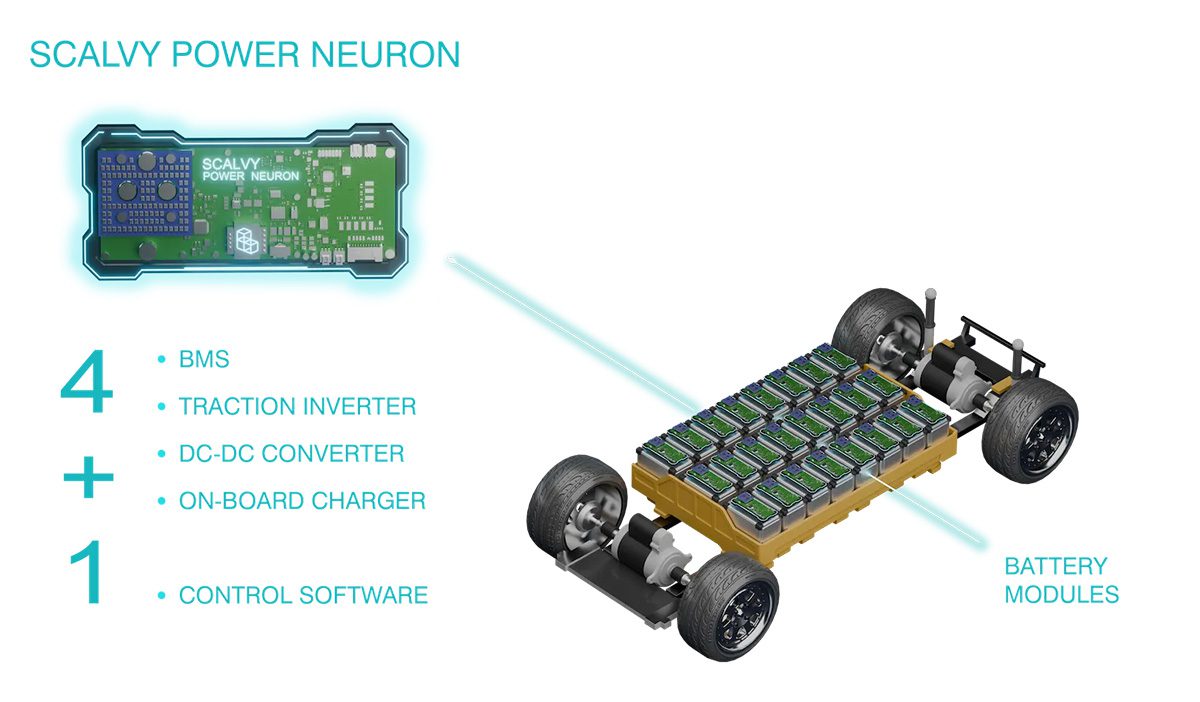
Scalvy says a joint concept evaluation with Valeo has validated its modular battery-integrated power architecture for EVs under WLTC operating conditions, marking a step toward automotive deployment of the company’s distributed “Power Neuron” platform.
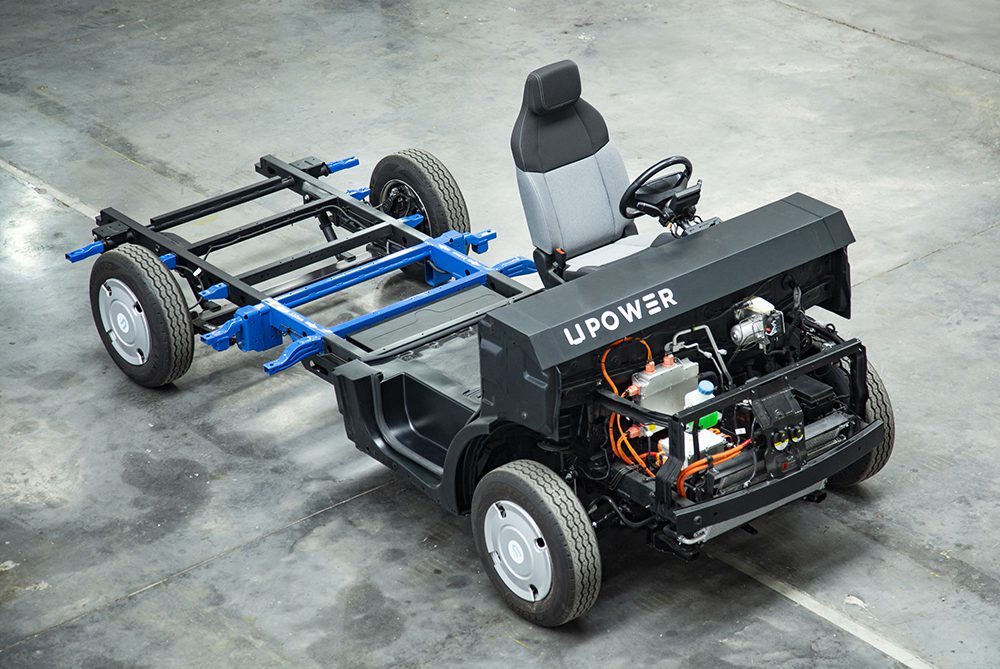
Instead of using separate centralized inverters, DC-DC converters and onboard chargers, Scalvy’s architecture distributes those functions into compact modules at the edge of each battery pack. The company says that reduces switching and conduction losses while making the system scalable across vehicle classes and battery chemistries.
In the lab-based WLTC evaluation, Scalvy says the system achieved a peak inverter efficiency of 98.3% at 10,000 rpm and 65 Nm. The company also says module-level state-of-charge balancing kept SOC deviation between battery modules negligible during testing, and that the system maintained motor temperatures below 62 °C and power-device temperatures below 65 °C without hotspot formation.
That combination of tight SOC balancing and pulse-like distributed switching reduces localized electrical and thermal stress, enabling faster charging and extending battery life by up to 15%, according to Scalvy. Valeo’s Farouk Boudjemai said the results were “highly encouraging” and would help advance the concept’s readiness level. Scalvy says it is field-testing the technology with select customers and is targeting commercial production in 2027.
Source: Scalvy




















 EV Engineering Webinars & Whitepapers














 EV Tech Explained