




US and Japanese automakers have fallen far behind their Chinese rivals, as even Big Three CEOs freely acknowledge. Their ultimate fate, however, is far from certain. This tragedy will play out over several years, but one possible scenario includes the failure of one or several of the legacy OEMs. Could the Chinese someday add insult to injury by acquiring one of our iconic brands?
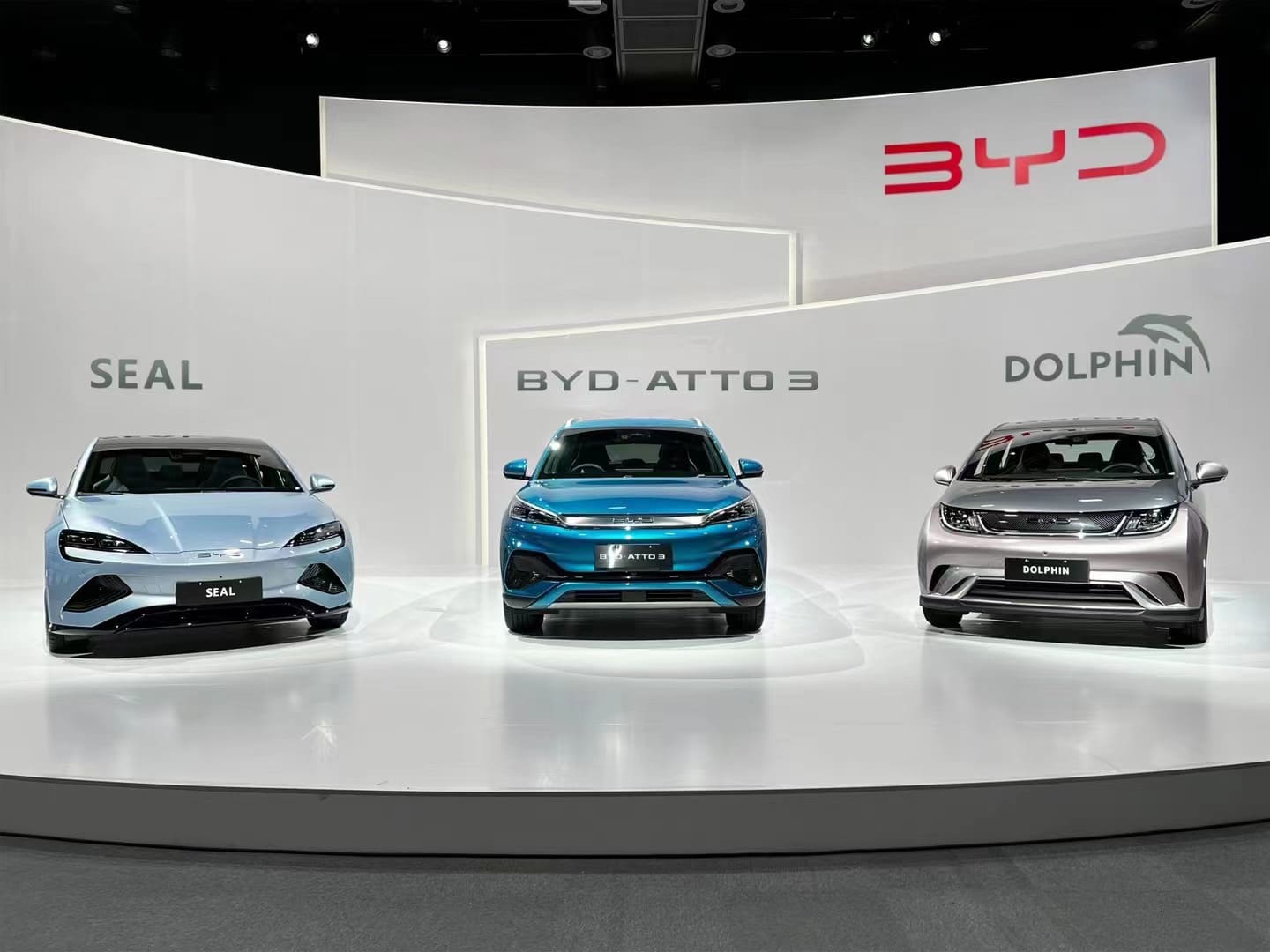
Electrek reports that BYD’s Executive Vice President Stella Li recently made some fairly aggressive remarks regarding North American production and the consolidation of the global auto industry.
This chapter of the story actually begins with the rupture between the US and Canadian arms of the North American auto industry. For a century, auto production has been a binational affair—manufacturing plants and suppliers are located on both sides of the border (and now in Mexico too). More recently, the current US government’s bellicose attitude towards our northern neighbor (and possibly its “back to the past” attitude towards automotive technology) has caused Canada to reverse years of industrial policy and slash tariffs in order to allow a limited number of Chinese EVs into its market.
The Chinese are wasting no time—three automakers aim to sell cars in the Canadian market by the end of 2026, Automotive News reports. Now the world’s largest EV maker has announced ambitions to go further. Ms. Li told Bloomberg that BYD is considering building a wholly owned manufacturing plant, and possibly even acquiring a struggling legacy automaker.
Canada has been courting Chinese automakers, encouraging them to invest in local production via joint ventures with Canadian companies, but Ms. Li told Bloomberg that BYD isn’t interested in a JV, but rather in owning and operating its own Canadian facility. This should be no surprise, considering that BYD is perhaps the most vertically-integrated automaker in the world. It manufactures its own batteries, motors, semiconductors—just about everything except tires and glass.
BYD’s international expansion is gathering speed—the company is now ramping up production at its vehicle factory in Hungary, and considering building a second facility in Turkey. Mexico is another region targeted for massive expansion—BYD already controls around 70% of Mexico’s plug-in vehicle market share, and is angling to buy a plant from a Nissan-Mercedes JV (they’re selling due to the tariff situation and Nissan’s financial troubles).
Thanks to a combination of US anti-industrial policy, corporate short-sightedness and our old friend the Innovator’s Dilemma, packs of electric Chinese dragons are now at our front and back doors.
Worse yet, one may soon force its way into the kitchen. Ms. Li raised some journalistic eyebrows with her assertion that BYD is evaluating potential acquisitions of existing automakers. She named no names, and acknowledged that there is no deal currently in the works, but said her company is “open to every opportunity.”
And opportunities are out there. As Electrek’s Fred Lambert sees it: “Several American, European, and Japanese manufacturers are struggling under the financial strain of maintaining both combustion and electric vehicle product lines simultaneously. Legacy automakers from Detroit to Tokyo are hemorrhaging cash…Some of them won’t survive the transition.”
Ford, GM, Stellantis and Honda all recently wrote off tens of billions after cancelling EV programs. The automakers (and most of the media) have blamed the debacle on declining demand for EVs. However, some suspect that it has more to do with declining political support for EVs—a problem that BYD does not have to deal with.
Source: Electrek










 EV Engineering Webinars & Whitepapers
 EV Tech Explained