




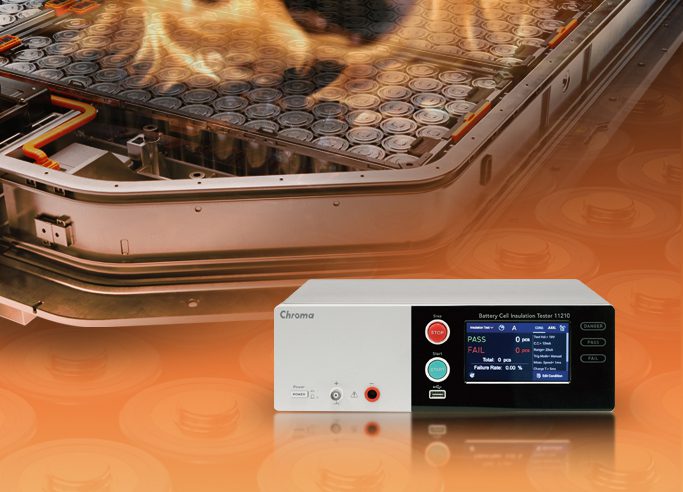
Lithium-ion battery technology has played a significant role in the advancement of electric vehicles and other consumer electronics. As market competition intensifies, manufacturers are striving to achieve higher power densities and production throughput. While lithium-ion technology has matured, electrical shorts can still develop inside the cell after passing production tests due to burrs or particles on the positive electrode reaching the negative electrode after inflation occurs. If these cells, which are susceptible to failure, reach the end user, the results could be catastrophic.
In order to decrease the risk of failure in the field, the root cause must be identified and any defective cells must be filtered out before they reach the end user. You may be surprised to learn that traditional Hipot and IR tests fail to catch future failures. So how do you properly identify the root cause which makes a cell susceptible to a greater risk of failure?
Join this webinar at our March Virtual Conference on EV Engineering, presented by Chroma, to learn how to identify and mitigate these occurrences in the dry cell stage before electrolytes are introduced.
Mar 10, 2026, 12:30 pm EDT
Register now—it’s free!
See the complete session list for the Virtual Conference on EV Engineering here.
Broadcast live from March 9 to 12, 2026, the conference content will encompass the entire EV engineering supply chain and ecosystem, including motor and power electronics design and manufacturing, cell development, battery systems, testing, powertrains, thermal management, circuit protection, wire and cable, EMI/EMC and more.












 EV Engineering Webinars & Whitepapers





 EV Tech Explained