




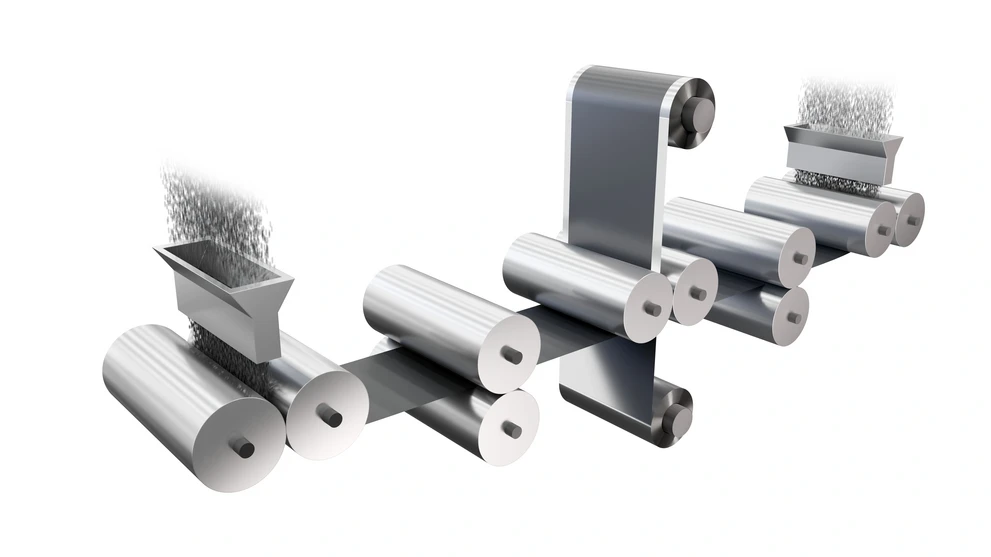
Dürr has announced the development of X.Cellify DC, a dry electrode coating process that forms a free-standing film of active battery material, which is fully recyclable until it is laminated onto the collector foil. The company says this approach reduces active material waste in battery electrode production, and its proof-of-concept confirms the technology’s reliability, scalability,and suitability for lithium-ion battery electrodes, with potential applications in solid-state battery manufacturing in the future.
Conventional electrode manufacturing primarily uses wet coating, in which slurry is applied to metal foils and then dried in an energy-intensive process. X.Cellify DC replaces this with a solvent-free process that uses a dry powder mixture. The dry battery material is pressed into a film via the Activated Dry Electrode process, supplied by development partner LiCAP Technologies. The process stages include dosing, film formation, densification and lamination onto the collector foil.
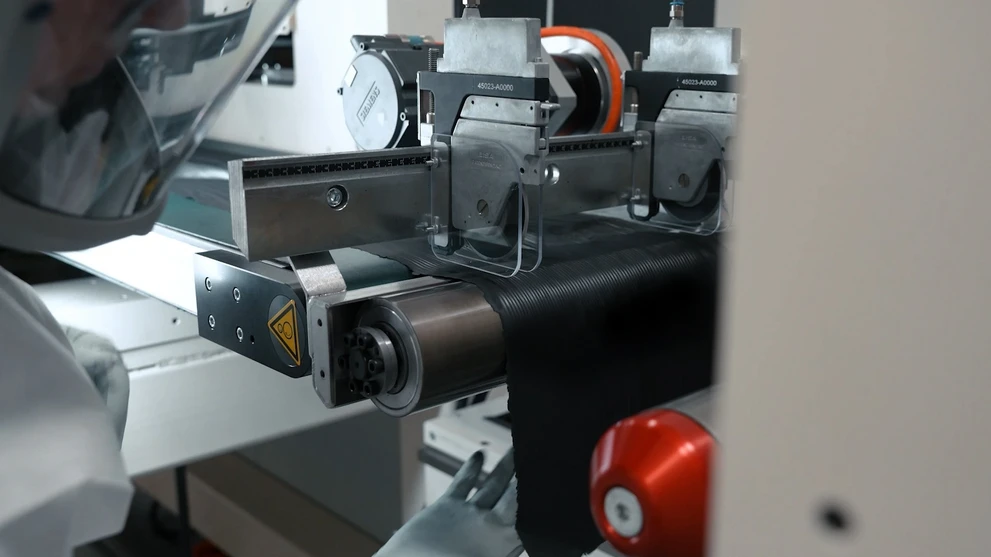
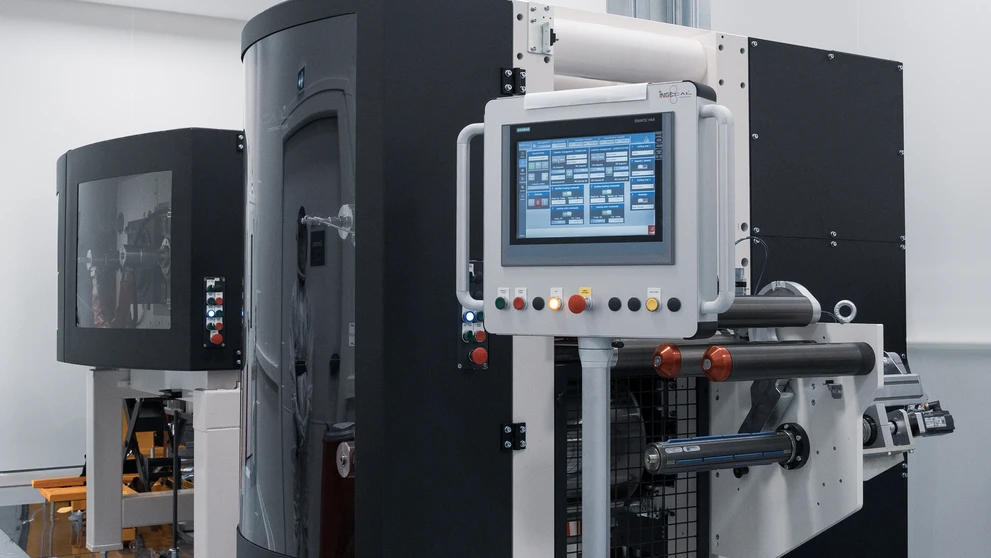
Dürr says that dry coating with X.Cellify DC offers notable process advantages for battery manufacturing, including reductions in required production space by up to 65 percent and energy consumption by up to 70 percent. These savings are attributed to the elimination of drying ovens and solvent recovery systems.
The method also enables a closed loop for quality control, as the free-standing film can be recycled within the manufacture line if it fails to meet specifications, reducing scrap of active materials. The system’s web guidance design allows transport of the self-supporting film and compacts it before lamination onto the current collector.
“The successful proof of concept is a major step forward for us. We have demonstrated that the new kind of dry coating with free-standing film works reliably and delivers consistently good quality. It can be scaled up, making it the basis for initial pilot projects in industry,” said Bernhard Bruhn, Vice President of Dürr’s Global Business Unit LIB. “Since we don’t need a carrier foil until the final step, we can return the film to the process in its entirety if it does not meet the desired specifications. Thanks to the closed loop, no valuable active material is lost and we significantly reduce waste – an important point in battery production.”
Source: Dürr







 EV Engineering Webinars & Whitepapers





 EV Tech Explained