



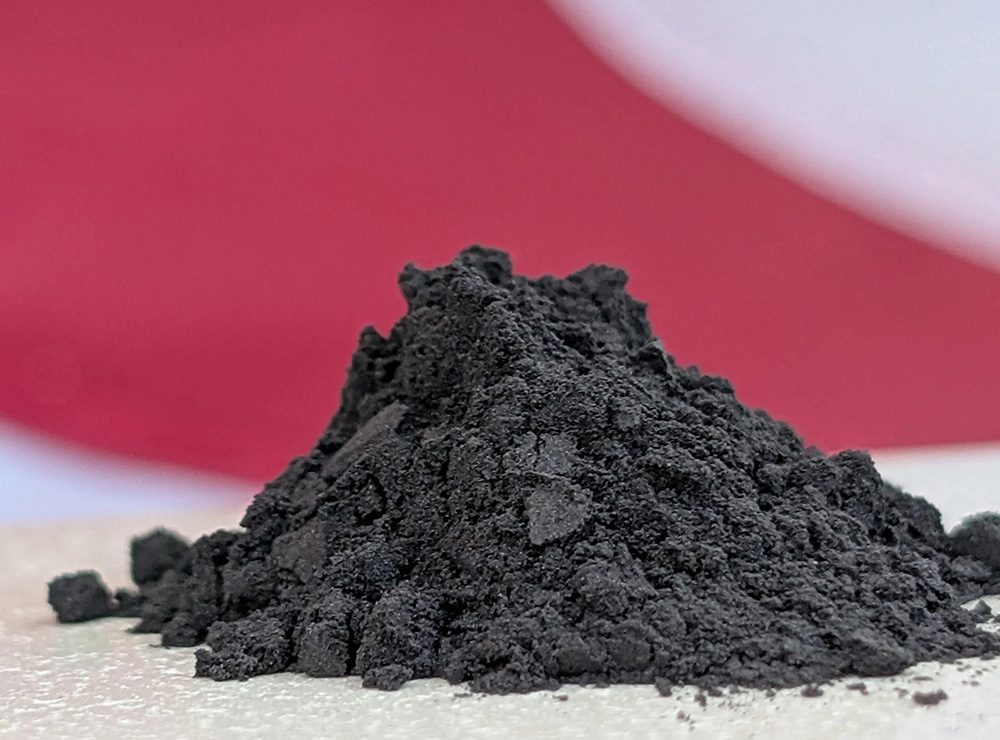
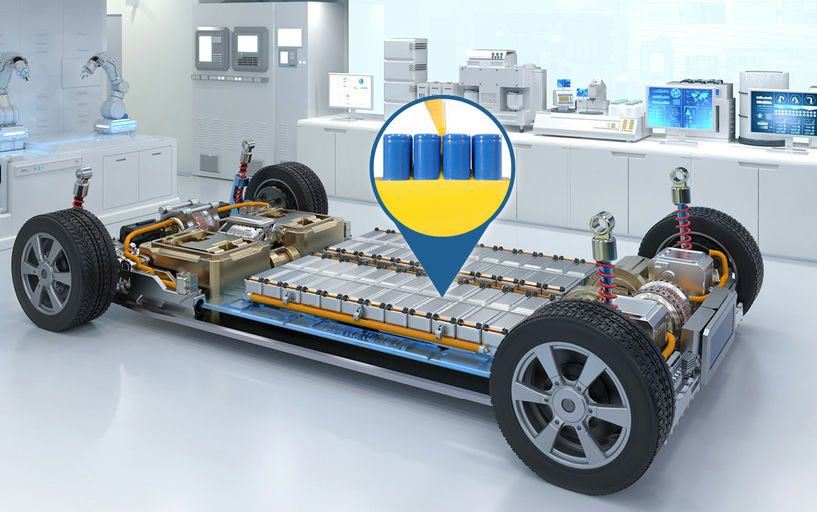
University of Central Florida (UCF) research suggests that C-BATT’s Obsidia battery anode material could help solve material swelling during cycling, which is one of the most persistent causes of failure in lithium-ion batteries.
The results of the research show that Obsidia exhibits lower swelling during lithiation than graphite anode material. When battery materials swell during charge and discharge, repeated volume changes cause them to crack and break down over time, eventually leading to cell failure. Reduced swelling means batteries can last much longer, making them more reliable and cost-effective.
In testing led by UCF professor Dr. Akihiro Kushima, powder particles of pure Obsidia showed approximately 5% swelling during initial lithiation and de-lithiation. Graphite typically swells around 11%, while high-capacity materials such as silicon can swell by up to 300%.
“Swelling is a major cause of cell failure, and these results are a very encouraging sign,” said Dr. Kushima. “Our measurements show that Obsidia experiences very low swelling compared to traditional materials, which is a strong indicator that it could support much longer-lasting batteries.”
The research was funded in part by a matching grant from the Florida High Tech Corridor.
C-BATT is a joint venture between CONSOL Innovations and X-BATT, and has a lab in Oviedo, Floraida, close to the University of Central Florida. The company plans to use CONSOL Innovations’ domestically sourced carbon resources.
“These results are an important milestone for C-BATT,” said Bill Easter, Vice President of C-BATT. “Testing from UCF helps confirm that US-made Obsidia can significantly reduce swelling, which is key to building batteries that last longer, perform better, and ultimately cost less for consumers. As of right now, it appears that Obsidia is the only anode material on the horizon that has significantly more lithium storage capacity than graphite (greater than 500 mAh/g) but less inherent material swelling than graphite. We plan to further prove out this significant advantage by conducting electrode swelling tests, larger cell builds, and more independent third-party testing.”
Source: C-BATT









 EV Engineering Webinars & Whitepapers






 EV Tech Explained