





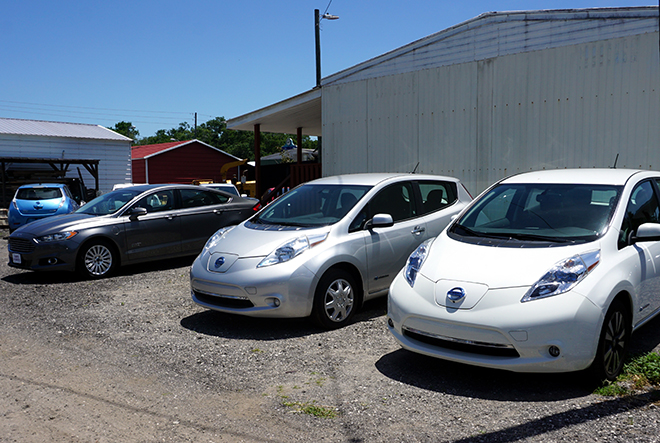
EVs haven’t been around long enough, or in great enough numbers, for any large-scale market in replacement batteries to develop. However, Toyota’s Prius hybrid went on sale in the US in 2000, and has sold well over two million units. There’s a lively market for replacement batteries, with both OEM and aftermarket options available. For… Read more »
Search Results Found For: "lithium metal"
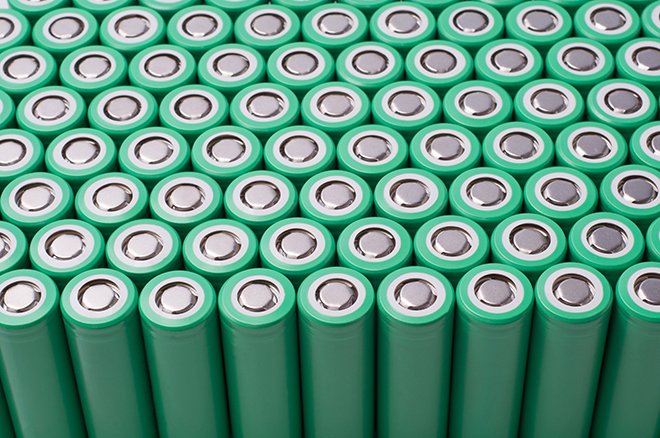
Penn State researchers develop cold-weather fast charging method for Li-ion batteries
Fast charging cold Li-ion batteries comes with the risk of lithium plating. When metallic lithium is formed in a battery, it can severely reduce battery lifespan and increase instability. Researchers from Penn State have suggested a solution to that problem that can provide 15-minute fast charging and a twelve-year battery lifespan in temperatures as low as… Read more »

2019 Jaguar I-PACE: An apex brand pounces on the electric crossover scene
Believe it or not, we may have a BEV SUV turf war on our hands. Many of the major automakers have announced plans to produce all-electric crossovers, including Mercedes, Volvo, Hyundai, Kia and Volkswagen – not to mention the onslaught startups like SF Motors, Faraday Future, Byton and Rivian. The all-electric Audi e-tron SUV is… Read more »
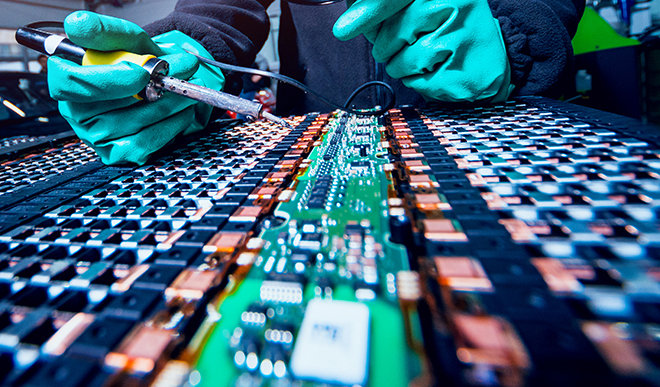
How to protect circuits in battery management systems
Sponsored by Littelfuse By Carlos Castro, Global Director Marketing Automotive Electronics, Littelfuse, Inc. As hybrid and electric vehicles roll closer to battery power drive systems with 48V or higher, the lithium-ion battery in a closed system is the clear leader for power. Lithium-ion gets high marks in cost, energy efficiency, temperature performance, power-to-weight ratio and lifecycle…. Read more »
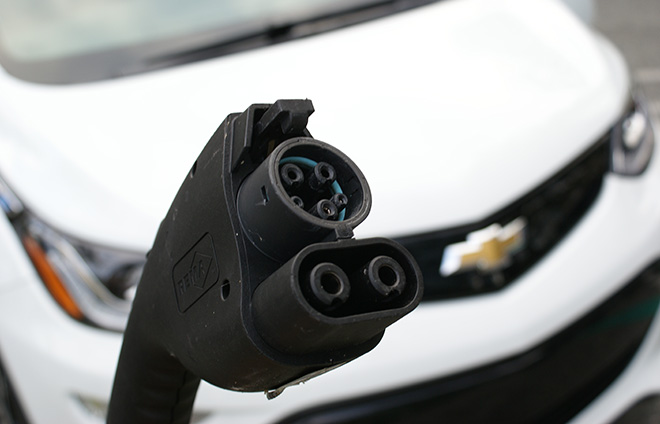
DOE awards $19 million for extreme fast charging research
The DOE is awarding $19 million in funding to 12 cost-shared research projects focused on “extreme fast charging,” which is defined as a system with power levels up to 400 kW and typical charging times of 15 minutes or less. Nine of the selected projects focus on advanced anodes, electrolytes, and battery cell designs: UC… Read more »

Wildcat sorts through the avalanche of new battery materials to find the best
As automakers and cell manufacturers begin to realize the complexity of benchmarking new battery materials, Wildcat Discovery Technology is using its high-speed R&D technology to help find clarity If you follow battery technology news on a regular basis as we do, it’s easy to get overwhelmed by the volume of new announcements. There are… Read more »

Between the wheels: AxleTech goes electric
Can a company that’s 100 years old be called a startup? Mary Petrovich, Executive Chairman of AxleTech, certainly thinks so. AxleTech was founded in 1919 as Wisconsin Custom Built Axles, and has seen a century’s worth of sales, acquisitions, and rebrandings since then. Petrovich herself brought AxleTech back from the brink of failure not once,… Read more »
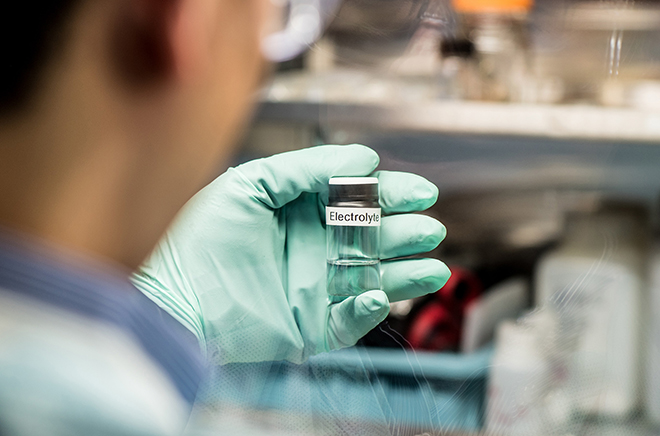
PNNL research finds that optimal salt concentration increases battery life
Researchers at the DOE’s Pacific Northwest National Laboratory have discovered that the “special sauce” of batteries is all about the salt concentration. By getting the right amount of salt right where they want it, they’ve demonstrated that a lithium-metal battery can undergo about seven times more charge/discharge cycles than batteries with conventional electrolytes. Finding an electrolyte solution… Read more »
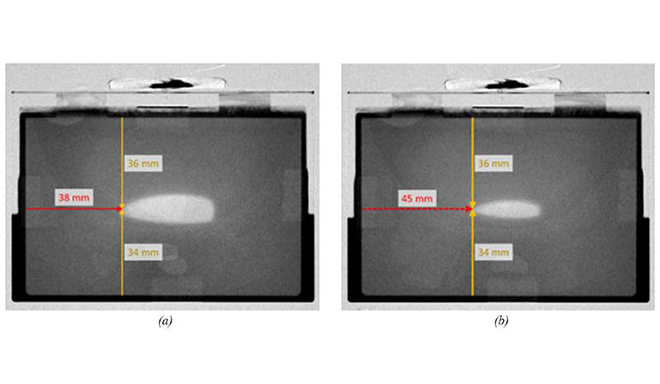
Neutron imaging improves battery filling process
Researchers from Bosch, the Technical University of Munich, and the University of Erlangen-Nuremberg are using neutron imaging to analyze the filling of lithium-ion batteries with electrolytes. Since very few neutrons are absorbed by the metal battery housing, they are ideal for analyzing batteries. In “Visualization of electrolyte filling process and influence of vacuum during filling… Read more »
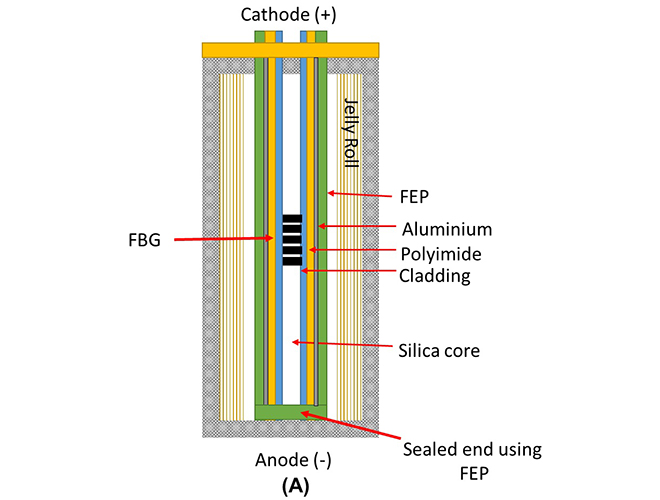
New Li-ion battery sensor tech promises 5x faster charging
According to researchers at the University of Warwick (UK), a new testing technique they have developed shows that commercially available lithium-ion batteries can safely be charged up to five times faster than currently recommended. In a paper entitled “Understanding the limits of rapid charging using instrumented commercial 18650 high-energy Li-ion cells,” published in the journal Electrochimica… Read more »