


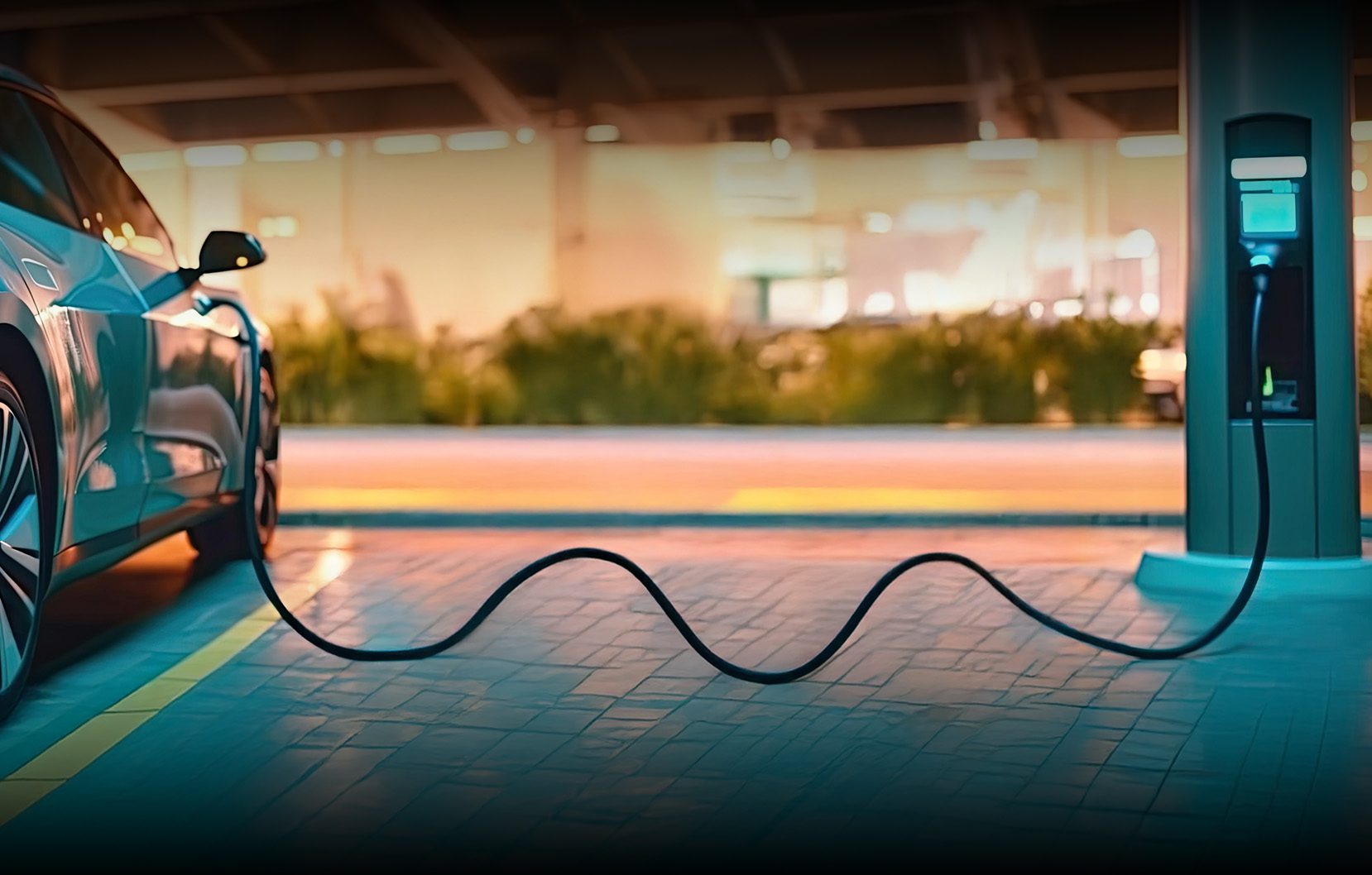





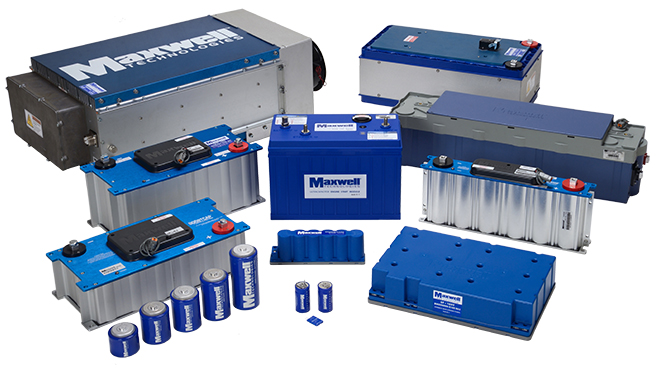
Tesla plans to acquire Maxwell Technologies at a price of $4.75 per share, or approximately $218 million. The merger, which was unanimously approved by Maxwell’s board of directors, is to be finalized around the second quarter of 2019. Maxwell is based in San Diego and has about 380 employees. The company will be familiar to… Read more »
Search Results Found For: "stanford"

Indian truck builder developing battery swapping system for electric buses
Ashok Leyland, India’s second-largest truck-maker, has announced a partnership with startup SUN Mobility to develop a battery swapping system for electric buses. The initial focus will be on city transit buses, followed by smaller delivery trucks, inter-city buses and long-haul trucks, Ashok Leyland CEO Vinod K Dasari told The Mint. SUN Mobility is led by… Read more »

California Energy Commission awards $36 million for clean transportation projects
The California Energy Commission has awarded more than $36 million in grants for various clean energy transportation projects. The South Coast Air Quality Management District and Long Beach Harbor Department received $10 million each and the Los Angeles Harbor Department received $4.5 million to conduct field demonstrations of medium- and heavy-duty vehicles and cargo handling… Read more »

Tesla founders Martin Eberhard and Marc Tarpenning talk EVs
Here’s a treat for any EV fan: a long and meaty talk with Tesla founders Martin Eberhard and Marc Tarpenning, delivered at Stanford last October. While there are several substantial talks with Tarpenning available on YouTube (he also graciously granted me a lengthy interview for my book about Tesla), Martin Eberhard has seldom sat down… Read more »
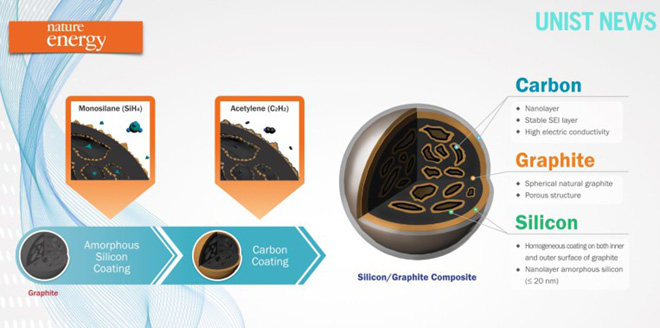
Researchers demonstrate Li-ion anode with silicon-nanolayer-embedded graphite/carbon
Larger figure Researchers from South Korea’s Ulsan National Institute of Science and Technology (UNIST) and Stanford University have demonstrated the feasibility of a hybrid anode for Li-ion batteries using silicon-nanolayer-embedded graphite/carbon. In “Scalable synthesis of silicon-nanolayer-embedded graphite for high-energy lithium-ion batteries,” published in Nature Energy, Minseong Ko and colleagues explain that this architecture allows compatibility… Read more »

The inevitability of electric buses
Electric transit buses enter the fast-follower market stage as the leaders work to remove the last barriers to adoption. Q&A with Proterra’s Ryan Popple and ABB’s Daan Nap on the state of the market and charging standards in North America and Europe. With each passing year, more decision makers are realizing that city buses are an… Read more »
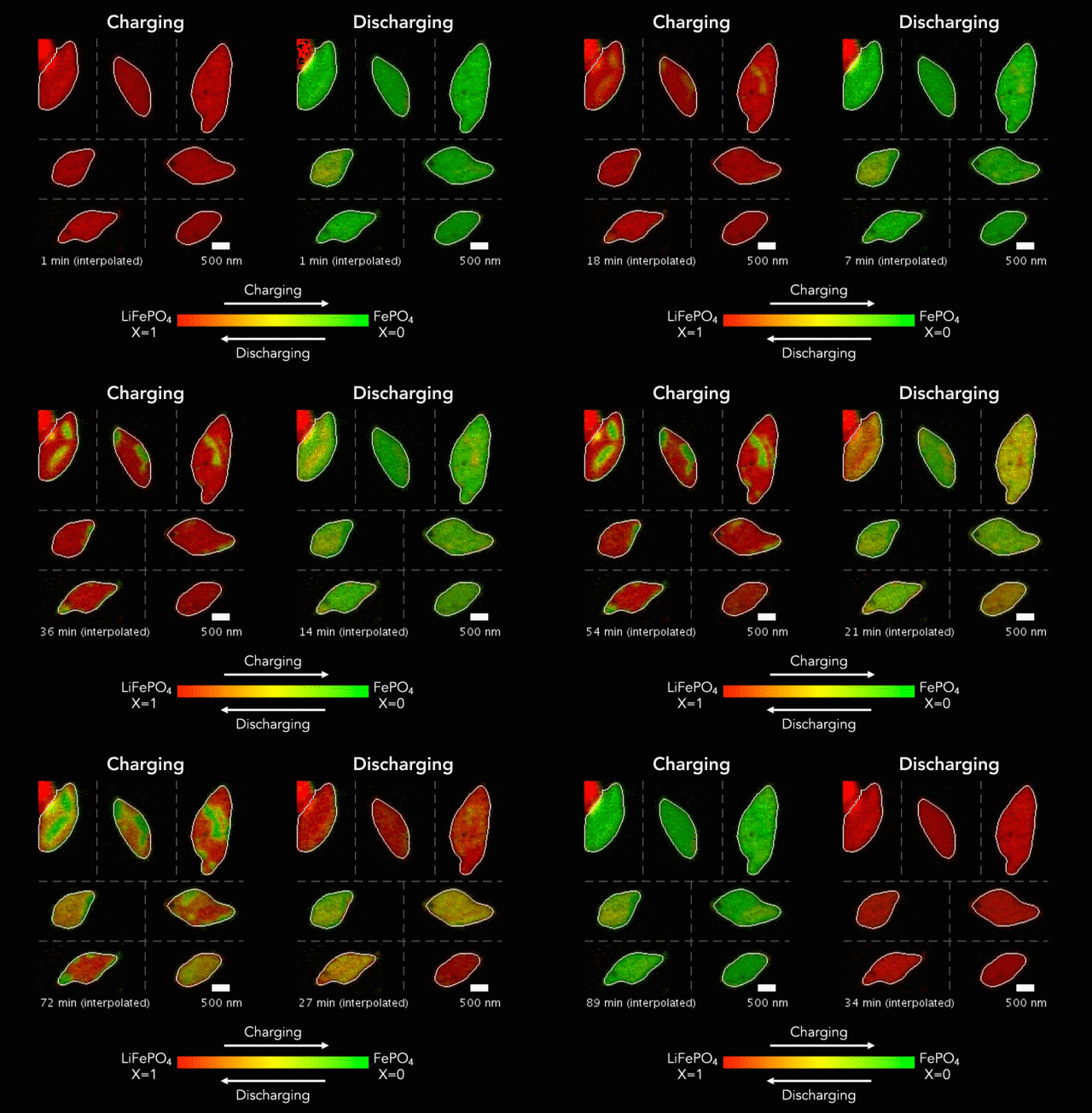
New X-ray microscopy technique reveals the secret life of batteries
In pursuit of their quest for more capable batteries, scientists are searching for better ways to observe battery particles as they charge and discharge in real time. A new technique developed at Berkeley Lab’s Advanced Light Source is providing researchers with nanoscale images of the electrochemical reactions that make lithium-ion batteries do their thing. In… Read more »
Graphene cages could be the key to silicon anodes
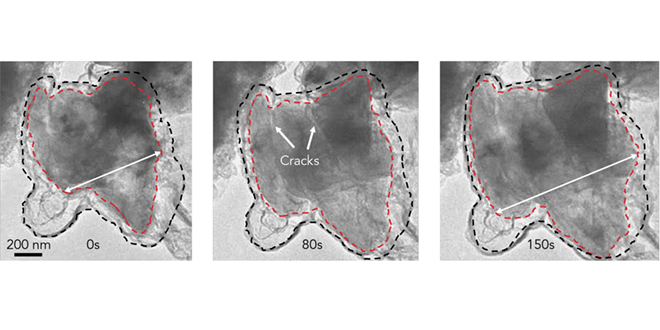
Battery boffins are buzzing about silicon anodes, which could store up to 10 times more energy than today’s anodes. The catch is that silicon particles tend to swell and crack during cycling, and to react with the electrolyte in unwanted ways. Now a team from Stanford University and the Department of Energy’s SLAC National Accelerator… Read more »
Two-level cathode structure improves battery performance
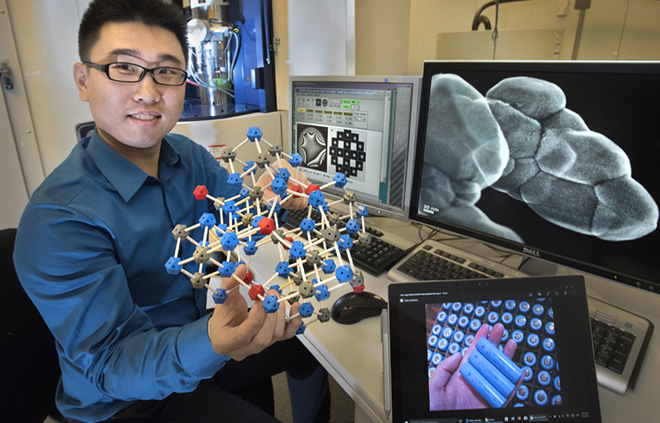
As the search for a better battery grinds on, a lot of the attention is focused on potential cathode materials. Nickel is one possibility that shows a lot of promise – its drawback is that it is unstable and tends to have destructive reactions with the electrolyte. Now a team of scientists from the Brookhaven… Read more »
New material shuts down batteries at high temperatures and restarts when it cools
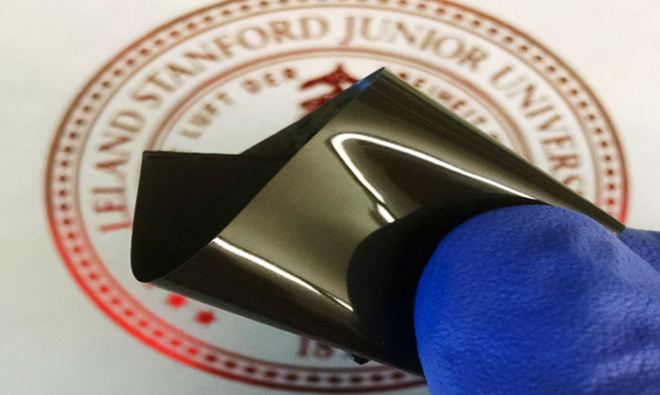
Stanford researchers have invented a new technology that could eliminate thermal runaway in high-energy-density batteries. Thermal runaway refers to a chain reaction in which an increase in temperature causes further increases in temperature and uncontrollable release of energy. In “Fast and reversible thermoresponsive polymer switching materials for safer batteries,” published in Nature Energy, Professor Zhenan Bao and… Read more »