








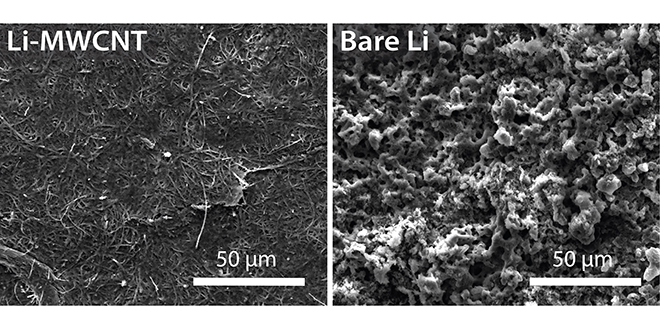
Carbon nanotubes could make high-powered, fast-charging lithium metal batteries an alternative to lithium-ion batteries, according to new research from Rice University. In a paper published this month in the journal Advanced Materials, the researchers show how a carbon nanotube film can be used to keep batteries safe from dendrites, spear-like protrusions that naturally form on… Read more »
Search Results Found For: "NANO ONE"
Sila Nano raises $70 million in funding for silicon-dominant battery anodes
Battery specialist Sila Nanotechnologies has received $70 million in Series D funding from Sutter Hill Ventures, Next47 (backed by Siemens), and Amperex. Sila Nano will use the funding for the development and commercialization of its silicon-dominant anodes. Overall, Sila has raised $125 million from investors including Bessemer Venture Partners, Chengwei Capital, Matrix Partners, Samsung, and… Read more »
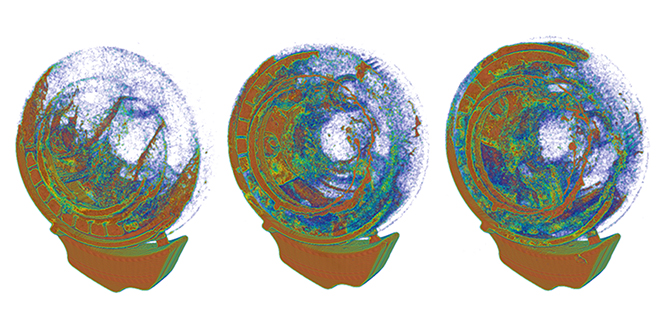
nanoFluidX models lubrication flow to reduce drivetrain drag losses
Engineering consultancy Drive System Design (DSD) has partnered with software specialists Altair and FluiDyna to develop and enhance nanoFluidX, a computer modelling technique that is used to analyze lubrication flow. DSD uses nanoFluidX to reduce drivetrain drag losses, which the company says represent the largest energy draw on the battery pack at speeds up to… Read more »
Solving the energy density challenge with single wall carbon nanotubes
Sponsored by OCSiAl Group Li-ion batteries represent the most dynamic and fastest growing battery market, with total sales of $10 billion in 2015 [i]. Historically, the primary challenge for battery manufacturers has been the constant demand for greater energy density, both volumetric and gravimetric. Li-ion’s dramatic rise is in large part due to solving this challenge more… Read more »
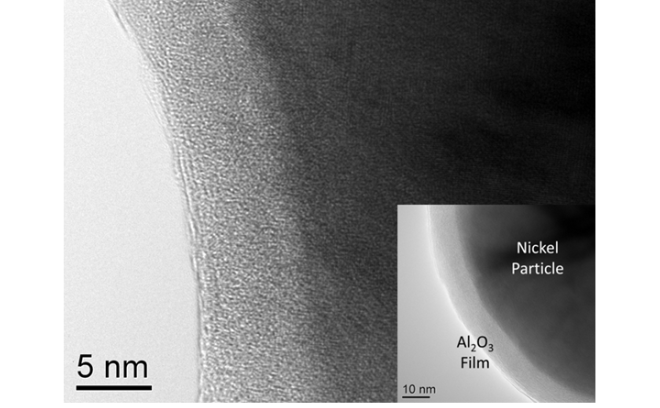
Argonne NL licenses continuous ALD technology to Forge Nano
Argonne National Laboratory has granted an exclusive license to Colorado-based nano-coating specialist Forge Nano to commercialize Argonne’s patented system for continuous atomic layer deposition. Atomic layer deposition (ALD) is a process that deposits a uniform, ultrathin encapsulating coating around any material. It can be used to upgrade materials such as powders utilized in lithium-ion batteries,… Read more »
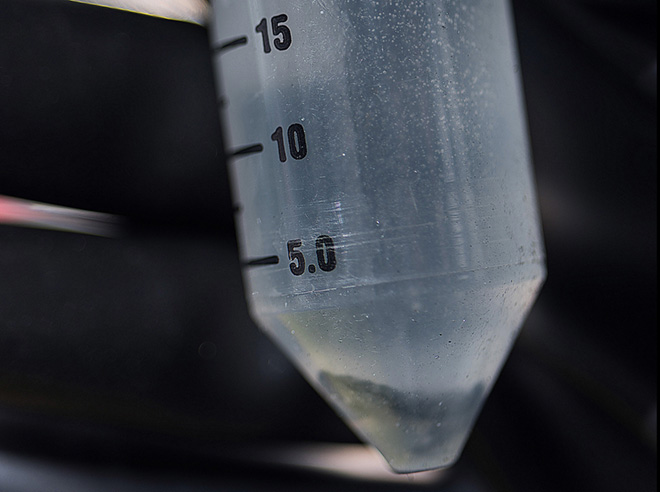
Converting bulk alloys to oxide nanowires could produce cheaper battery membranes
Image: Alloy in solvent A simple technique for producing oxide nanowires directly from bulk materials could dramatically lower the cost of producing the one-dimensional (1D) nanostructures. That could enable the production of thermally stable, strong battery membranes able to withstand temperatures of more than 1,000° C. In “Transformation of bulk alloys to oxide nanowires,” recently published… Read more »
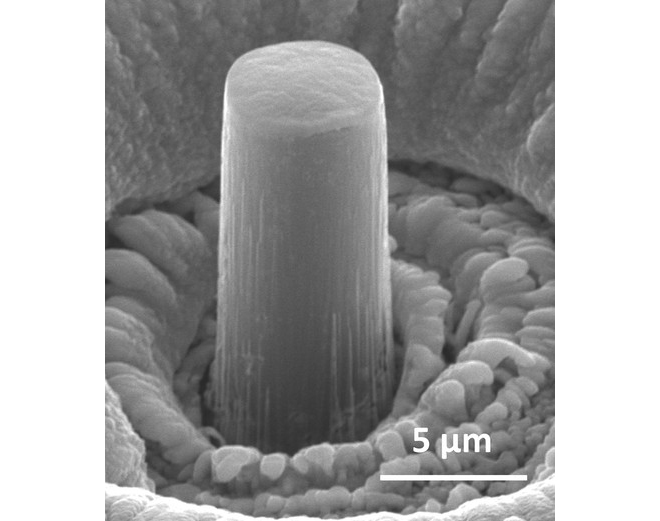
Nanoscale measurement of lithium metal could lead to suppressing dendrite formation
Lithium metal, which can store more energy than carbon, would seem to be an ideal anode material, except for one serious flaw: dendrites, tiny needle-like branching structures that can grow through the battery, eventually causing a short circuit. Now, a joint team of researchers from Caltech and Carnegie Mellon University has measured the strength of… Read more »
$20 million in Series A funding for Forge Nano’s precision nano-coatings
Forge Nano, formerly PneumatiCoat Technologies, is a Colorado-based startup that has developed a technology to enable precision nano-coatings at scale for manufacturing of Li-ion battery materials. The company recently closed a Series A investment of $20 million to expand its manufacturing capacity and fuel its growth. A nano-coating is an ultra-thin layer that improves how… Read more »
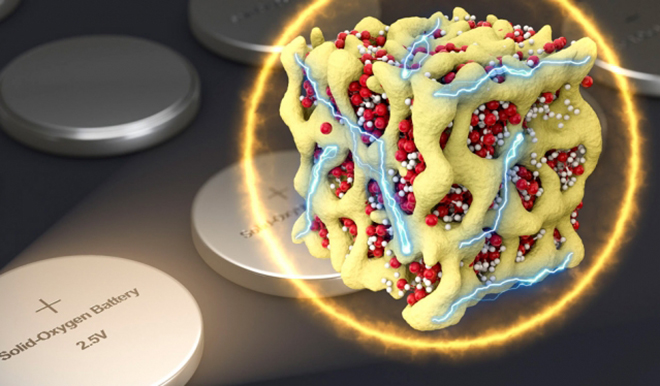
Researchers use nanolithia to improve efficiency and longevity of lithium-air batteries
Lithium-air, or lithium-oxygen, has been touted as the ultimate battery technology, because its theoretical energy density is ten times that of current lithium-ion solutions. However, scientists have struggled to overcome major challenges with the technology. The batteries waste a lot of energy as heat, degrade relatively quickly, and often require extra components to pump oxygen… Read more »
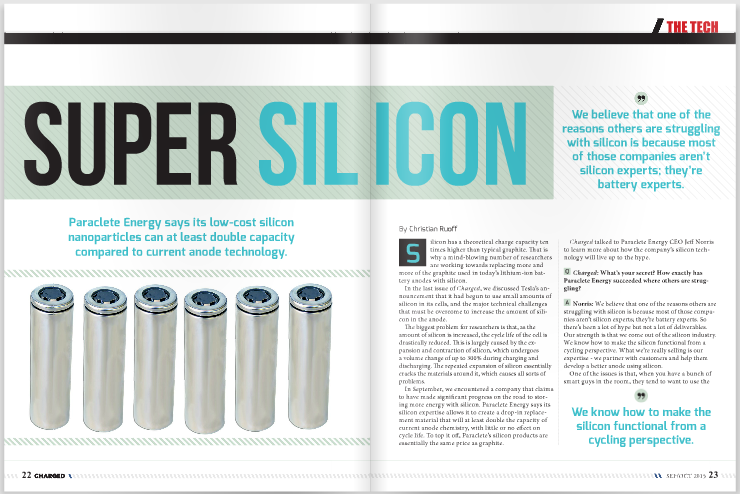
Paraclete Energy says its low-cost silicon nanoparticles can at least double your current anode capacity
Silicon has a theoretical charge capacity ten times higher than typical graphite. That is why a mind-blowing number of researchers are working towards replacing more and more of the graphite used in today’s lithium-ion battery anodes with silicon. In the last issue of Charged, we discussed Tesla’s announcement that it had begun to use small… Read more »