




Toshiba has launched four voltage-driven photorelays in a small S-VSON4T package that are rated for operation up to 135 °C, targeting test and burn-in gear that has to run hot to evaluate automotive-grade semiconductors. The new parts are the TLP3407SRB, TLP3412SRB, TLP3412SRHB and TLP3412SRLB, and Toshiba says volume shipments have started. As electrification and automated… Read more »
Newswire
AYK Energy’s 16 MWh Pisces+ battery will power Germany’s next Polarstern ice-class research ship
Marine battery maker AYK Energy has won a contract to supply what it calls the largest battery ever installed on an ice-class vessel: a 16 MWh Pisces+ system for Germany’s next-generation Polarstern polar research ship. AYK says the battery system will weigh 131 tonnes, be delivered in 2028, and support a vessel scheduled to enter… Read more »
New report finds port electrification strengthens global competitiveness
Port facilities represent a grove of low-hanging fruit when it comes to emissions reduction—ports are potent sources of local air pollution, but many classes of equipment and vehicles used in and around ports (including, as regular Charged readers know, terminal tractors) present near-ideal use cases for EVs. Port electrification can also deliver substantial economic benefits,… Read more »
Webinar: New strategies for high voltage fault management in next-gen EVs
As electric vehicles push toward more efficient and higher voltage architectures, the limitations of traditional fuse and contactor protection are becoming harder to ignore. False triggering, single‑use hardware, and complex redundancy add cost, weight, and downtime. This webinar addresses these challenges head‑on and introduces an innovative approach for high voltage fault management. Join the webinar… Read more »
Webinar: Designing batteries for upcoming regulations: no flame out, no explosion
China’s updated standards set one of the strictest global EV battery safety standards, requiring testing under extreme conditions. The European market and U.S. manufacturers are expected to follow. What tools do battery engineers need in order to balance battery performance and safety? To meet these regulations and help ensure battery thermal safety across all applications,… Read more »
Vector and Hubject improve electric bus preconditioning with with VDV 261
Vector Informatik has expanded its vCharM charging and energy management system with features aimed at making VDV 261-compliant preconditioning easier to deploy for electric bus fleets. Working with Hubject, Vector says it can now automate the certificate management required for secure VDV 261 communications, and its vCharM.edge hardware can support VDV 261 communication in existing… Read more »
Beam Global and HEVO launch wireless charging platform for autonomous EVs
Beam Global sells a versatile off-grid solar-powered EV charging solution. HEVO provides wireless charging hardware and a supporting software platform. Now the two companies have partnered to launch an integrated autonomous wireless charging system. The system is aimed at the autonomous vehicle (AV) sector, and is adaptable to a wide range of commercial EV fleet… Read more »
Harbinger acquires autonomous driving company Phantom AI
Harbinger, a manufacturer of medium-duty EVs (see our recent interview with CEO John Harris), has acquired autonomous driving company Phantom AI. The Phantom AI team of 30 employees will continue to operate in Mountain View, California. Harbinger will incorporate Phantom AI’s computer vision into its vehicles, enabling ADAS features such as emergency braking, adaptive cruise… Read more »
2026 Subaru Trailseeker EV first drive: the most Subaru-looking EV yet
The most Subaru of all the brand’s EVs is visually identifiable, competent off-road and on—and lighter than competitors. “When we showed them the side view, without any badges, and asked them what brand it was, everyone said, ‘It’s a Subaru!’,” said Garrick Goh. He’s the car line planning manager for the 2026 Subaru Trailseeker, the… Read more »
Dry electrode battery manufacturing: LiCAP says its solvent-free process can cut costs up to 50%
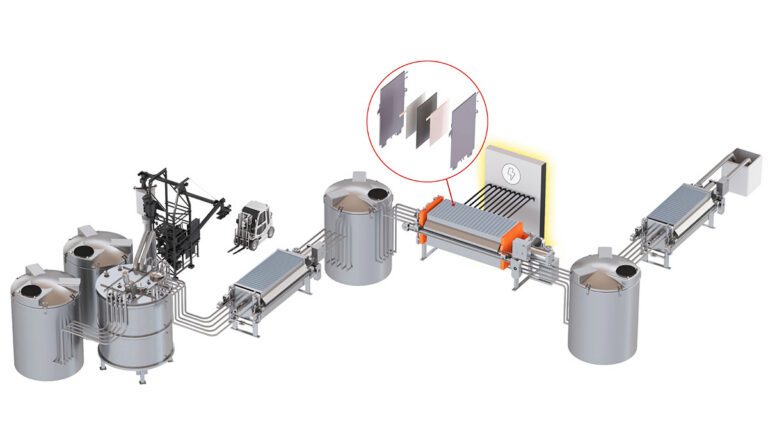
Drying out the EV battery manufacturing process. Reducing the cost of batteries is imperative #1 in today’s EV market. Battery costs have plummeted over the past few years, but by some estimates, the battery still accounts for roughly 40% of an EV’s total cost—and the higher upfront cost of EVs is the main impediment to broader adoption…. Read more »