






SOLiTHOR, a spin-off company from the Belgian research organization Imec, recently raised €10 million in a seed investment round led by Imec. The company will use the proceeds to develop and commercialize its solid-state battery cell technology. Imec has been investing in solid-state battery tech for 10 years, and aims to enable an assembly process… Read more »
Search Results Found For: "NANO ONE"

Canada’s Innovation Supercluster Initiative spurs $76 million in zero-emission vehicle investments
NGen Canada, a non-profit organization that promotes advanced manufacturing, has announced a series of new innovation projects to support the zero-emission vehicle (ZEV) manufacturing ecosystem in Canada. In 2021, NGen launched a call for proposals to support R&D projects for ZEV manufacturing, systems, components, and batteries. Now the organization has announced 15 new industry-led consortia… Read more »
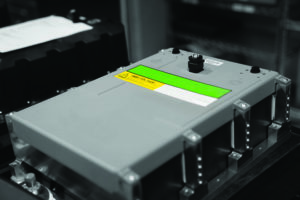
Solving shock and vibration challenges for EV electronics
Sponsored by Hutchinson Reducing the electrical conductivity of vibration isolators with elastomer solutions When it comes to the electric vehicle market, it’s not just consumer cars that are getting all the attention. While electrified automobiles such as sedans, pick-up trucks and SUVs are becoming increasingly popular choices among buyers, EVs for commercial purposes are also… Read more »
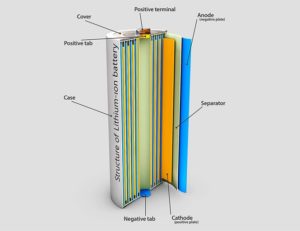
DOE study examines how plating causes battery degradation
A new study from DOE’s Argonne National Laboratory seeks to identify the reasons that DC fast charging accelerates battery degradation. The researchers gained some new insights into a process that can cause damage to the anode during charging and discharging. A paper based on the study, “Increased disorder at graphite particle edges revealed by multilength… Read more »

Amprius partners with US Army to develop silicon anode batteries for unmanned aircraft
Amprius Technologies has been awarded a contract with the US Army’s Rapid Capabilities and Critical Technologies Office. The 18-month rapid prototyping contract includes the design, development, and validation of high-energy-density silicon anode lithium-ion batteries to be used in unmanned aircraft system applications. Amprius offers a silicon anode battery with high energy density in commercially available… Read more »

Moscow deploys 800th electric bus, on the way to 1,000 by year-end
If someone asked you which of the world’s major cities has the most electric buses in operation outside of China, would your first guess be the capital of a country that’s one of the planet’s largest fossil fuel producers, and that seldom generates any EV-related news in the US press (except for an impractical plan… Read more »

Yet another generation of Tesla’s Full Self-Driving chip in the pipeline, to be produced by Samsung
As Tesla’s Full Self-Driving system slowly evolves, it seems to be requiring ever more computing power. Back in 2016, Tesla announced a hardware upgrade, including a new computer from Nvidia, which it said would enable full self-driving capability, with future software updates. Since then, Tesla has upgraded the computer twice. In 2019, it introduced the… Read more »
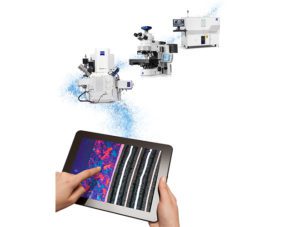
Accelerated battery analysis through connected microscopy
Sponsored by Zeiss Connecting different microscope types opens up completely new possibilities in quality assurance. In this way, the combination of light, X-ray, and scanning electron microscopes allows batteries for electric vehicles to be efficiently and accurately analyzed for faults. ZEISS solutions with coordinated hardware and inter-compatible data sets play a pioneering role here –… Read more »
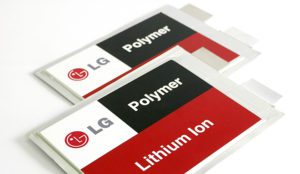
LG Chem to invest $5.3 billion in battery materials by 2025, aims to rule anode market
LG Chem plans to invest 6 trillion South Korean won ($5.3 billion) in battery materials by 2025, including efforts in anode materials, separation membranes, cathode binders, radiant adhesives and carbon nanotubes. LG Chem’s goal is to grow into the world’s largest comprehensive battery materials company, and to become the world’s number-one supplier of anodes. A… Read more »

Brookhaven researchers discover new approach to stabilizing high-nickel cathodes
High-nickel-content cathodes have captured the imagination of scientists, as they could enable much higher energy density. However, the high nickel content causes these cathode materials to degrade more quickly, creating cracks and stability issues as the battery cycles. A team of researchers at the DOE’s Brookhaven National Laboratory investigated the valence gradient of cathode materials… Read more »