




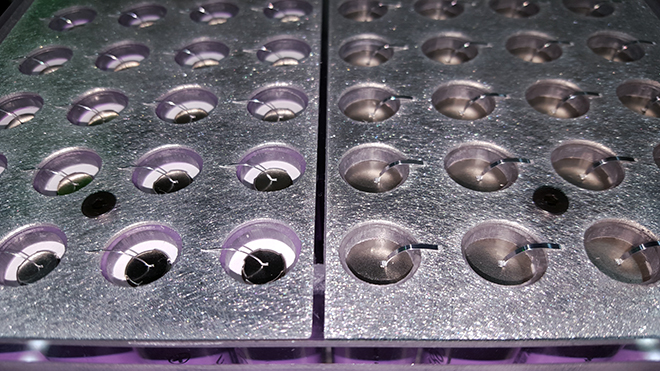
Sponsored by Kulicke & Soffa By: Peter Klaerner, senior manager for Wedge Bond Systems Engineering,Kulicke & Soffa Wire and ribbon bonding have traditionally been the methods of choice for creating reliable interconnects in the electronics industry. The progress in electric vehicle production has created the need for better, more reliable interconnects that can be scaled… Read more »
Search Results Found For: "MIT "
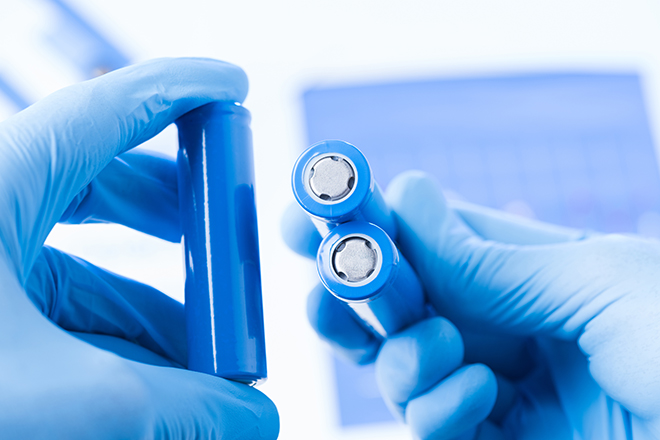
Umicore and Idemitsu Kosan team up to develop cathode material integrated with solid electrolyte
Umicore, a materials technology and recycling company, and oil company Idemitsu Kosan have reached an agreement to co-develop catholyte materials, which integrate cathode active materials (CAM) with solid electrolytes, for all-solid-state battery applications. Since Umicore began work on CAMs for solid-state batteries in 2017, it has established some patents in the area. “Based on more… Read more »
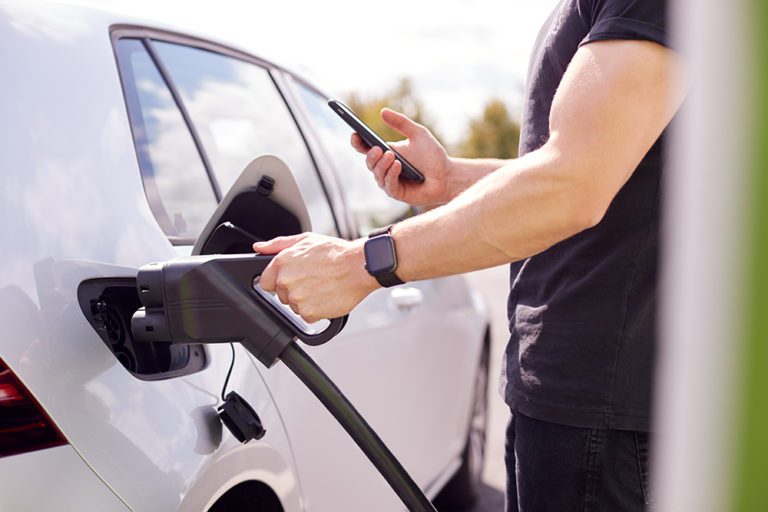
All 50 states, DC and Puerto Rico have submitted plans for national EV charging network
The National Electric Vehicle Infrastructure (NEVI) Formula Program, part of the Bipartisan Infrastructure Law (BIL) requires each state and territory to submit an EV Infrastructure Deployment Plan (EVIDP) in order to qualify for its share of the first round of the $5 billion of infrastructure formula funding (IFF) that will be made available over 5… Read more »
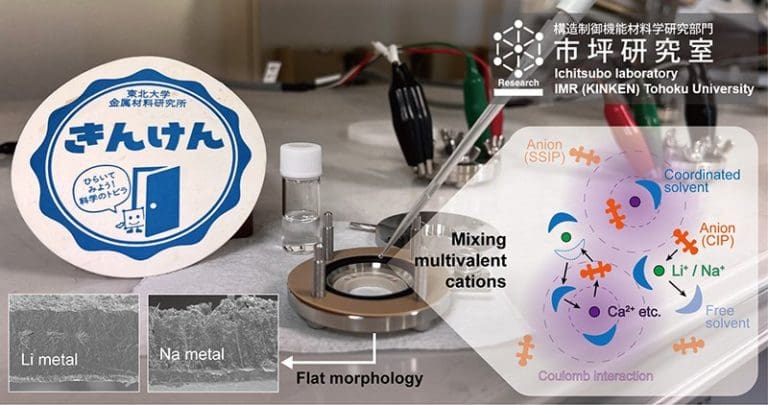
Researchers find additive can limit dendrite growth
A research team led by Dr. Hongyi Li and Dr. Tetsu Ichitsubo, both of Tohoku University in Japan, found that a multivalent cation additive can limit dendrite growth in rechargeable batteries by modifying the solvation structures of lithium or sodium ions in electrolyte. In an article published in Cell Reports Physical Science, the researchers say:… Read more »
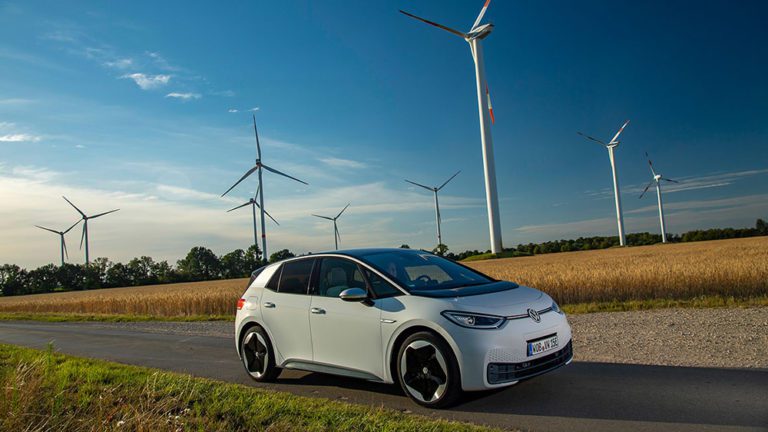
VW’s Elli and Mitnetz Strom launch pilot for smart grid/EV integration
Elli, a brand of the Volkswagen Group, and German grid manager Mitnetz Strom have launched a pilot project to test the integration of EVs with a smart electrical grid. The Innovation Impulse for Future-Proof Grid Integration of E-Mobility project is intended to provide insight into what a practical implementation of smart charging could look like…. Read more »
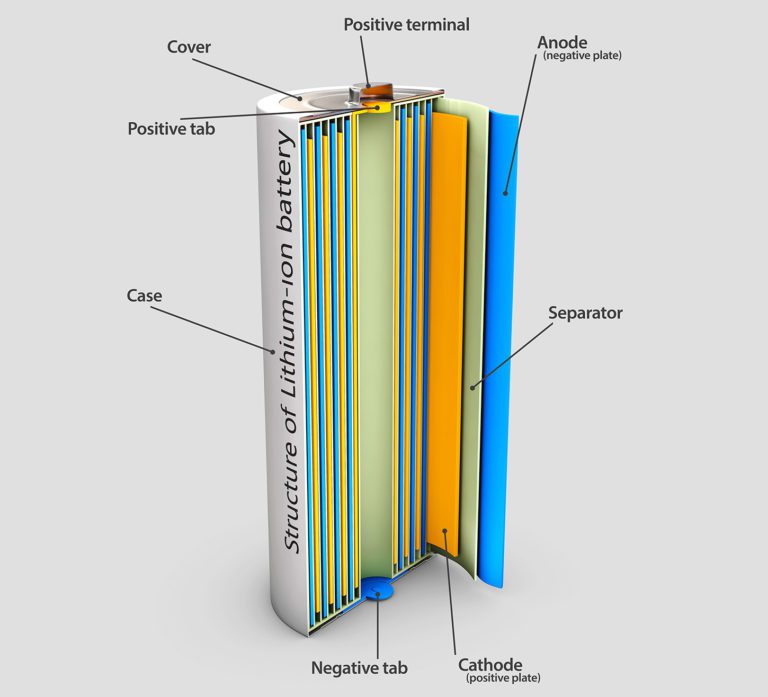
Mitsubishi Chemical Holdings expands its anode materials business
Mitsubishi Chemical Holdings Group (MCHG) plans to increase its production capacity of natural graphite anode materials in China from 2,000 tons to 12,000 tons per year. MCHG’s Chinese subsidiary Qingdao Lingda Kasei produces spherical graphite for the anode materials, which another Chinese subsidiary, Qingdao Anode Kasei, then uses to produce anode materials for lithium-ion batteries…. Read more »
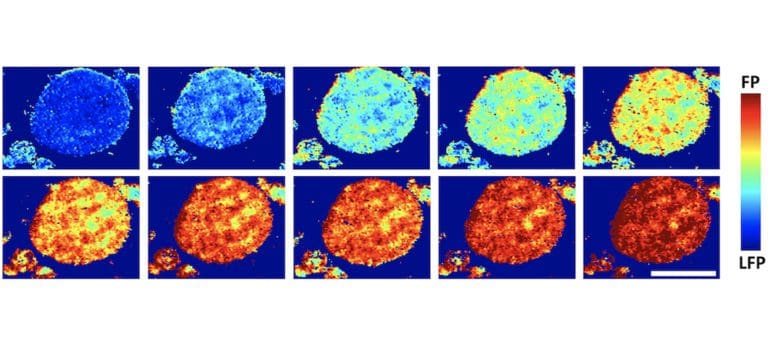
Rice researchers find misaligned crystallites in cathodes limit lithium flow
Researchers at Rice University have found that stress between misaligned crystallites in cathodes limits the flow of lithium. In an article published in ACS Energy Letters, the researchers write: “As an important battery cathode material, reaction distribution in lithium iron phosphate (LiFePO4) has been extensively studied in dispersed particle systems, but remains poorly understood for… Read more »

High Power EV Charge Profiles and Mitigation Studies
Long recharge times of EVs are considered one of the major impediments to widespread consumer adoption. As the entire industry is identifying solutions to meeting aggressive recharge targets, the Department of Energy and its National Laboratories are also actively working on characterizing High Power EV Charging progress, analyzing gird impacts, and developing mitigation strategies. This… Read more »