








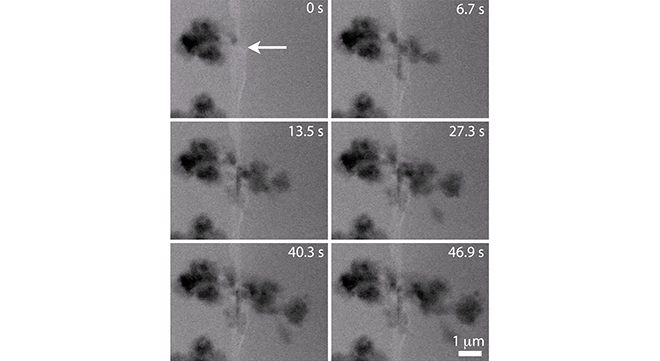
Scientists at the DOE’s Oak Ridge National Laboratory have captured the first real-time nanoscale images of lithium dendrite structures in lithium-ion batteries. The ORNL team is confident that its research, published in Nano Letters, will be of great benefit to scientists who are experimenting with different ways to tackle the dendrite problem. Dendrites form when… Read more »
Search Results Found For: "Performance Team "
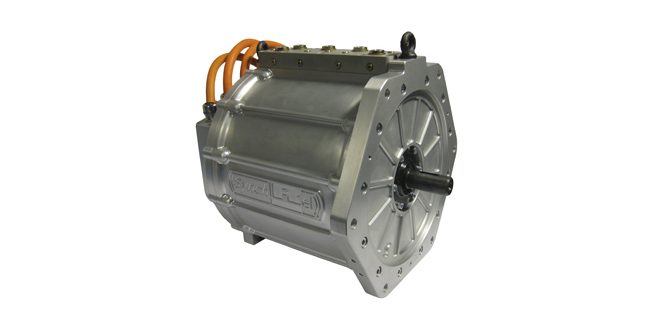
Next-generation switched reluctance motor uses no rare earth elements
Ricardo has developed a new prototype 85 kW synchronous reluctance motor designed for EV applications. Most EV motors use permanent magnets made from materials such as neodymium-iron-boron and samarium-cobalt. However, the rare earth elements in these compounds can be expensive and problematic to obtain. Switched reluctance motors, which do not use permanent magnets, show great… Read more »

$30 million in Federal grants to pay for Proterra electric buses
The Federal Transit Administration FTA recently distributed $55 million in grants to 10 transit agencies as part of a program to deploy US-made electric transit buses. More than half of that money will be going to South Carolina-based Proterra, the Greenville News reported. Six transit agencies in five states will buy a total of 28… Read more »
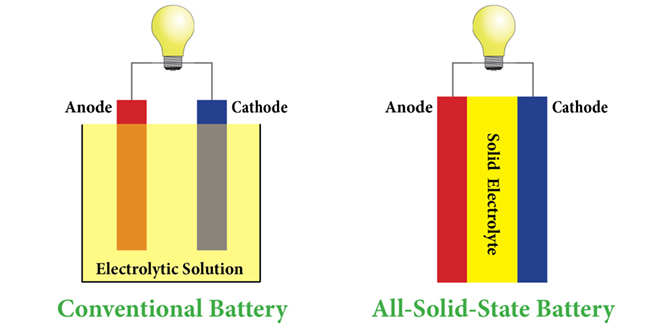
Beating the polysulfide shuttle to build a solid-state battery approaching theoretical capacity
The latest advance in lithium-sulfur technology comes courtesy of a research team from Samsung and the University of Rome, who have built a solid-state Li-S battery with a capacity (∼1600 mAhg−1) approaching the theoretical value and Coulombic efficiency approaching 99%. In a paper published in the Journal of The Electrochemical Society, the team concludes that… Read more »
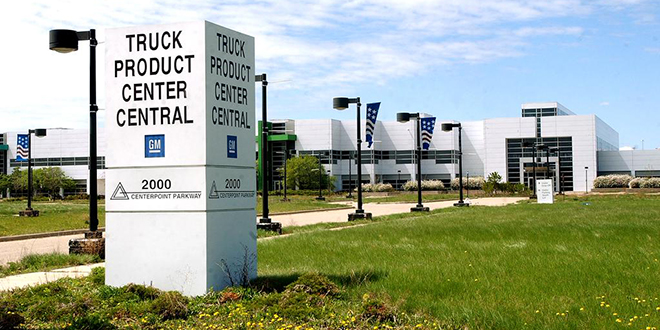
Energy Power Systems announces new Michigan battery manufacturing facility
Battery-maker Energy Power Systems plans to establish a high-volume manufacturing facility in Pontiac, Michigan. The new 150,000-square-foot facility will produce batteries for use in start/stop and micro-hybrid vehicles; utility-scale distributed energy storage; renewable energy integration; and fast-charging infrastructure for EVs. Full-scale production is expected to begin in early 2016. Initial annual capacity will be 500… Read more »
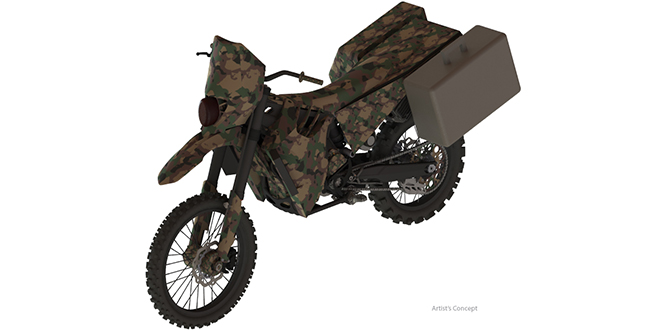
Logos wins DARPA funding for SilentHawk hybrid military motorcycle
The Defense Advanced Research Projects Agency (DARPA) has awarded funding to Logos Technologies to continue development of the SilentHawk military motorcycle in partnership with California’s Alta Motors (formerly BRD). In Phase I of the project, Logos and Alta tested Alta’s existing RedShift MX electric motocross bike in multiple terrains and riding conditions to understand the… Read more »

2015 VW e-Golf ushers in an era of interchangeable drivetrains for every Volkswagen model
Rising above the waters of the Mittelland Canal in Wolfsburg, Germany, four iconic smokestacks cut through an otherwise sparse skyline. These are the most recognizable – and among the last – vestiges of the original Volkswagen factory from 1938. Symbolically, however, the smokestacks represent much more than the symbols of a power plant that –… Read more »
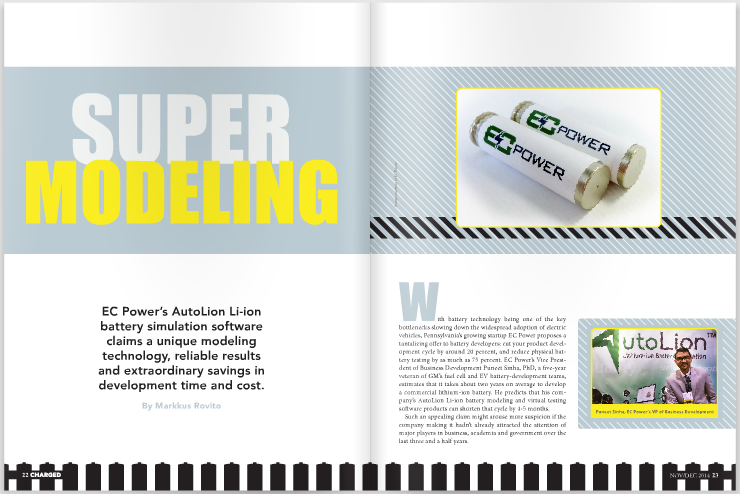
AutoLion Li-ion battery simulation software claims a unique modeling technology
Super modeling: EC Power’s AutoLion claims unique technology, reliable results and extraordinary savings in development time and cost With battery technology being one of the key bottlenecks slowing down the widespread adoption of electric vehicles, Pennsylvania’s growing startup EC Power proposes a tantalizing offer to battery developers: cut your product development cycle by around 20 percent, and… Read more »
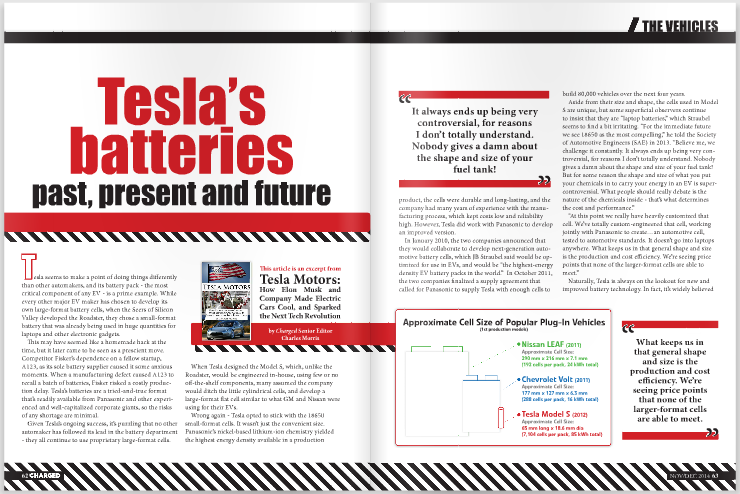
Tesla’s batteries – past, present and future
This article is an excerpt from Tesla Motors: How Elon Musk and Company Made Electric Cars Cool, and Sparked the Next Tech Revolution by Charged Senior Editor Charles Morris. Tesla seems to make a point of doing things differently than other automakers, and its battery pack – the most critical component of any EV –… Read more »
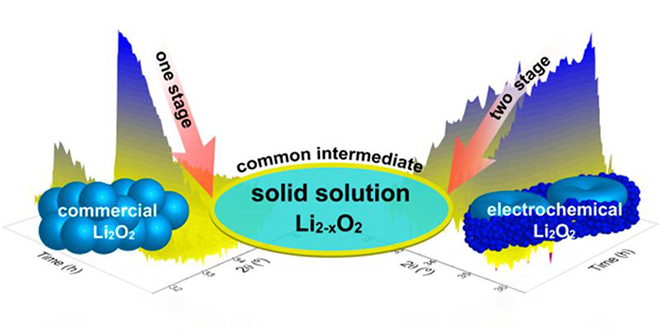
Researchers move another step closer to Li-air batteries
A team from Delft University in the Netherlands and the University of Waterloo in Canada has used operando X-ray diffraction to show that oxidation of electrochemically generated lithium peroxide (Li2O2) in high-energy-density Li-air batteries occurs in two stages, but in only one step for commercial (crystalline) Li2O2. In a paper published in the Journal of… Read more »