EV Testing & Measurement

Your source for EV testing know-how.

Mitigating EV Battery Thermal Runaway Risks With Simulation Technology

Session Banner

Webinar

Live webinar starts in:

  • 0 Days
  • 0 Hours
  • 0 Minutes
  • 0 Seconds
Electric vehicle fires often become big news stories, but what actually causes them? A chain reaction inside the battery—called thermal runaway —causes the battery to generate excess heat and catch fire. Regulations have been put in place so that once a thermal runaway issue has been detected in the battery pack, occupants of the car must have five minutes to safely stop the car and evacuate the vehicle. The engineering goal is then to ensure that the battery will stay within those limits.

Simulation can help engineers identify, understand, and prevent the conditions that create these dangerous reactions.

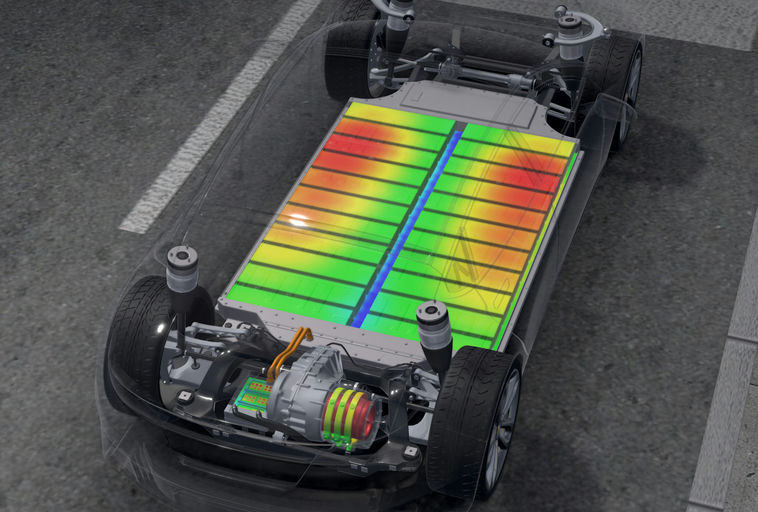
In this presentation, we will focus on EV battery thermal runaway propagation simulation. In such a simulation, we model the heat generation due to exothermal reactions during thermal runaway and the subsequent heat transfer of the heat to the cooling system. The exothermal reaction models are calibrated from the accelerating rate calorimetry (ARC) data of a battery cell. The heat transfer is modelled using conjugate heat transfer models in computational fluid dynamics (CFD). Modelling of venting and vented gas reaction is also discussed. Several validated examples will be shown in this presentation including module/pack runaway propagation and the associated venting and vented gas reaction.


Now available to watch on-demand: Register for this webinar to watch a recording of the presentation and audience Q&A, and download the presentation slides.

Presented by:

  • Xiao Hu, Sr. Principal Engineer, Ansys

More EV Testing Knowledge: