
Rivian aims to grow with a smaller, more affordable EV; the R2 has to have a Tesla Model Y moment.
The 2027 Rivian R2 electric SUV has to be nothing less than the company’s breakout vehicle. Tall and square, the five-seat compact utility vehicle is aimed at the heart of the U.S. market, with up to 330 miles of EPA-rated range at launch. Within a year or so, the R2 will range in price from $45,000 to north of $60,000. Deliveries of the high-spec R2 Performance with Launch Package start this week, priced from $59,485, and reservation holders can now configure their R2s online.
Rivian can build up to 160,000 R2s in its Normal, Illinois, assembly plant, CEO and founder RJ Scaringe said last week at a media roundtable. That’s before its second plant, in Georgia, comes online for 2029. Note that its larger and pricier R1S SUV and R1T pickup truck—now starting around $75,000—sold a combined 51,500 units in the U.S. in 2024, which fell to 38,000 last year.
We spent a long morning driving the Rivian R2 in and around Park City, Utah, last week, on a mix of highways, winding mountain roads, and off-road trails. It’s essentially what we expected: a thoroughly competent electric SUV that is very clearly Rivian in looks, technology, and performance. With what Scaringe termed “a very, very large backlog” of orders on the books, you may see a lot of R2s on the roads relatively soon.
Photos by John Voelcker
Strong sense of the brand
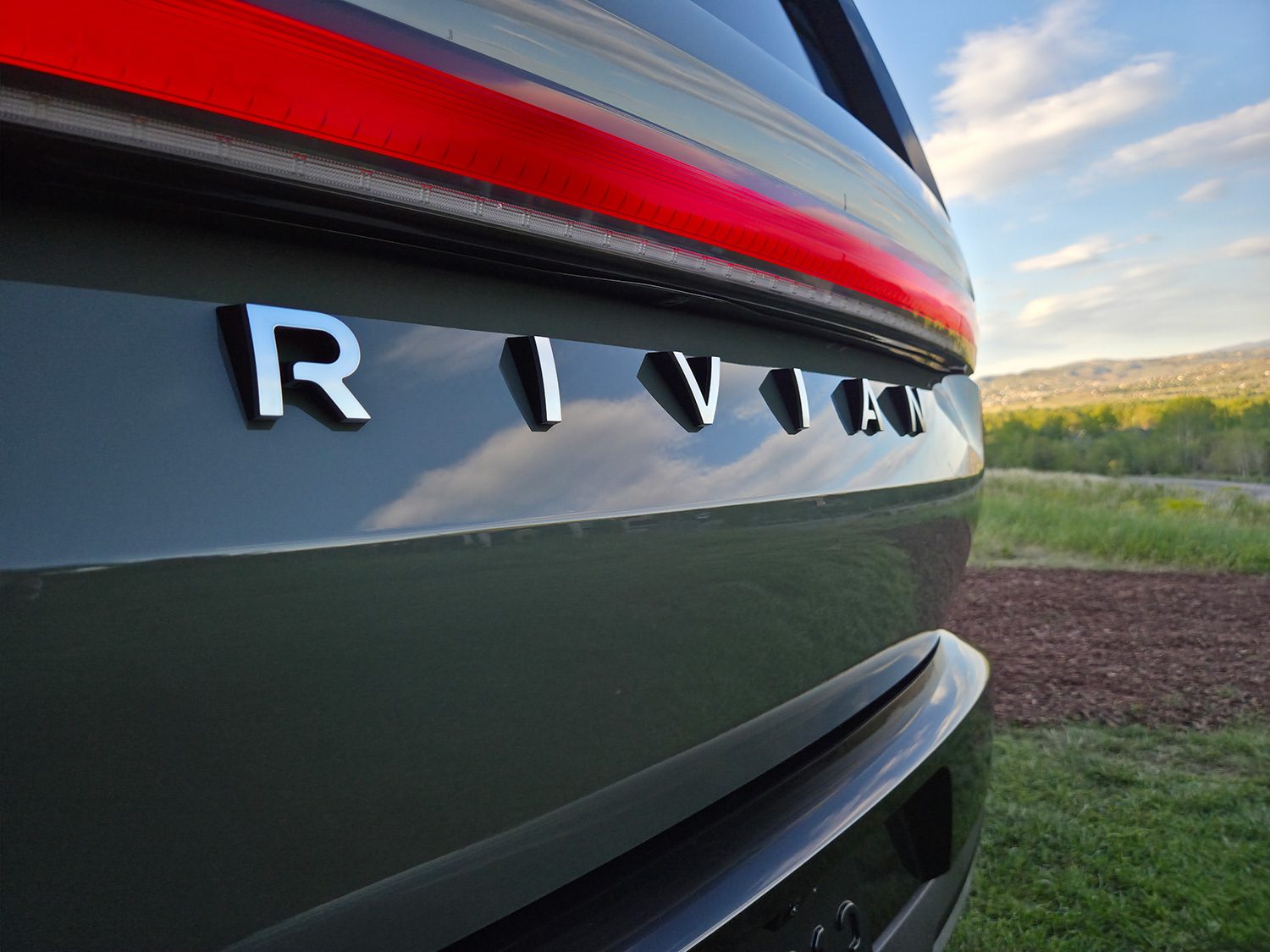
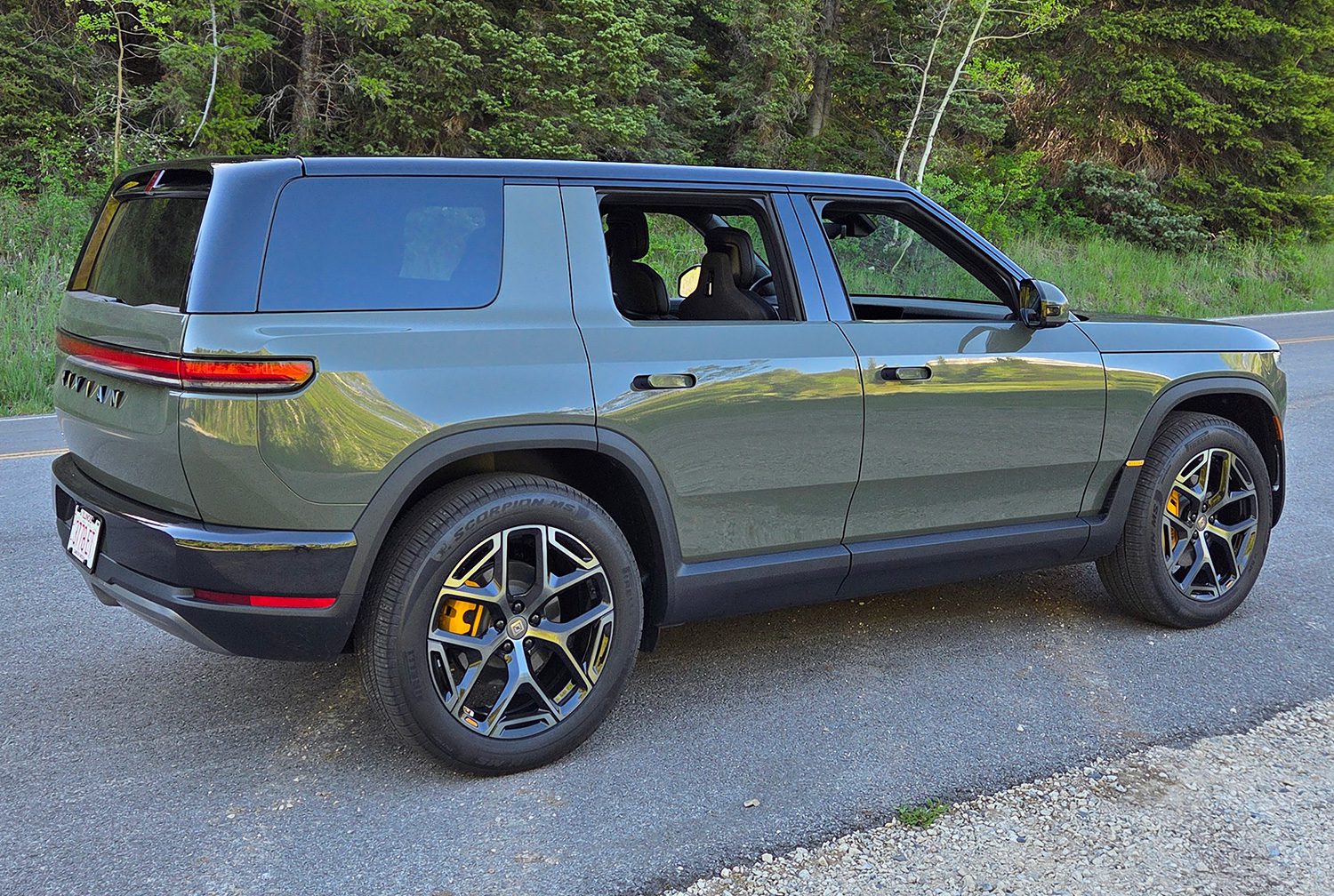
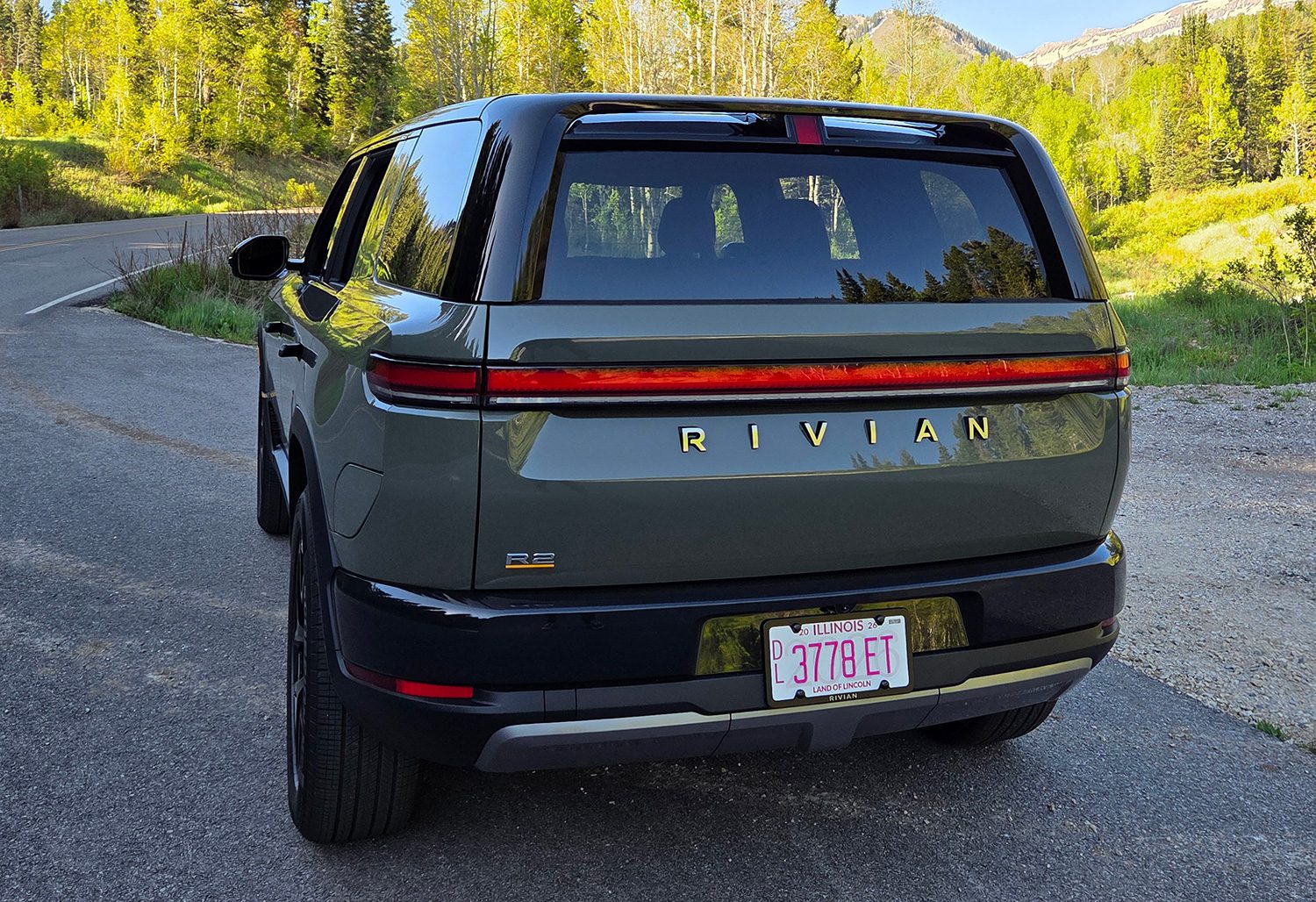
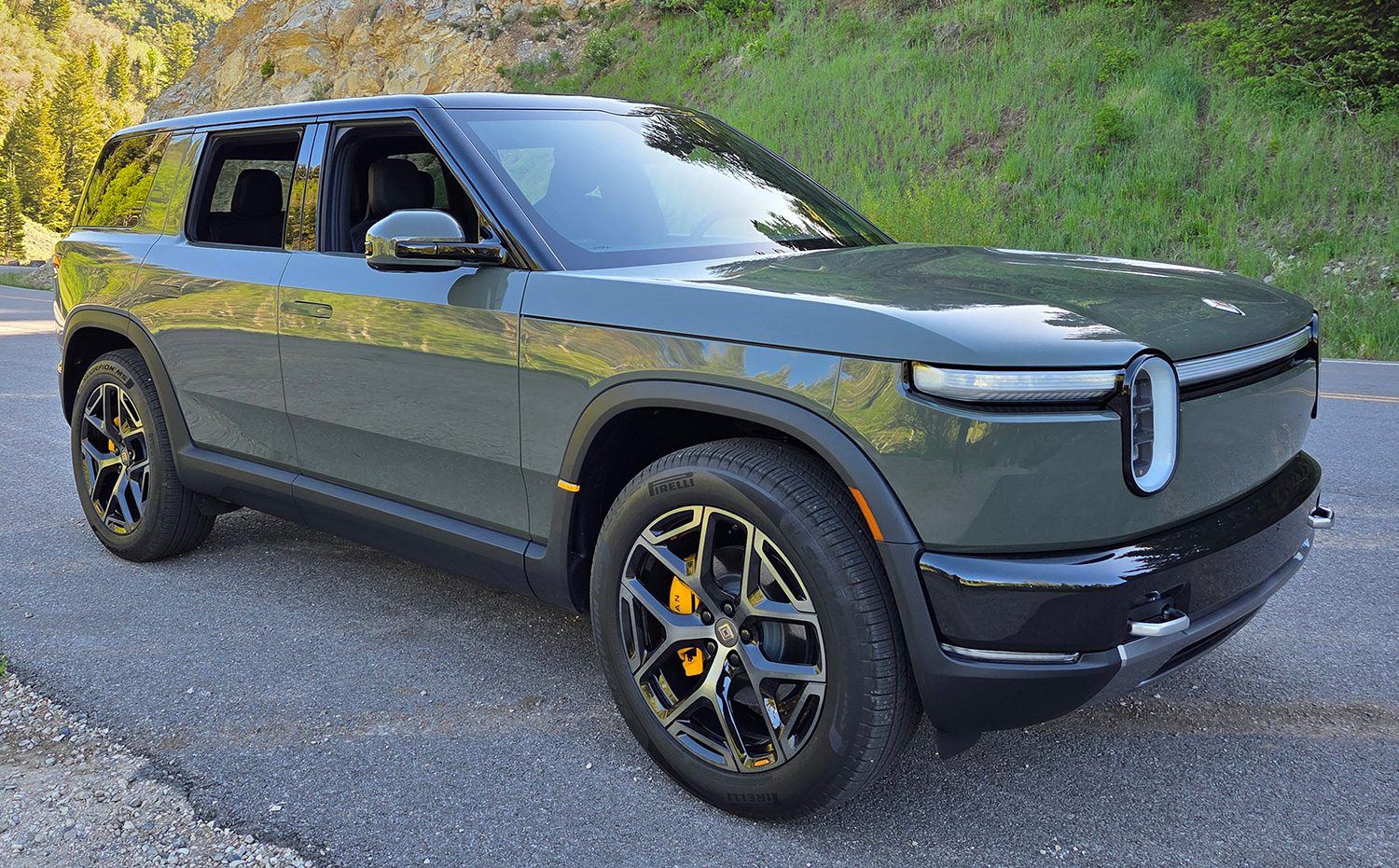
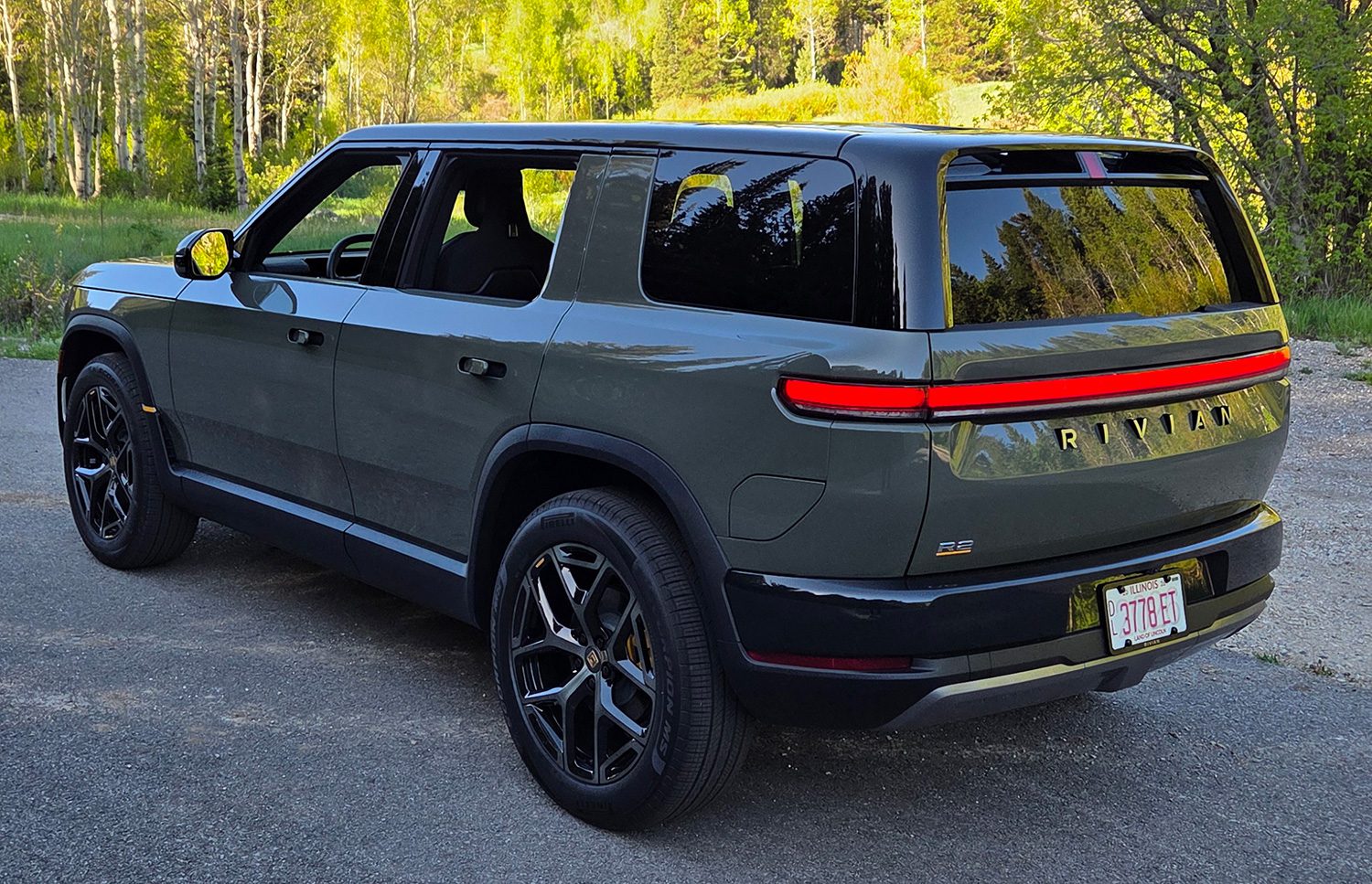
Rivian has a strong sense of its brand identity, and the R2 could have come from no other maker than Rivian. If anything, it risks being mistaken for the R1S, its larger sibling. If the R1 pair were Rivian’s debut, chief design officer Jeff Hammond said, the R2 is its “second album”—and it almost surely won’t disappoint fans of the first one.
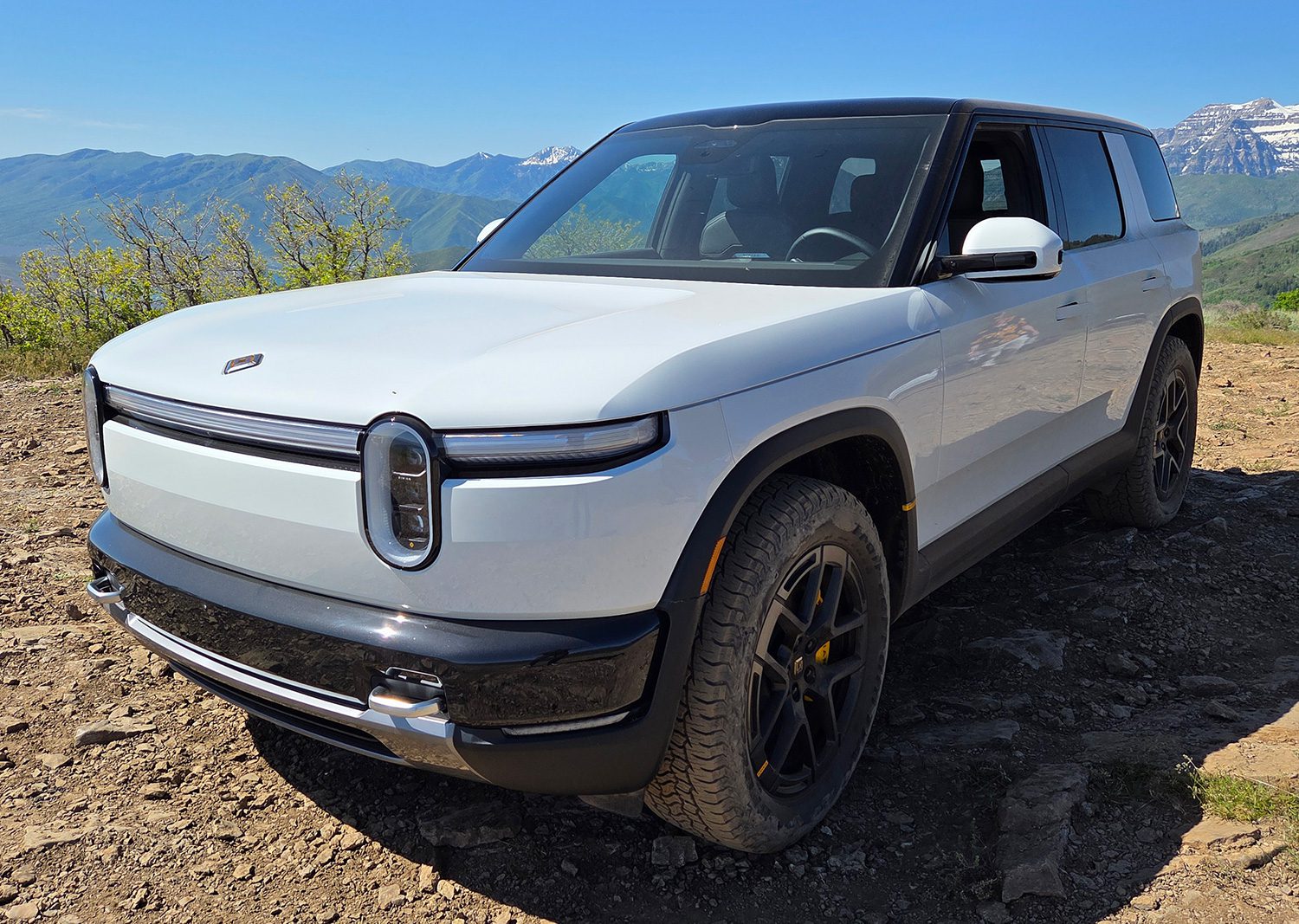
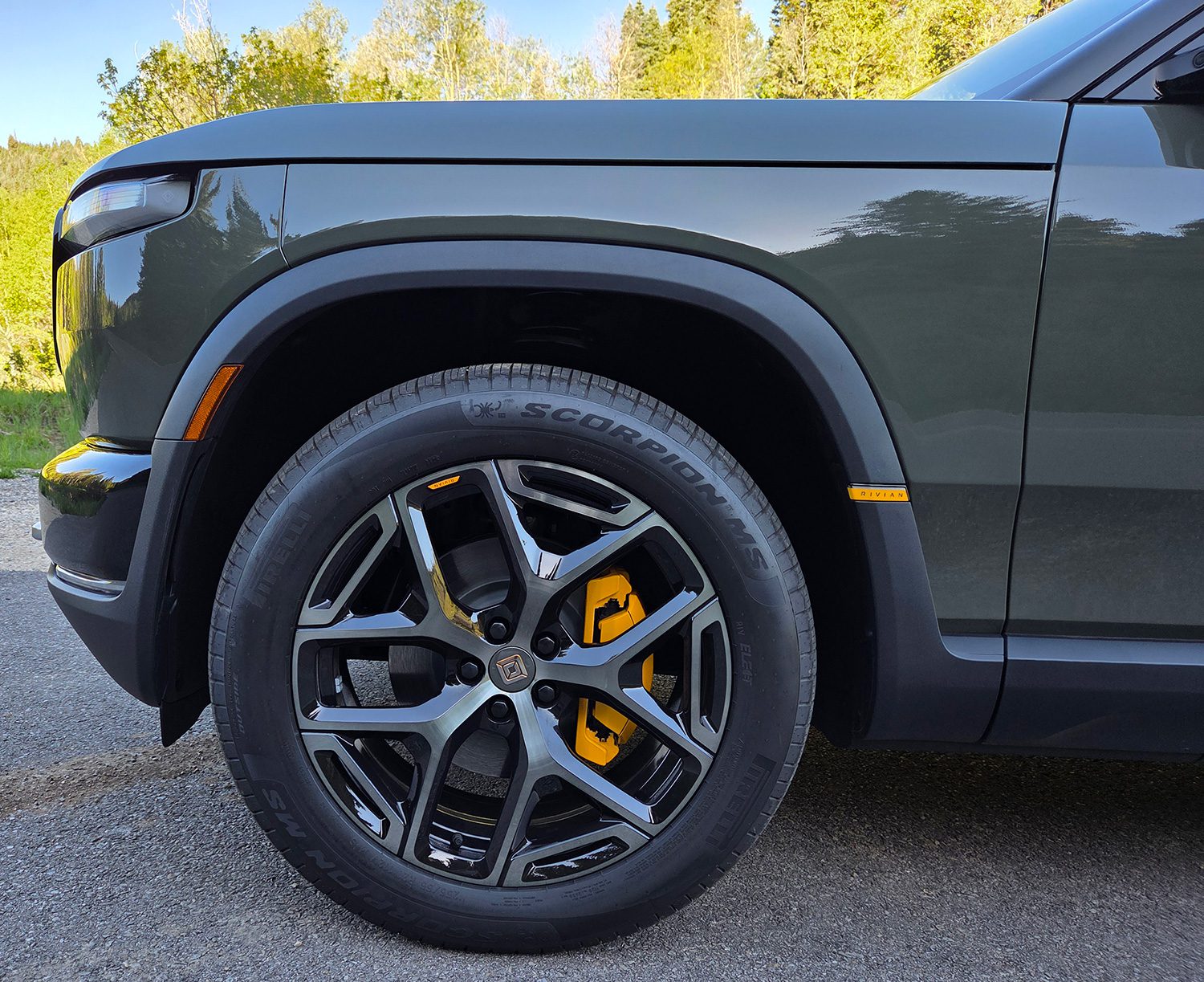
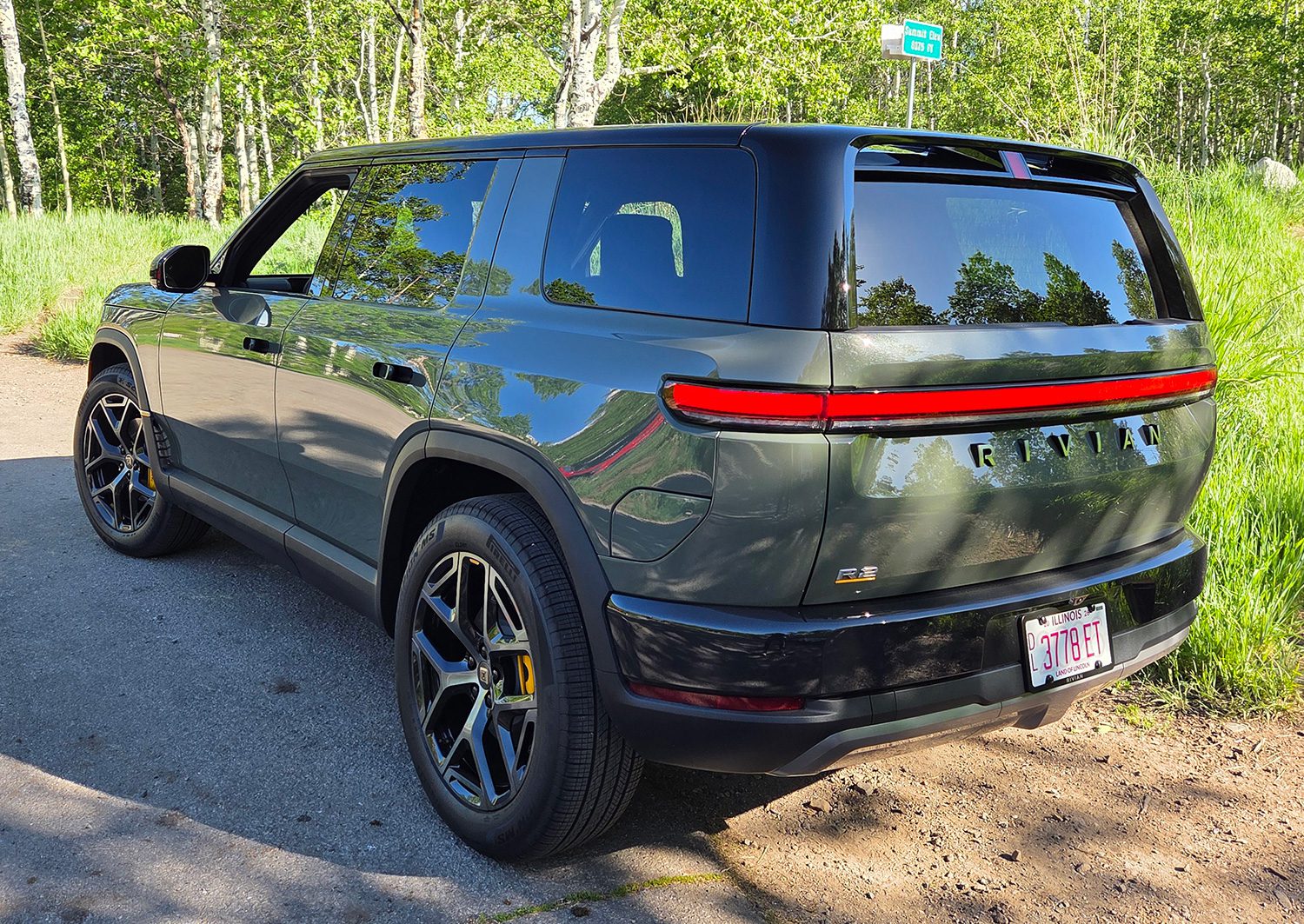
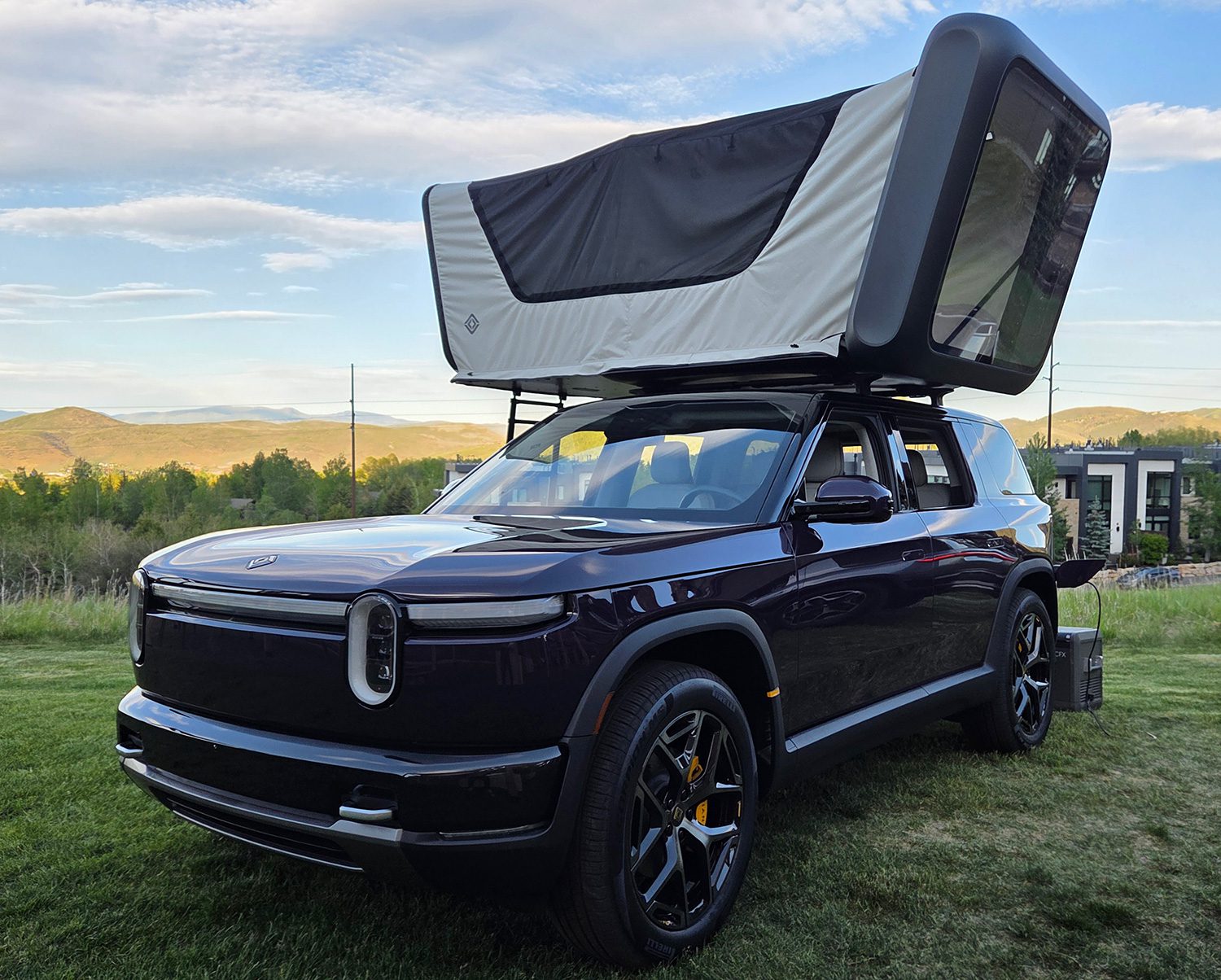
Only if you park them side by side does the R2 appear smaller than the R1S in every dimension. Its 66.9-inch height, 9.6 inches of ground clearance, and choice of 19-, 20-, and 21-inch wheels make it appear larger than it is—to our surprise, it’s only 2.5 inches longer (though 4 inches taller) than a Hyundai Ioniq 5 hatchback. That presence is part of the Rivian brand.
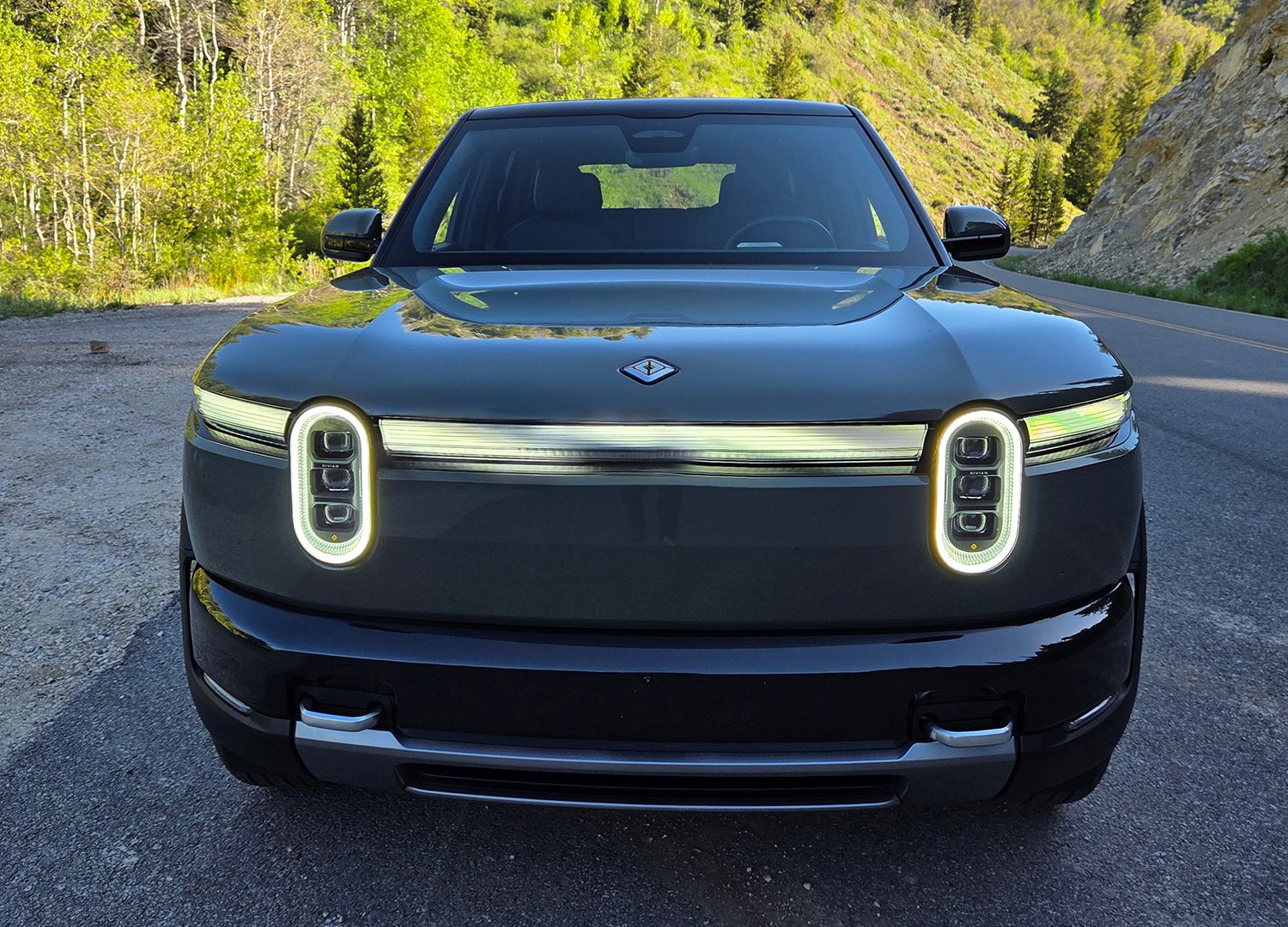
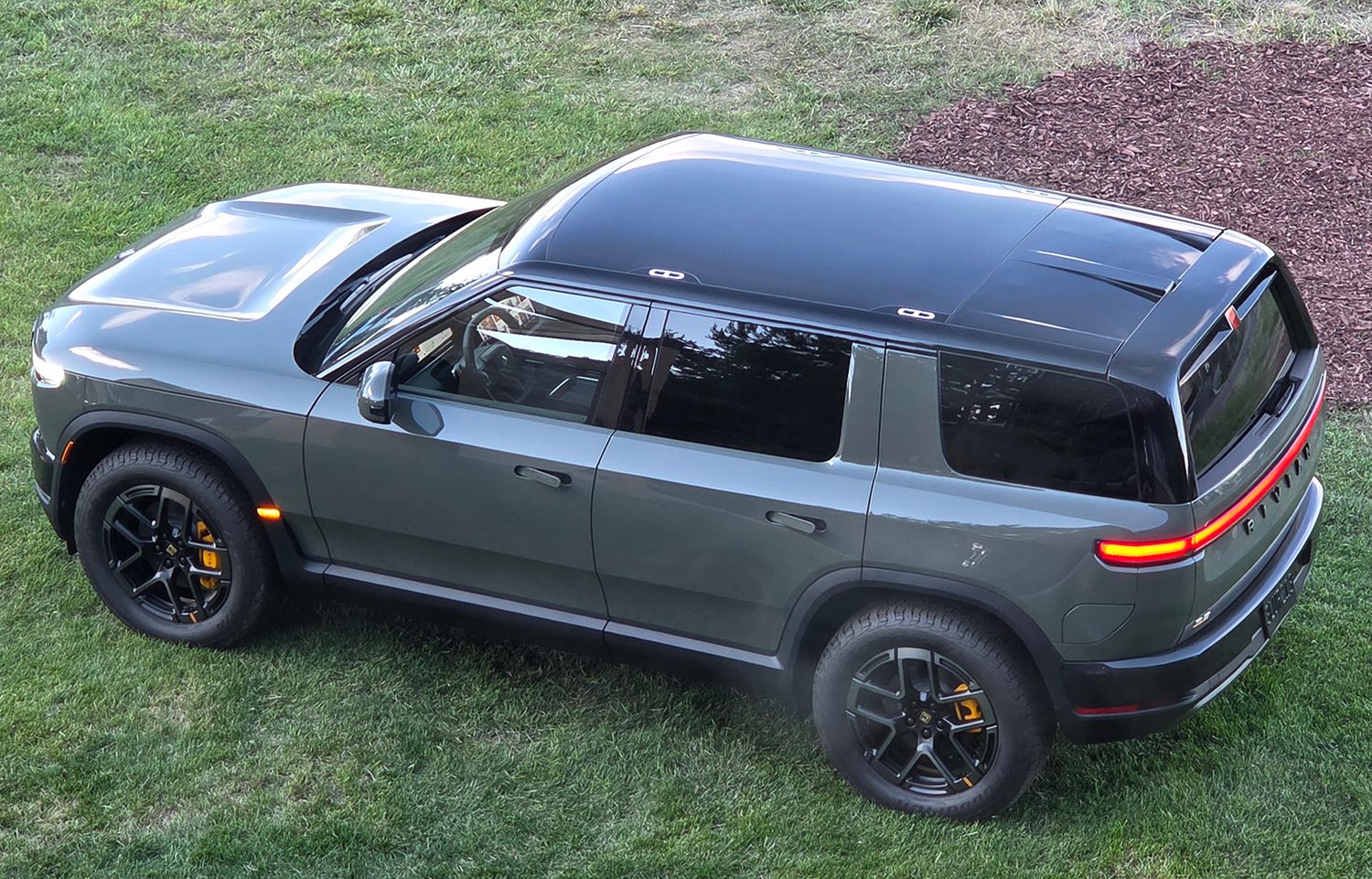
The vertical headlights either side of a blank panel are no longer as divisive a design element as they were when the two R1 models were the breakout hits of the 2018 Los Angeles auto show. Now, they just say Rivian—as do the slab-sided profile, the vertical tail, and the very traditional two-box shape overall. The hood line isn’t as beveled as many EVs, but it’s slightly dished in the center, which helps slightly with forward vision. Laudably, the beltline isn’t as high as it might have been, meaning better outward visibility at the sides and rear for driver and passengers. At 5’10” with the seat elevated, my shoulder was higher than the beltline, which is a rarity indeed these days.
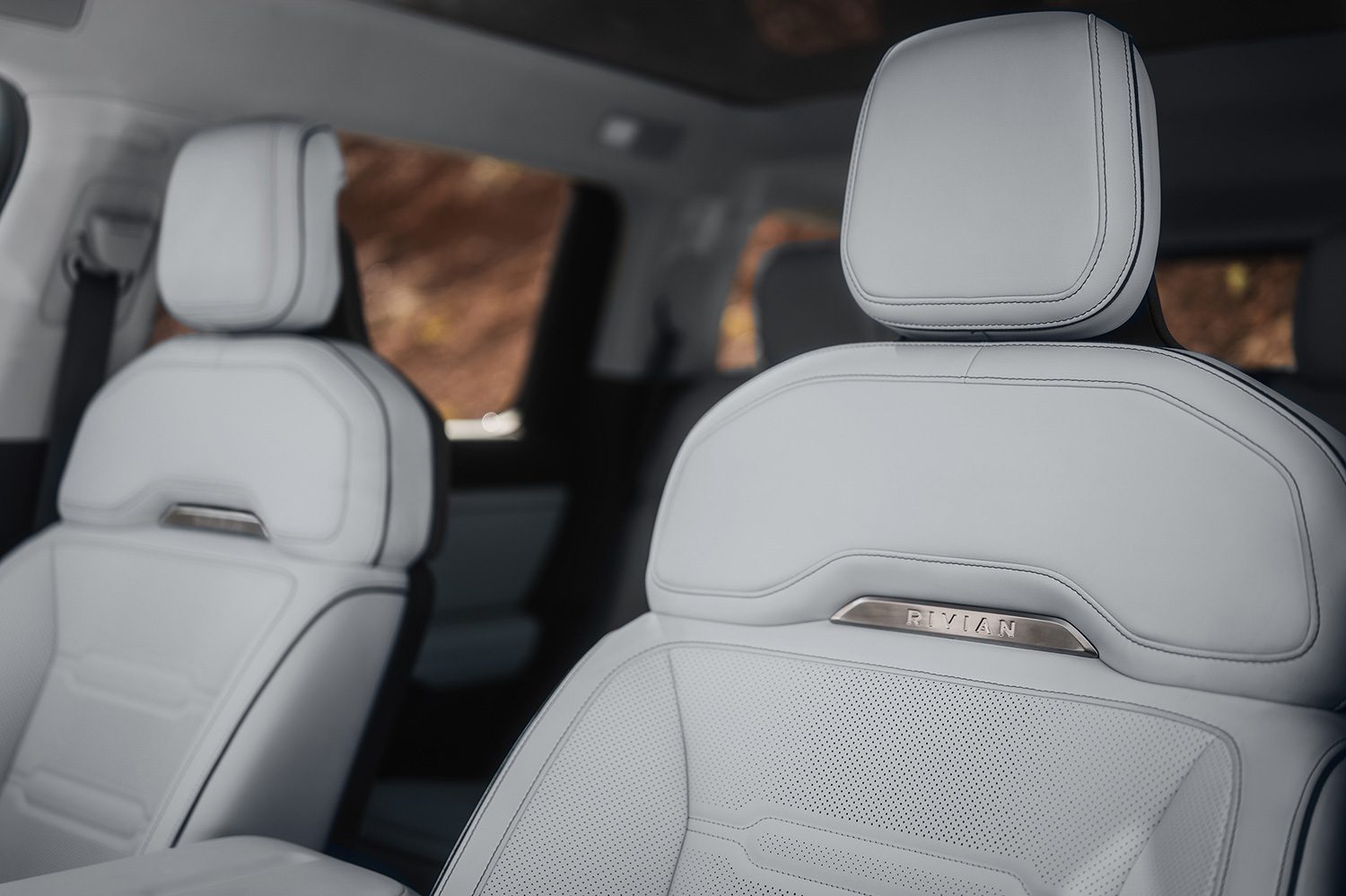
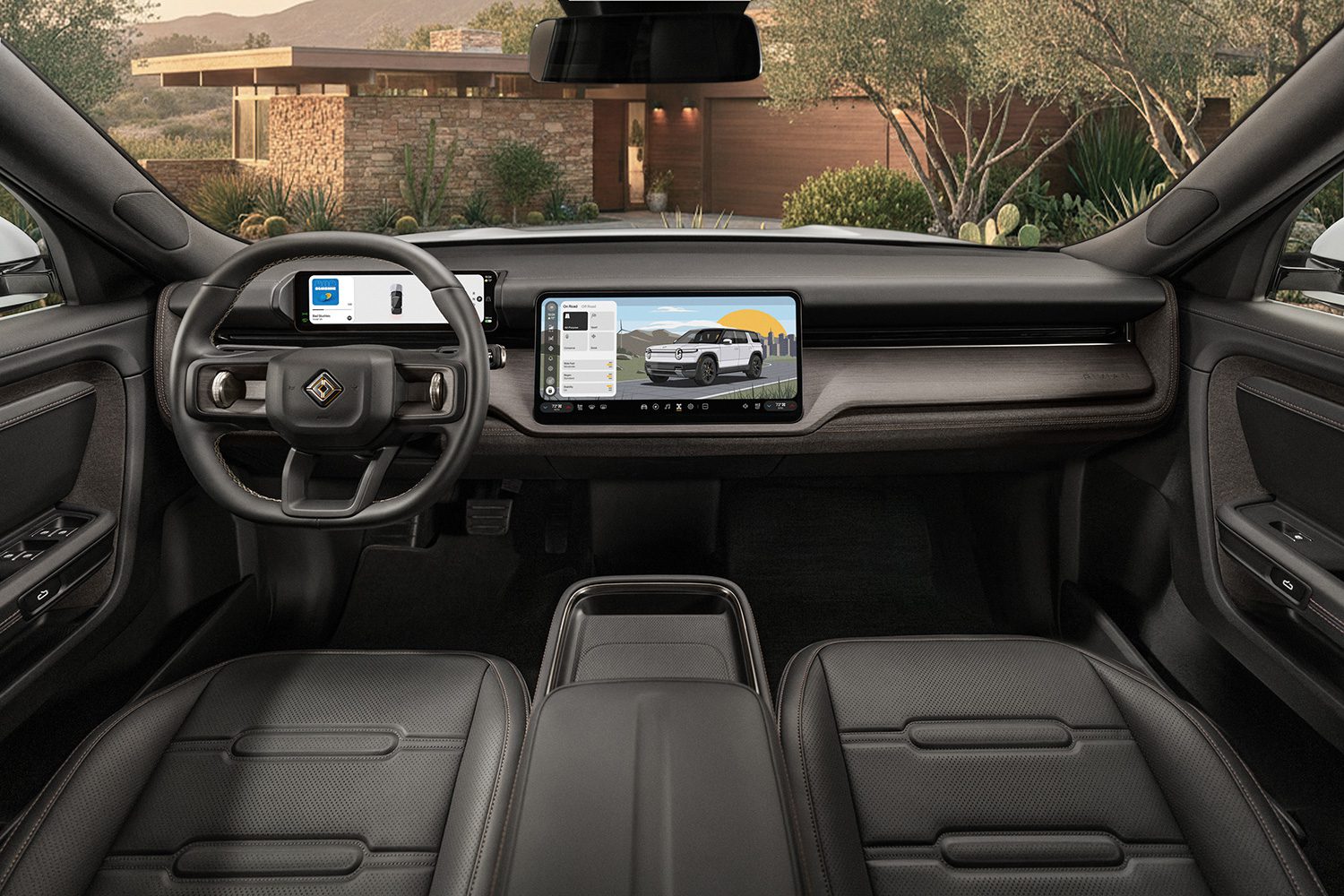
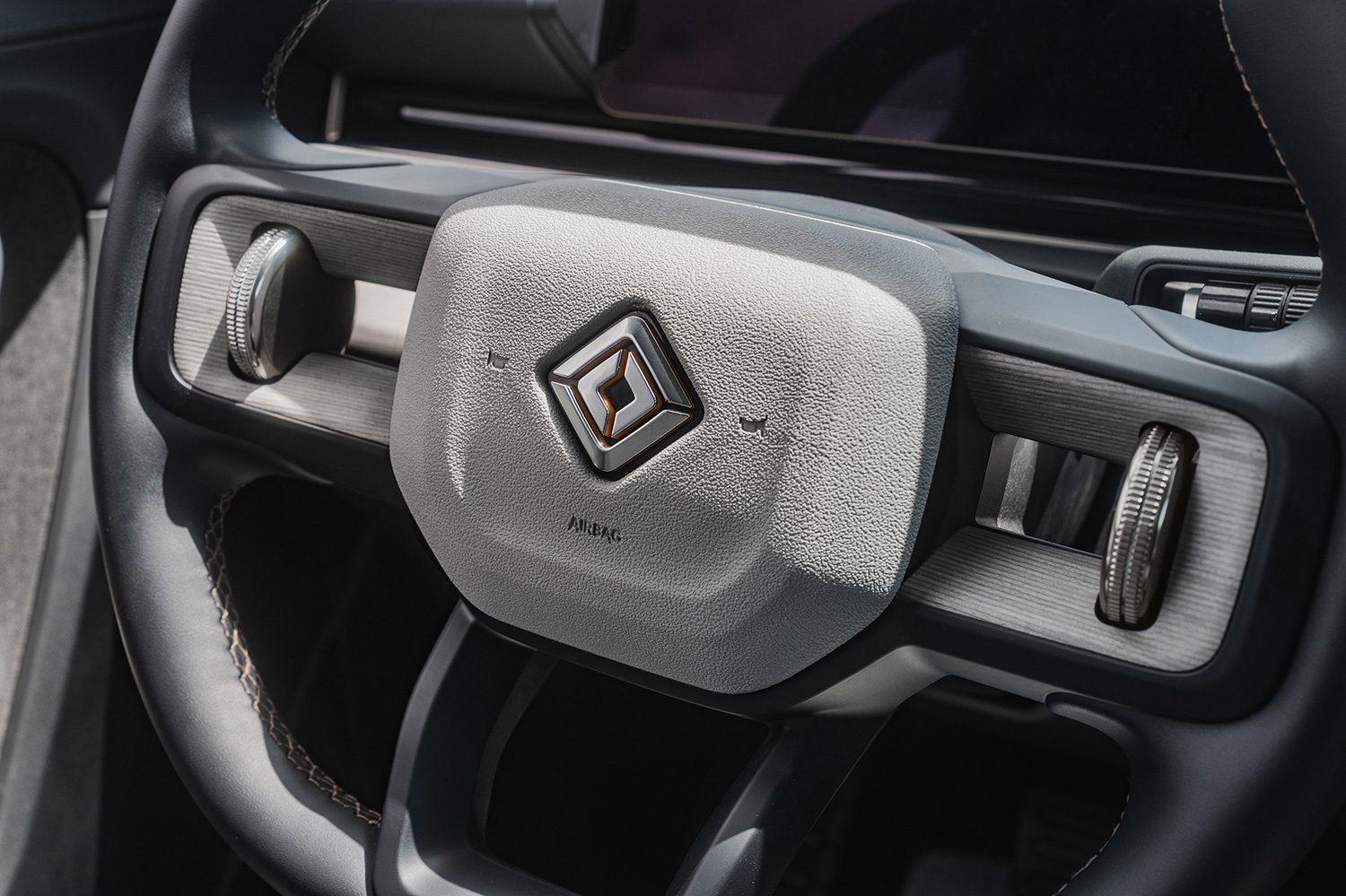
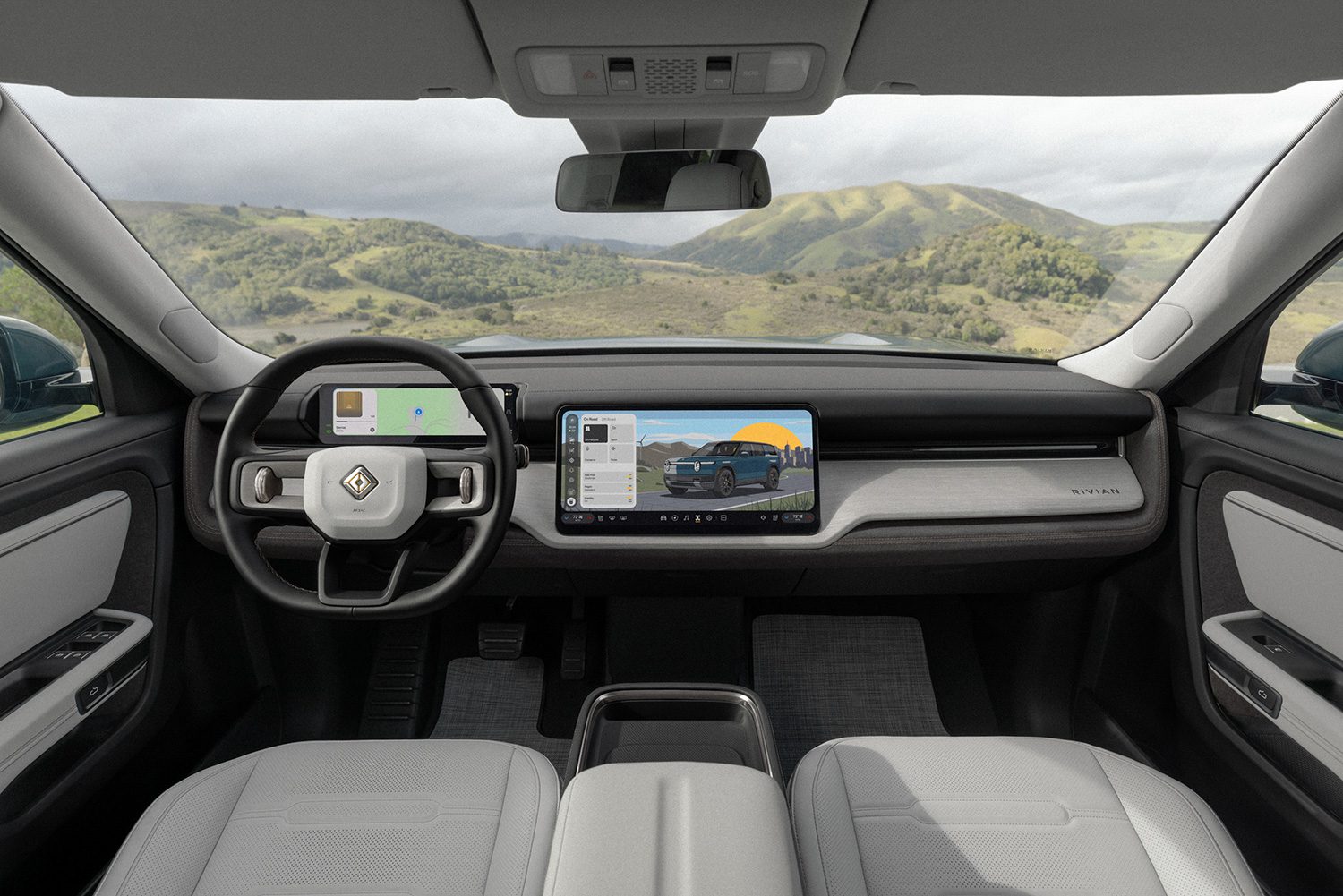
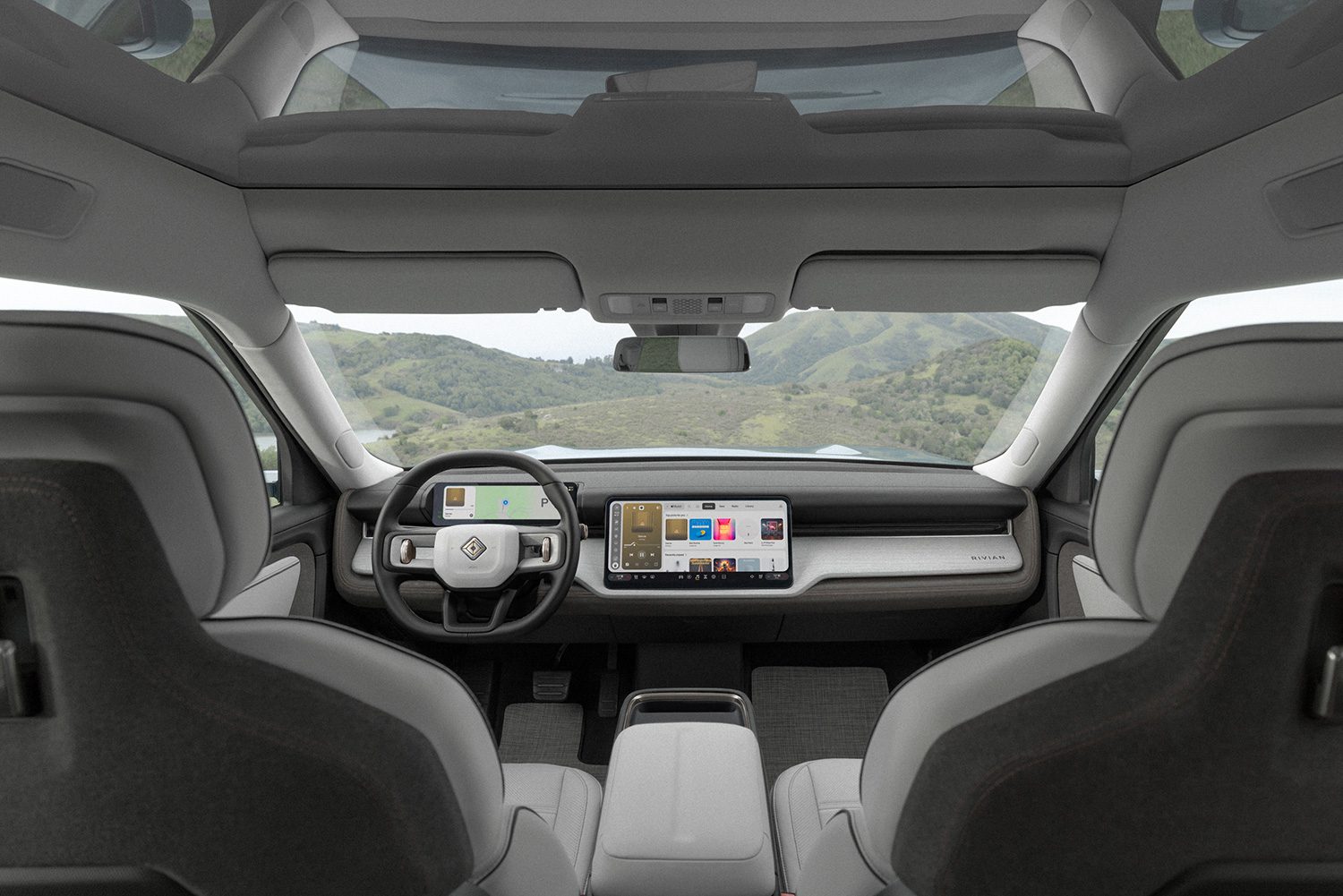
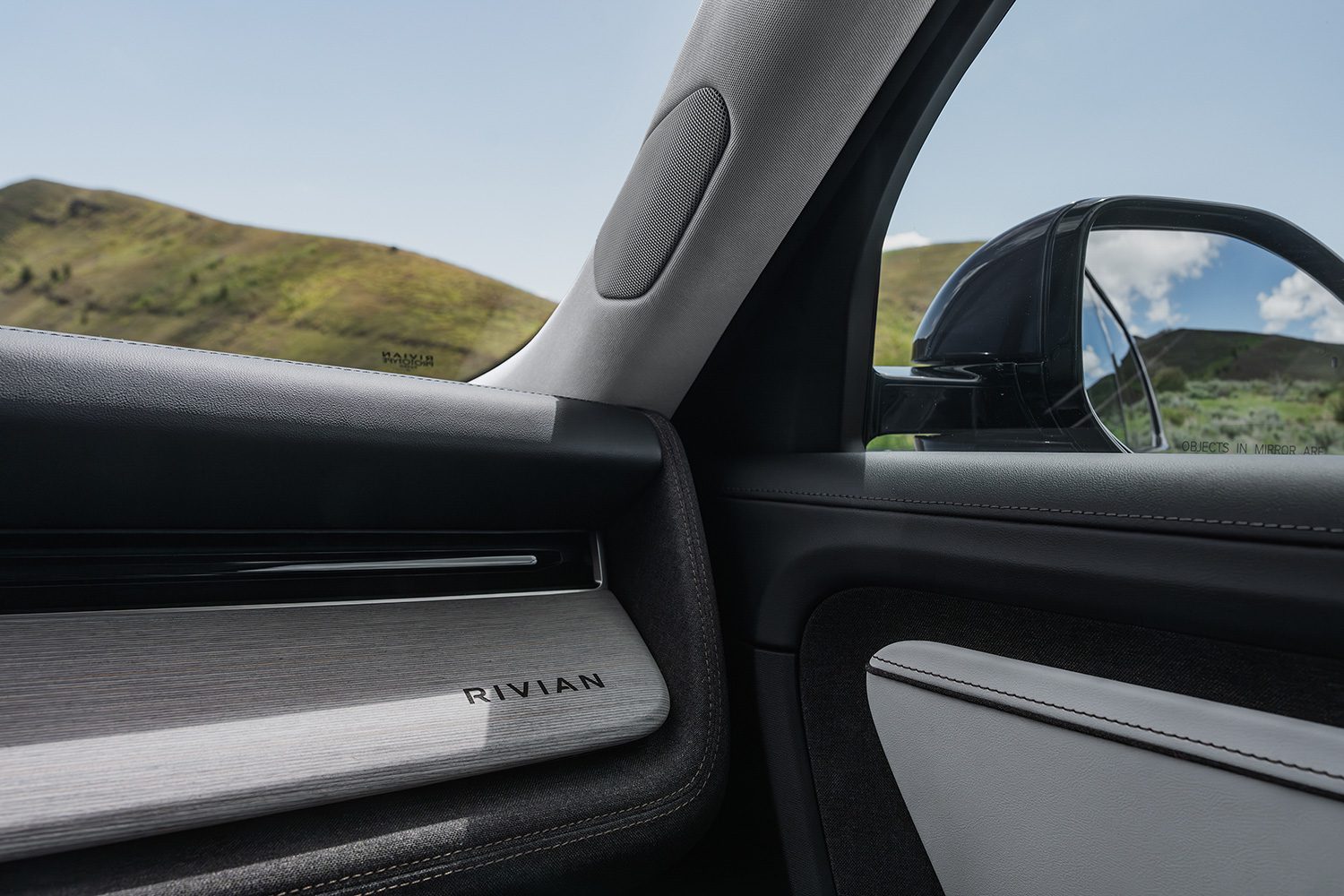
Inside, Rivian has created a simpler cabin in a lower-cost vehicle that doesn’t look cheap. There are still few hard controls, though the R2 sports a pair of large, knurled metal scroll wheels—Rivian calls them “haptic halo wheels”—at the ends of the steering-wheel hub. They not only scroll up and down, they tilt left or right, push in, or pull forward from the back. For drivers brand-new to the R2, they will take some learning, but they are, at least, very tactile—even as their functions change (with helpful diagrams in the instrument cluster showing what they do) depending on context and central-screen commands.
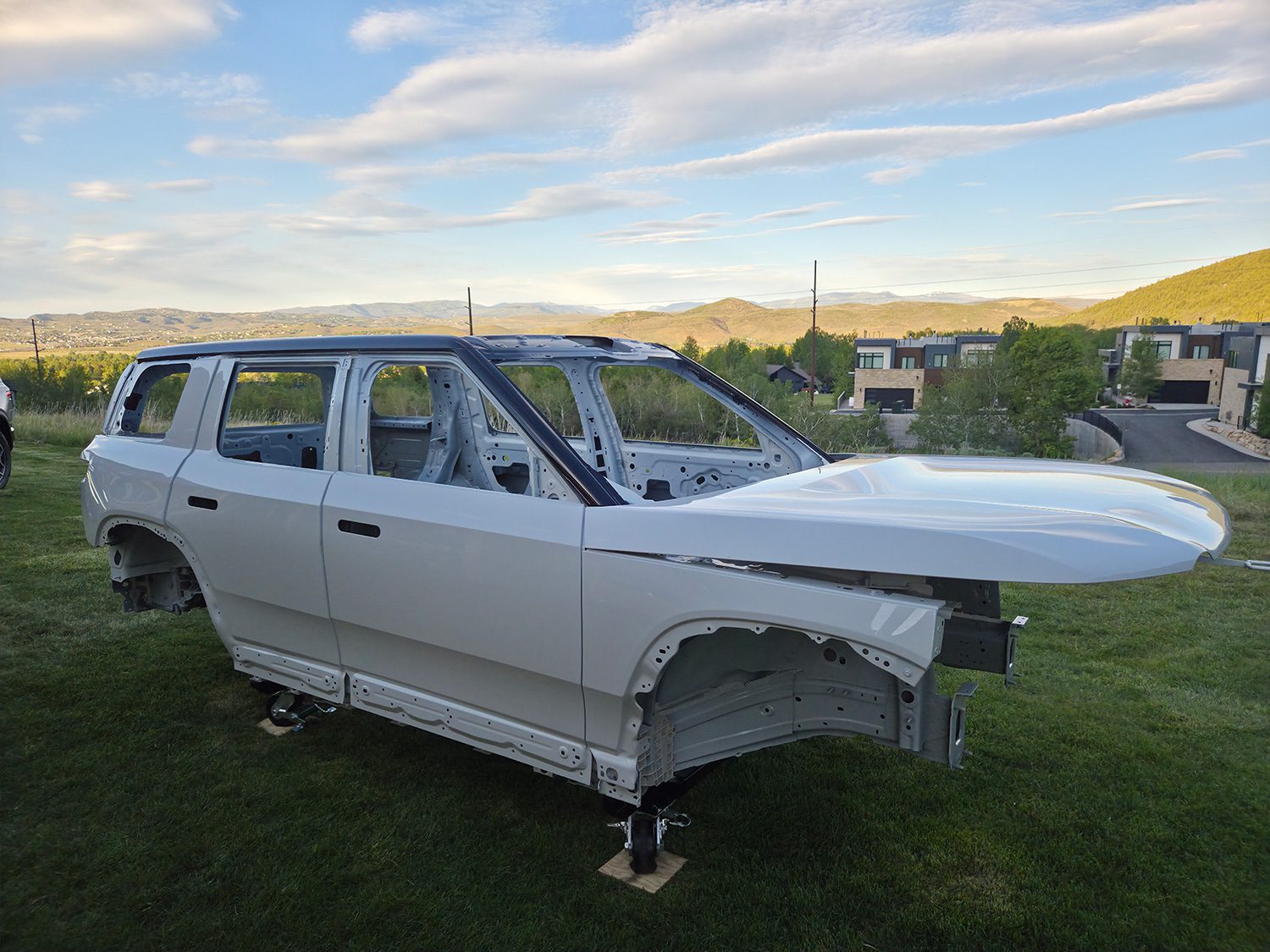
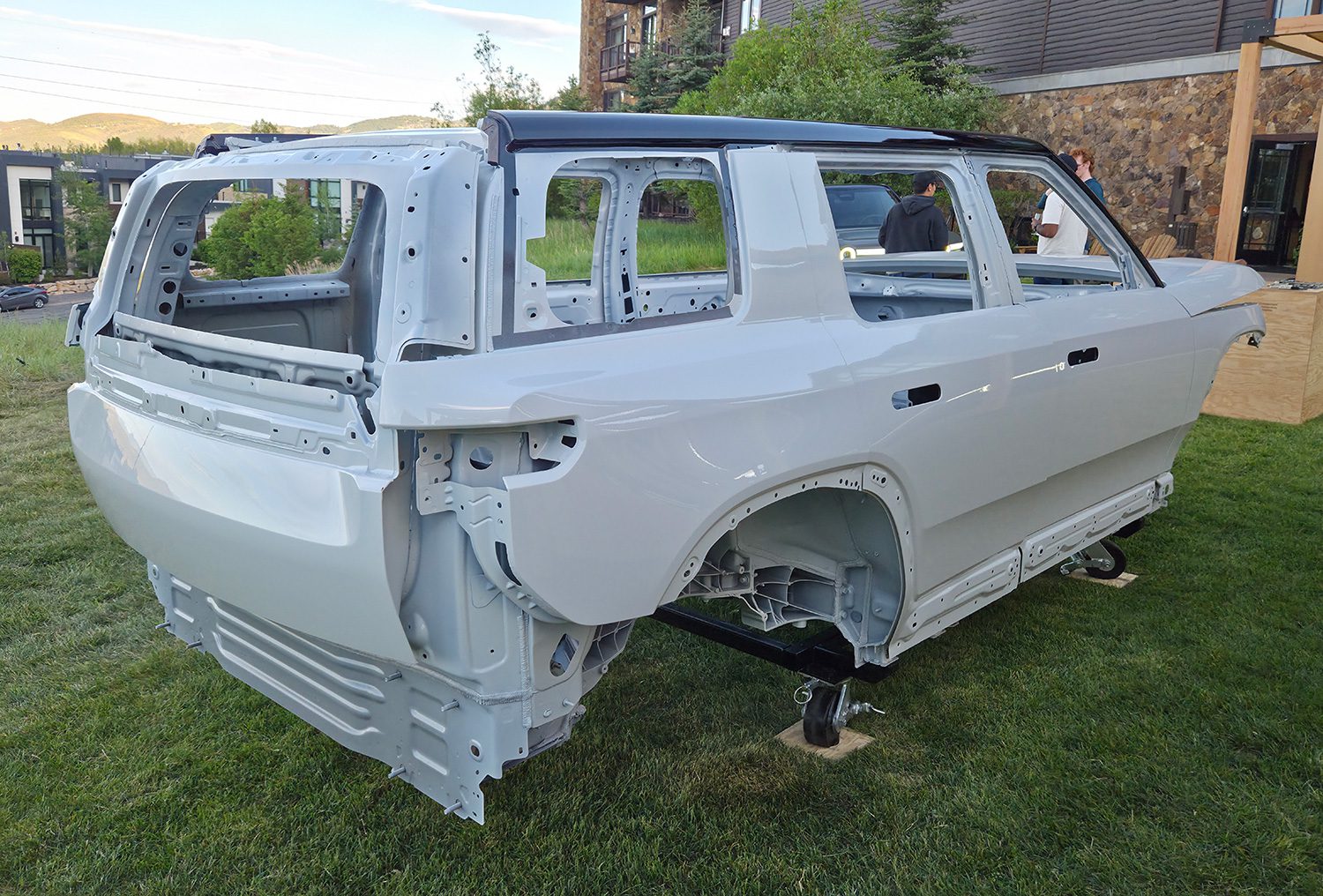
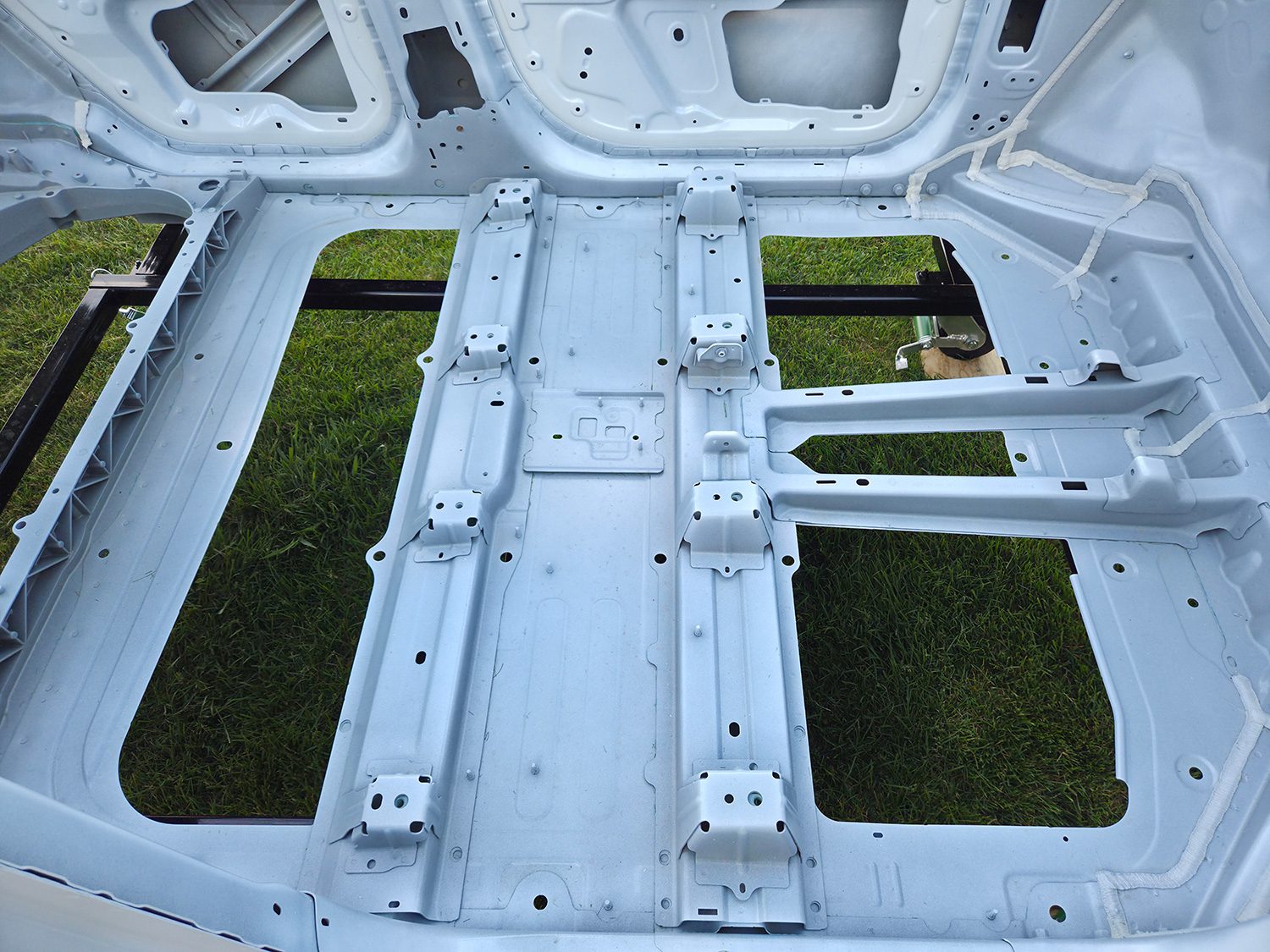
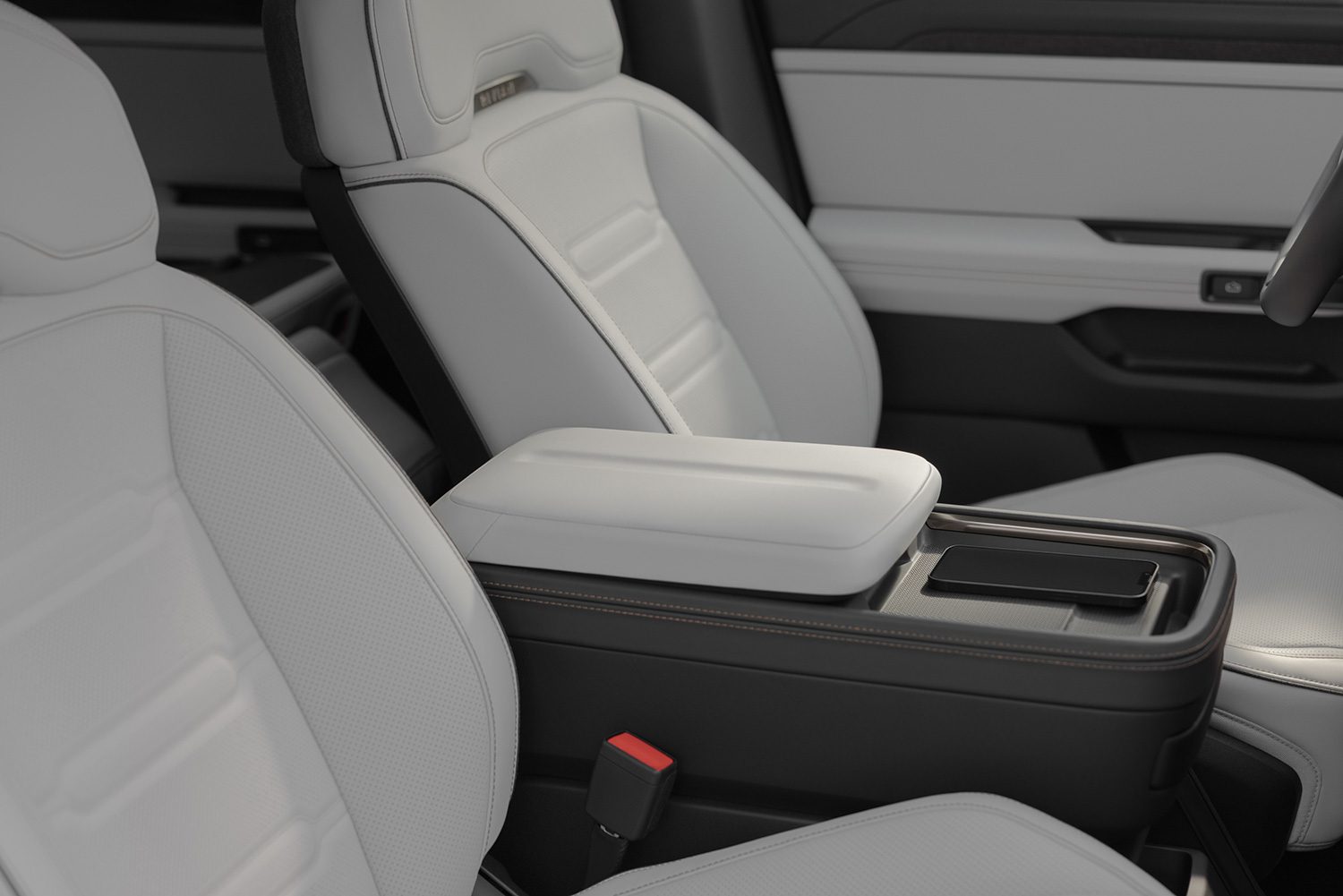
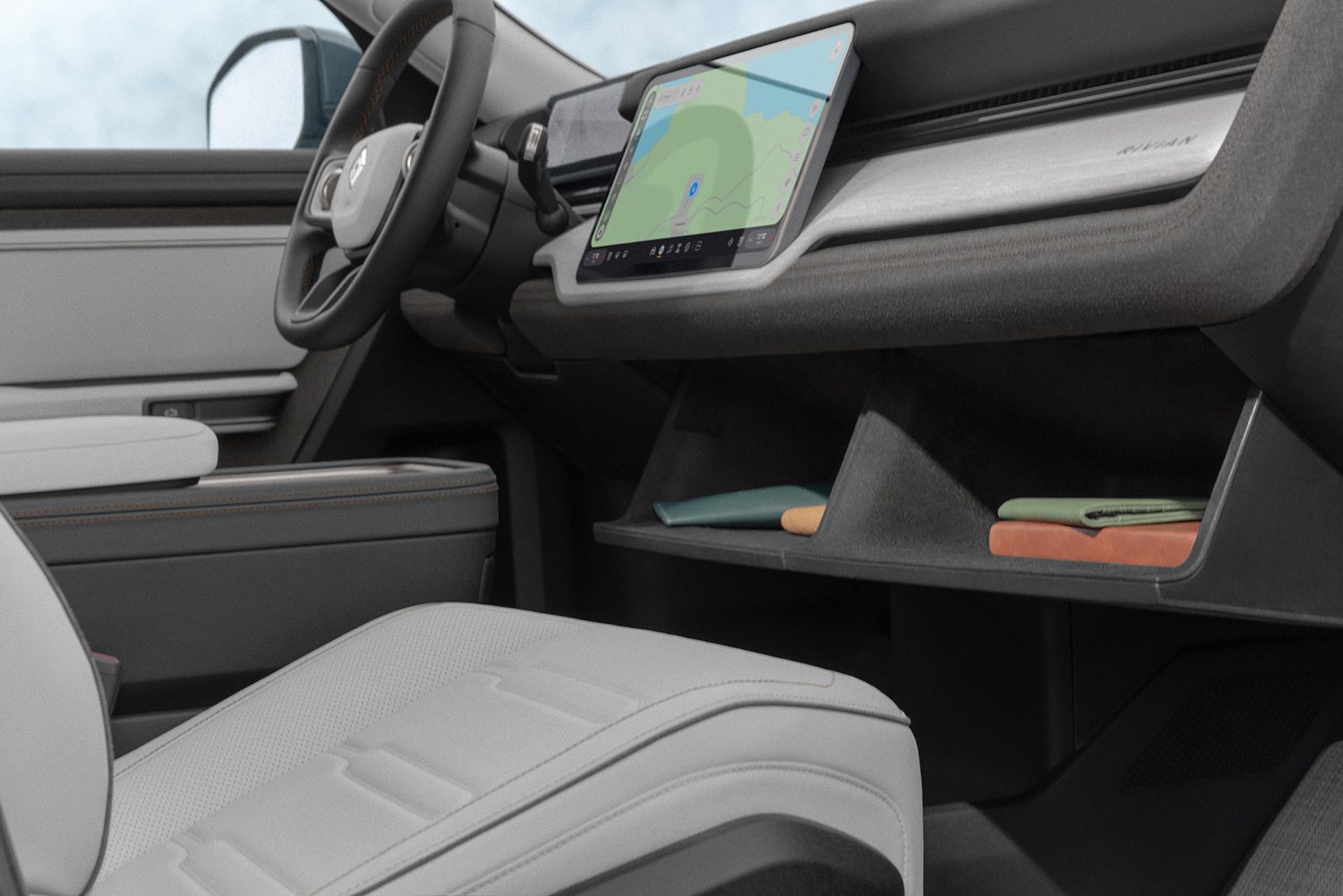
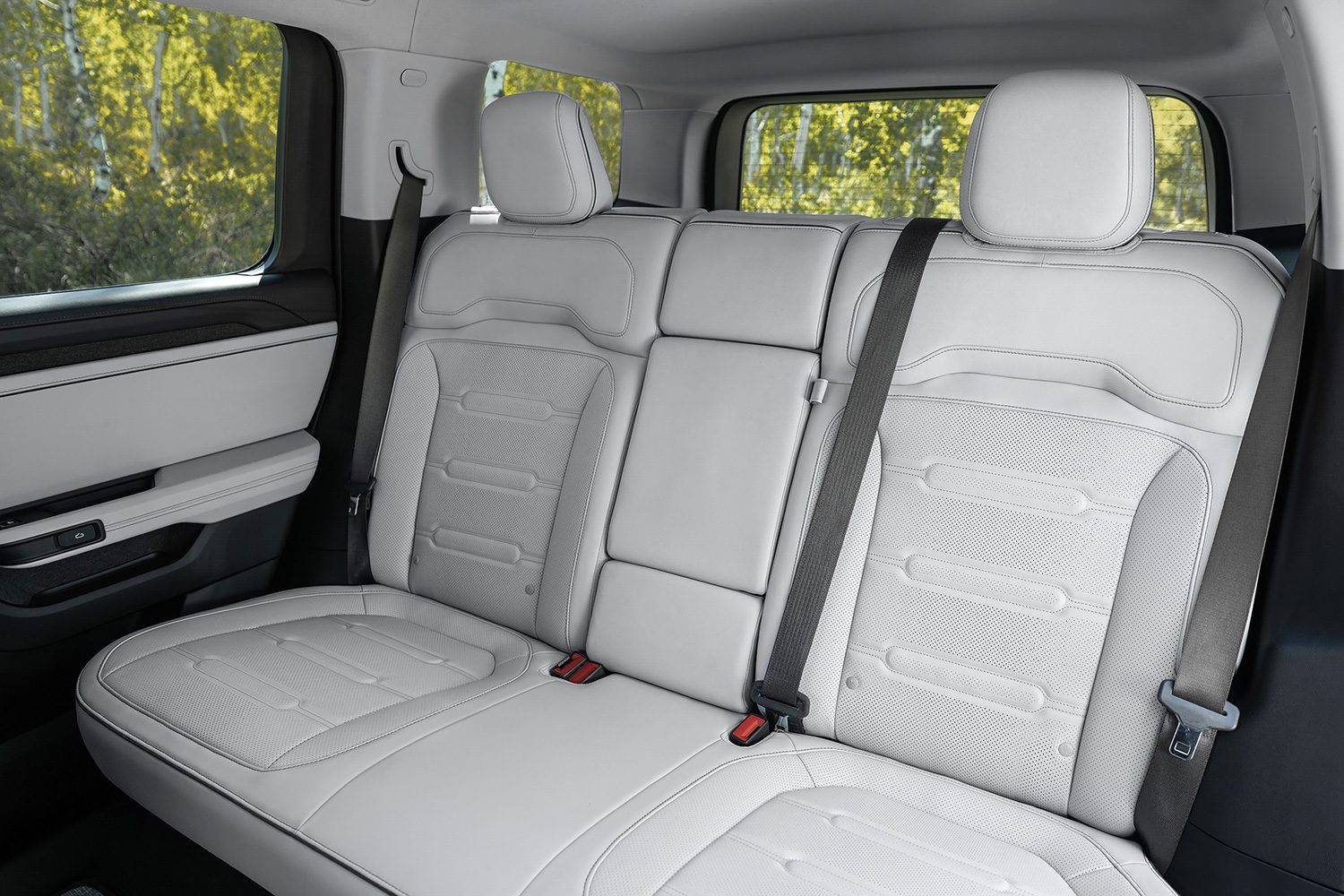
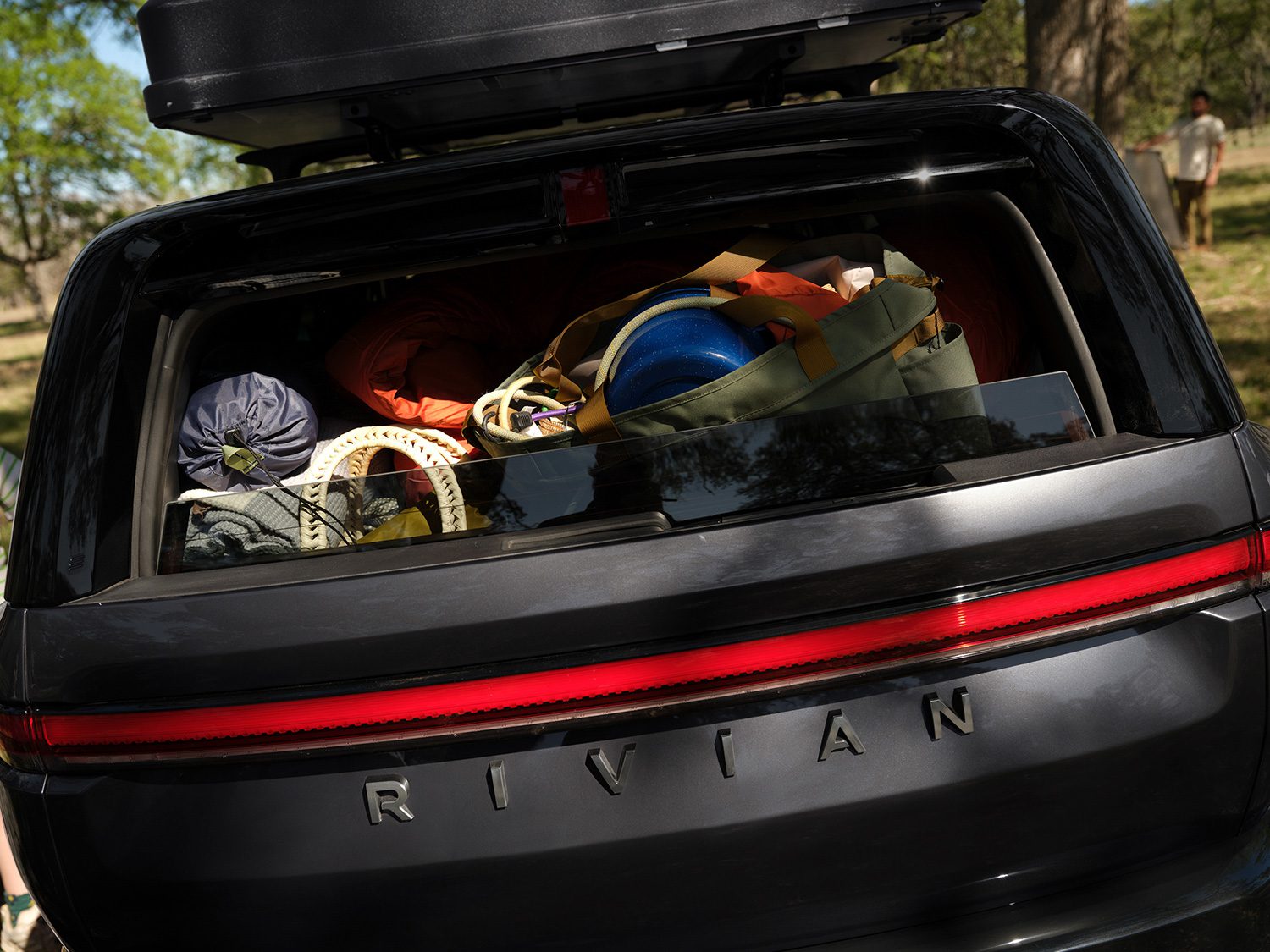
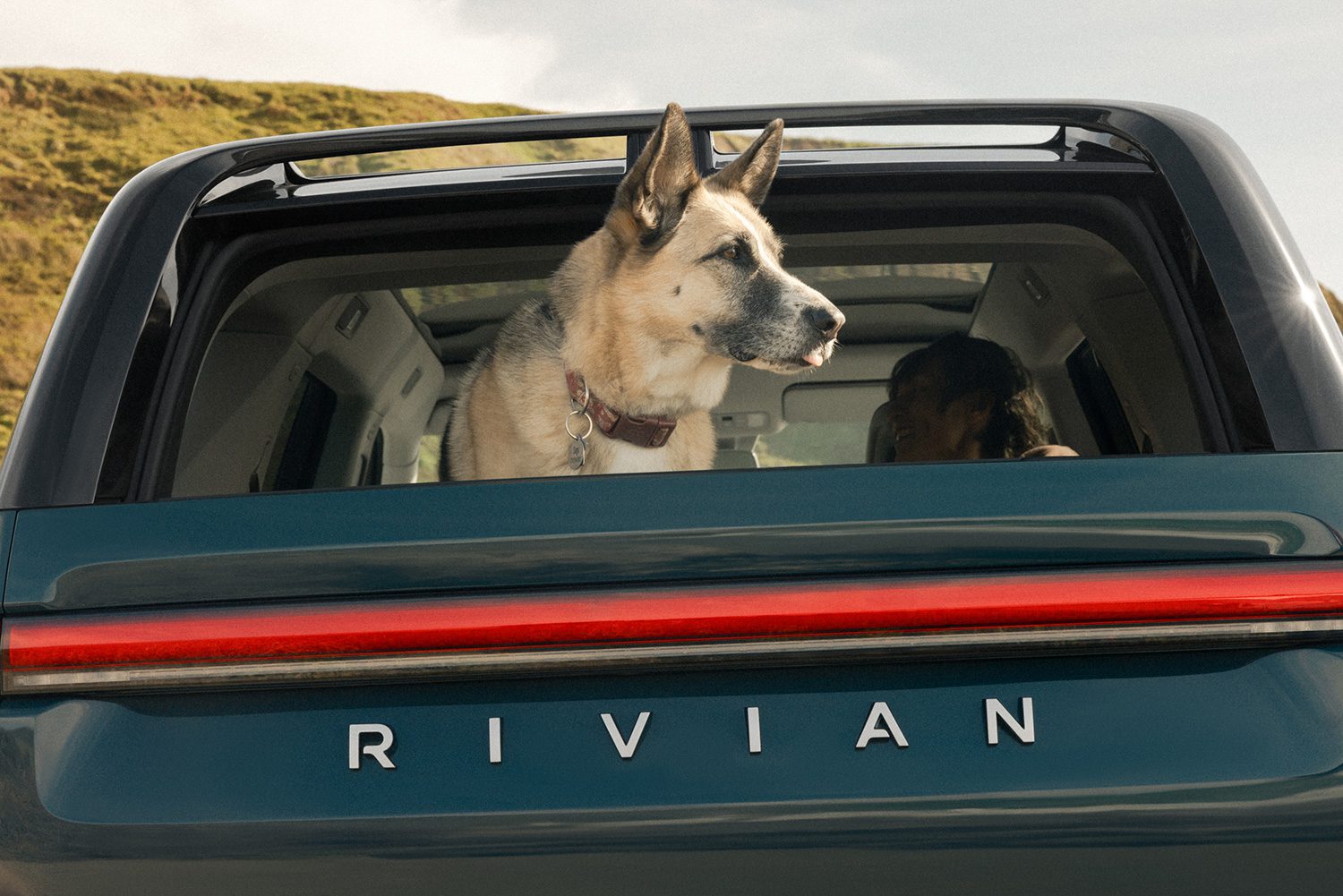
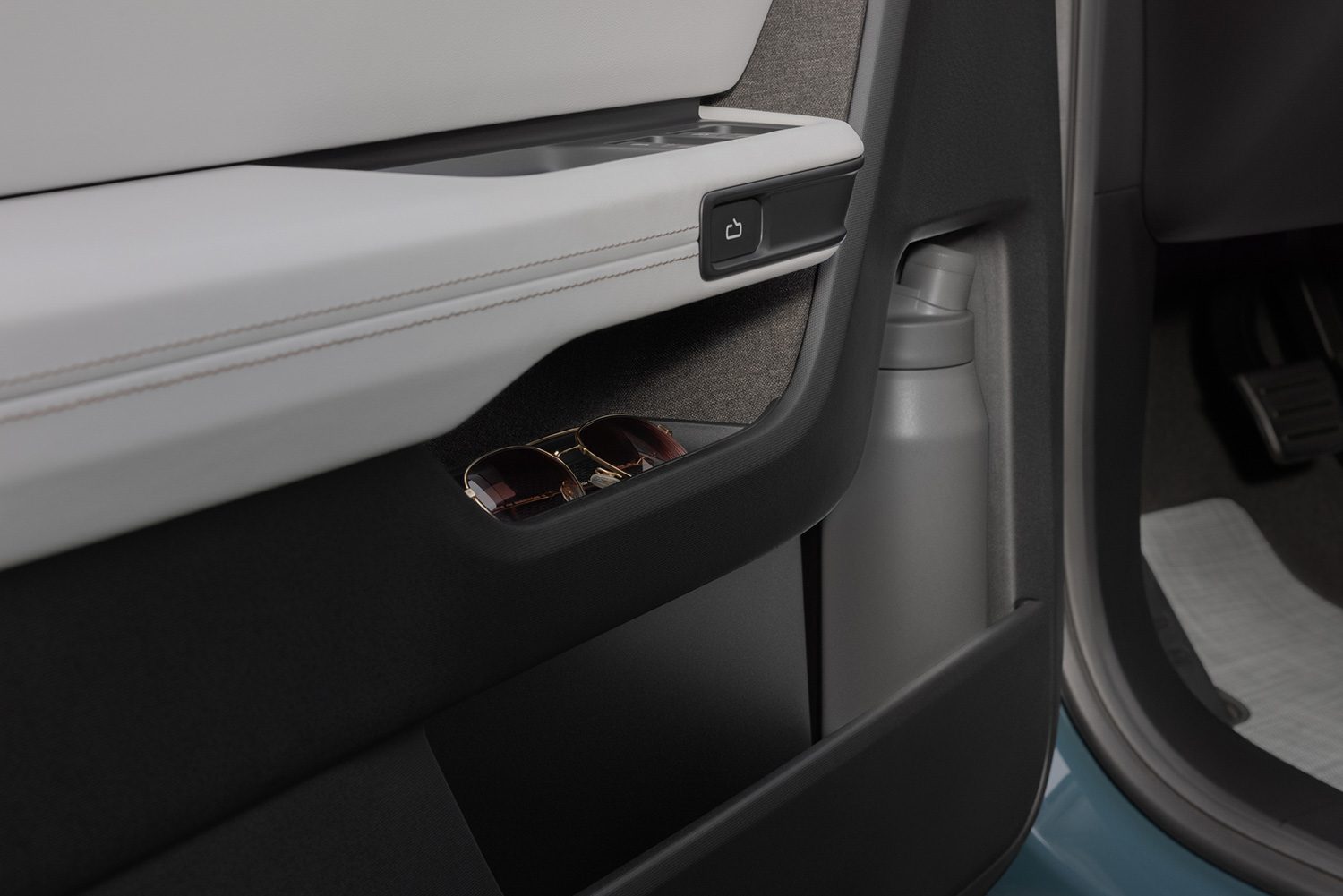
SUV features include a fully flat load-bay floor with the second row folded down, two separate glove boxes in the cabin, a front trunk, and a power rear window that retracts into the body of the tailgate to let owners carry longer items—surfboards, 12-foot lumber—with the gate closed.
Photos by John Voelcker
Drives just like … a Rivian
Rivians are hardly light, delicate vehicles, and their controls feel heavier than many other EVs. In comparison to the Volvo EX60 we drove last month—arguably a competitor in the compact to midsize EV utility category—the Rivian requires more steering effort, more pedal effort, and more deliberate motions from the driver. For a vehicle that is clearly a truck-biased SUV, that’s appropriate. But it’s easy to place on the road, steering feel is excellent, and Rivian’s regenerative braking and one-pedal driving is among the best.
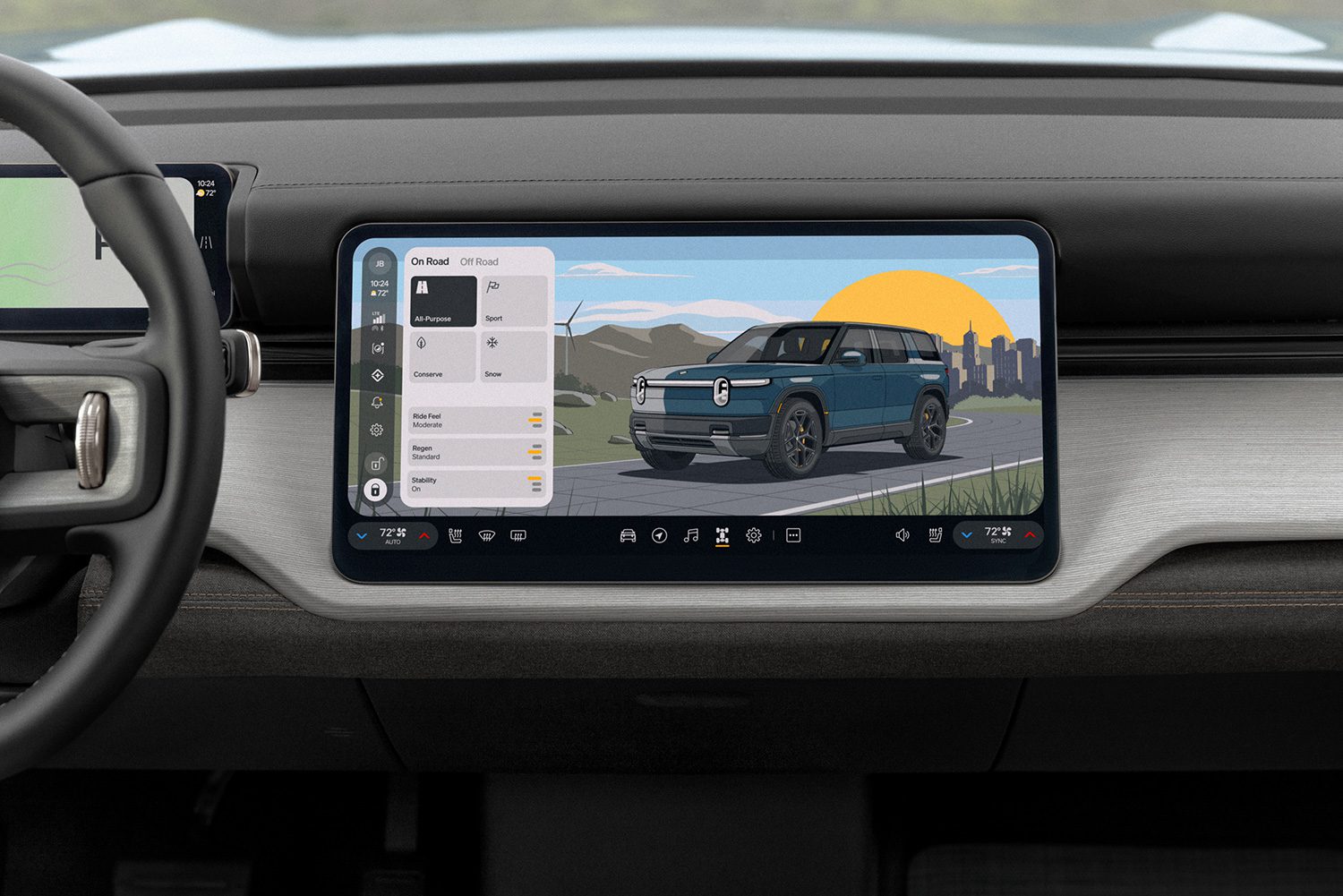
Behind the wheel, acceleration in the default All Purpose drive mode was fully adequate for even fast-moving traffic. Rivian doesn’t build in the kick-you-in-the-kidneys launch capability that got Tesla so much attention. Switch it to Sport mode, and pedal response gets a lot spicier. Still, Rivian quotes as little as 3.6 seconds for 0-to-60-mph acceleration, presumably using the Launch Mode, which we didn’t test. But there’ll likely be a tri-motor and/or quad-motor R2 at some point in the future, paralleling the R1 lineup, so if you want a hot-rod R2 with truly explosive off-the-line acceleration, wait for them.
On rocky trails, the R2 did just as we expected: fine on any road the company suggested. We can’t assess if it’ll rock-climb the way a Jeep Wrangler might, but it felt every bit the off-roader a standard-spec Jeep Grand Cherokee did. We’d expect Rivian to offer an All-Terrain Package for the R2 as well, again paralleling the R1.
Photos by Rivian
Old-school battery, charging
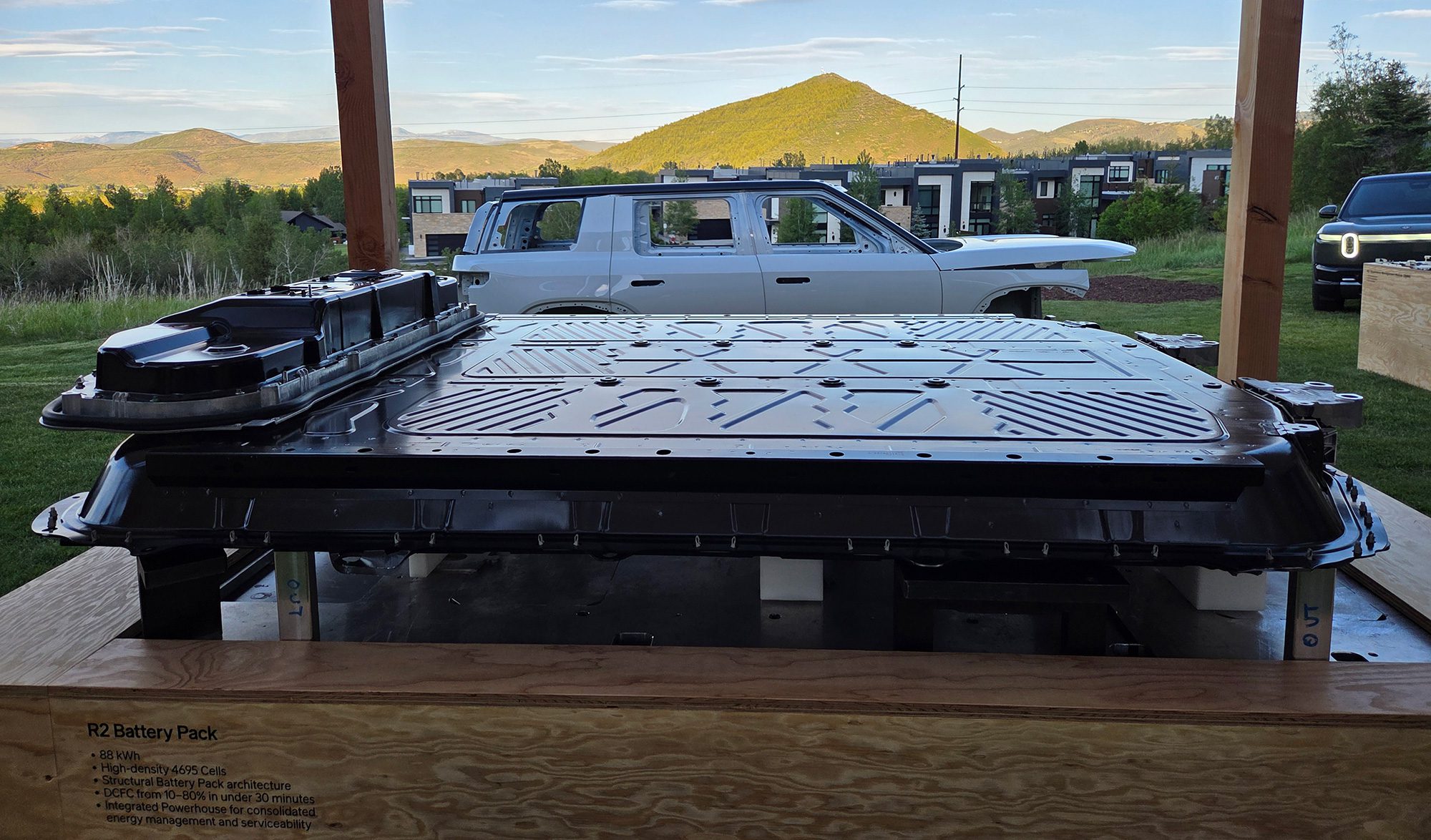
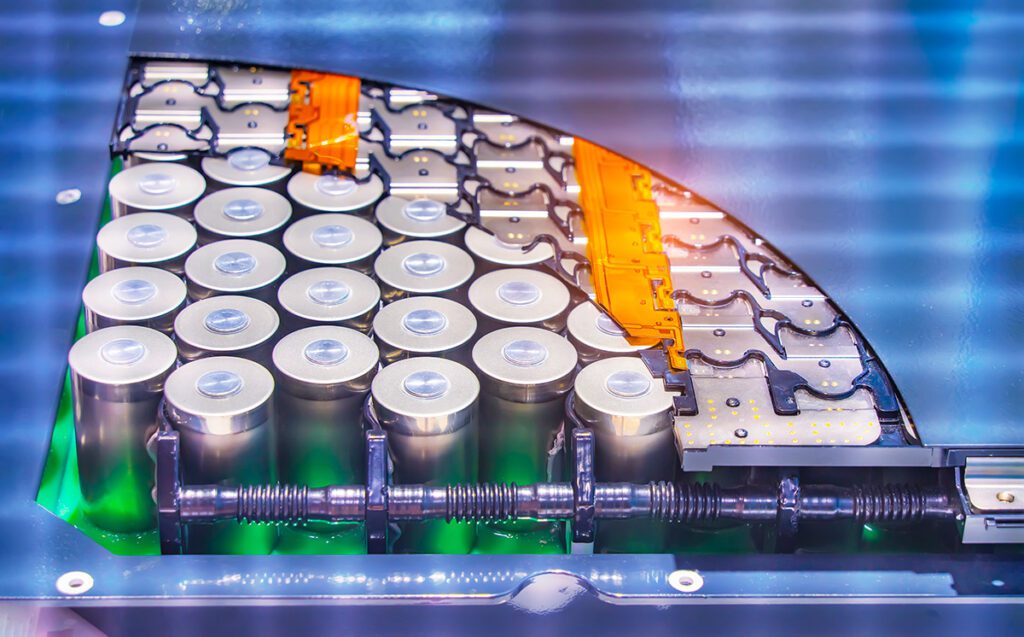
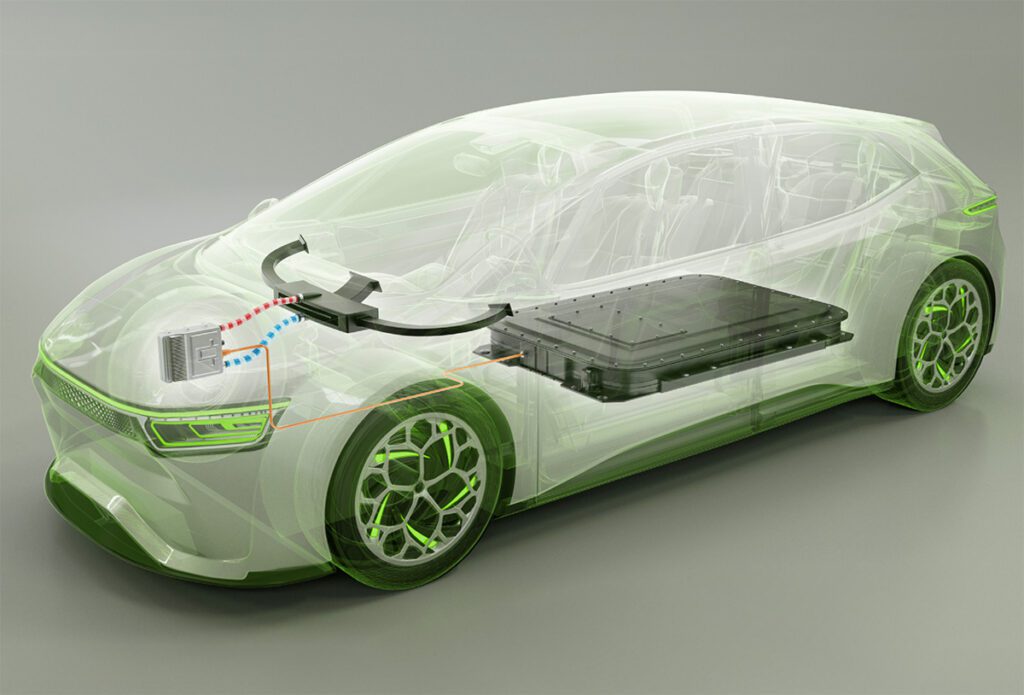
The R2’s 87.9-kilowatt-hour battery pack, containing 4695 form-factor high-nickel NMCA cells supplied by LG Energy Solutions, initially from South Korea until LG’s cell plant in Arizona is up and running next year. They are housed in traditional modules, powering a pair of motors rated at up to 482 kilowatts (656 horsepower) and 609 pound-feet of torque.
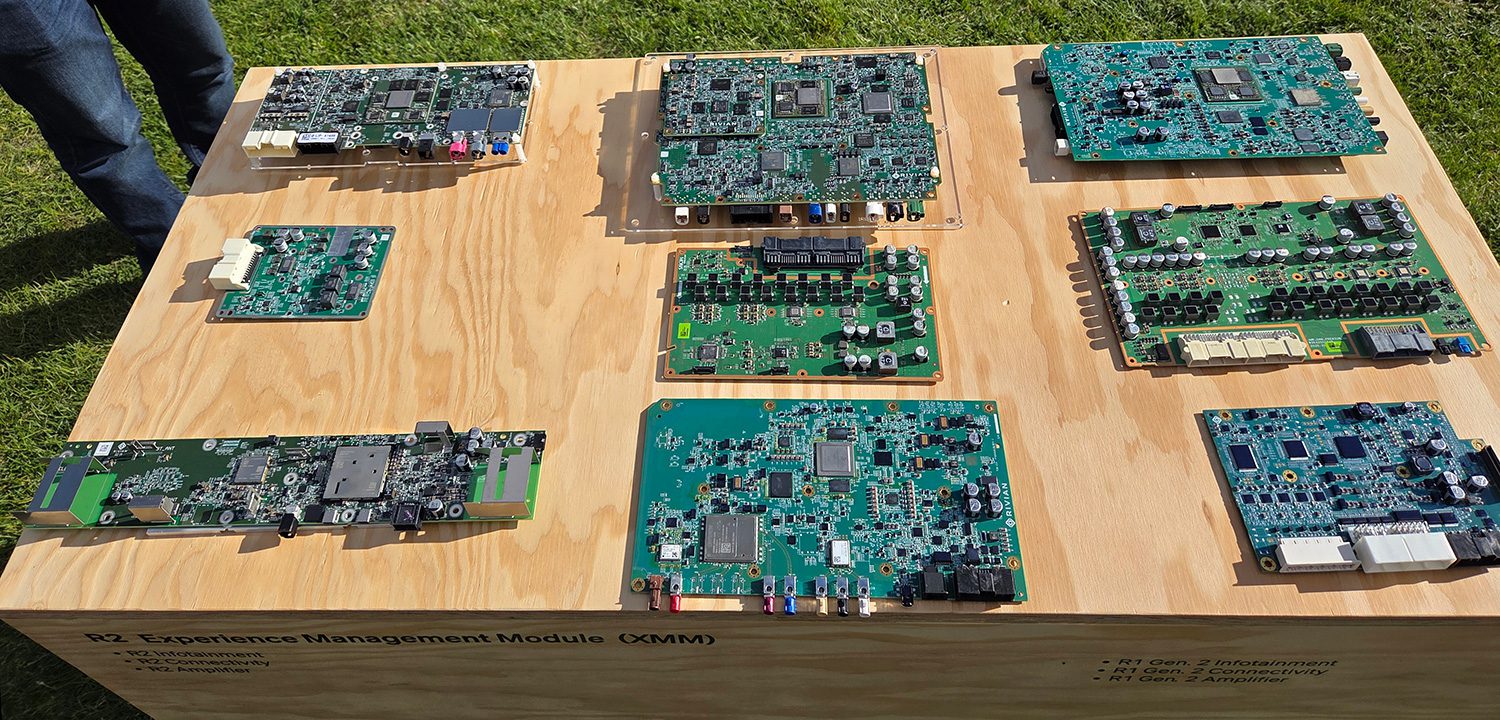
Unlike a growing number of makers, Rivian has not adopted an 800-volt architecture, running its pack at roughly 450 V. Instead, it’s put its tech efforts into its zonal-ECU strategy, advanced driver assistance systems (ADAS), and future deployment of significant artificial-intelligence features throughout the vehicle and its operating ecosystem.
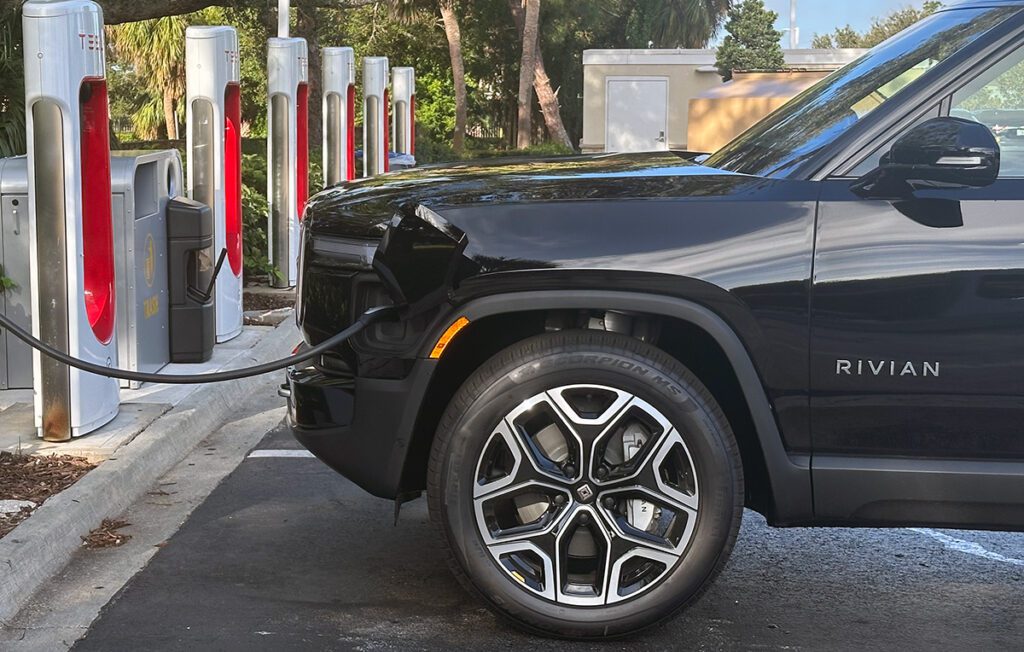
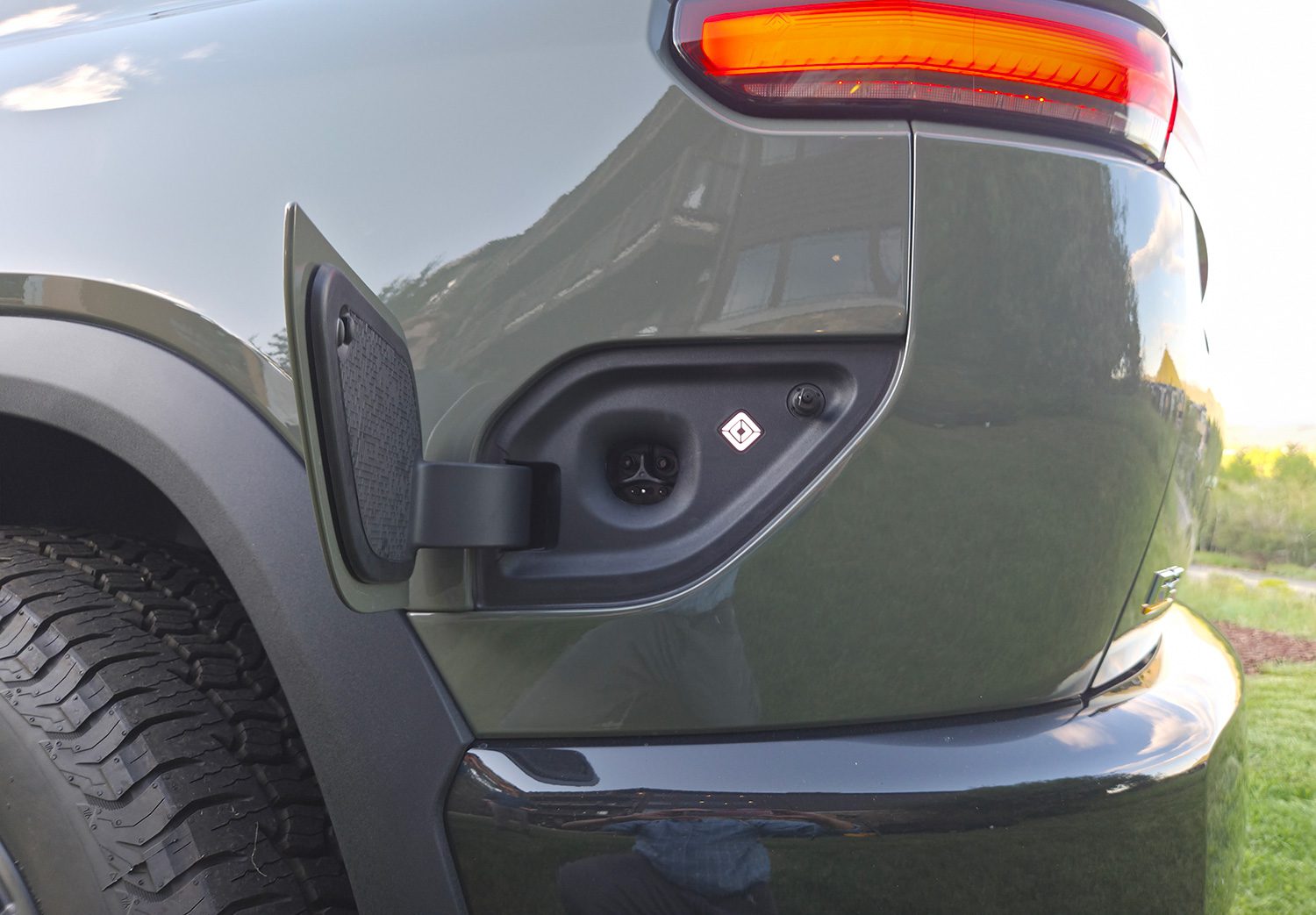
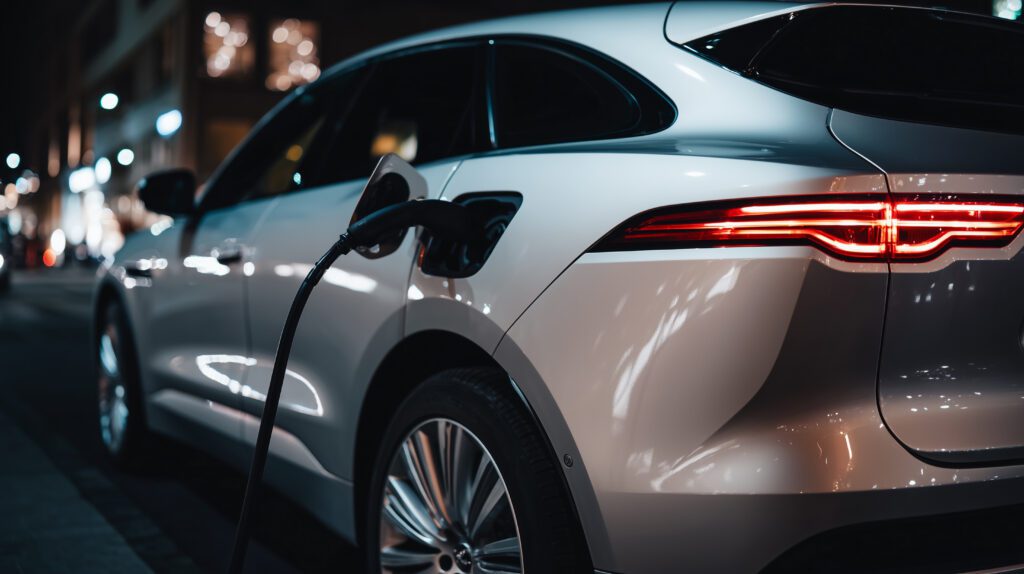
All R2s have a NACS port on the left-rear fender, which eases charging at Tesla Supercharger stations with older, shorter charging cords. Maximum DC fast-charging rate is up to 240 kW, and Rivian says it can charge from 10 to 80 percent in 29 minutes—as always, depending on ambient and battery temperature, charging-station performance, and utility power delivery. Level 2 charging is rated at 11 kW, and the R2 is fully bidirectional, with 11 kW of exportable power as well. A J-1772-to-NACS adapter comes standard with every R2 for Level 2 AC charging, but a CCS-to-NACS adapter for DC fast charging is optional.
Photos by Rivian
Zonal ECUs, AI computer power, autonomy to come
The Rivian R2 is one of the few vehicles on the road with an entirely zonal architecture minimizing and integrating compute units for the myriad functions required in a 2020s vehicle. CEO Scaringe noted that Tesla has done it, and Volkswagen will build Rivian’s platform into future products—though he neglected to name Lucid, arguably a competitor for Rivian customers, albeit with different types of EVs.
All 2027 R2s are fitted with the hardware and software for Rivian Autonomy+ (note the plus sign), which will provide “Universal Hands-Free” assisted driving on 3.5 million miles of North American highway and secondary roads. Every R2 buyer gets a 60-day free trial of Autonomy+, after which it’s either a one-time fee of $2,500 or can be switched on or off for $49.99 per calendar month. (Launch Package models include a lifetime subscription to the feature.)
Photos by Rivian
We tested the system briefly, but look forward to a longer and more comprehensive comparison with other hands-free adaptive cruise control systems—including Tesla’s so-called Full Self Driving, Drive Pilot from Mercedes-Benz, GM’s Super Cruise, and Ford’s Blue Cruise.
Point-to-point hands-off driving will roll out sometime later this year; all first-year R2s are capable of that function with the necessary OTA update. Note, however, that the first year of R2s will not be fitted with Lidar, for which a very small bulge in the roof just above the windshield can be seen. That will allow the later addition of further levels of autonomy, but the company is perhaps sensibly focused on getting its first year of R2s out the door while refining its autonomy systems.
Then there’s Rivian Assistant, an AI system that answers natural-language questions. It will become available later this summer via OTA update—meaning we couldn’t test it in our early-production R2s.
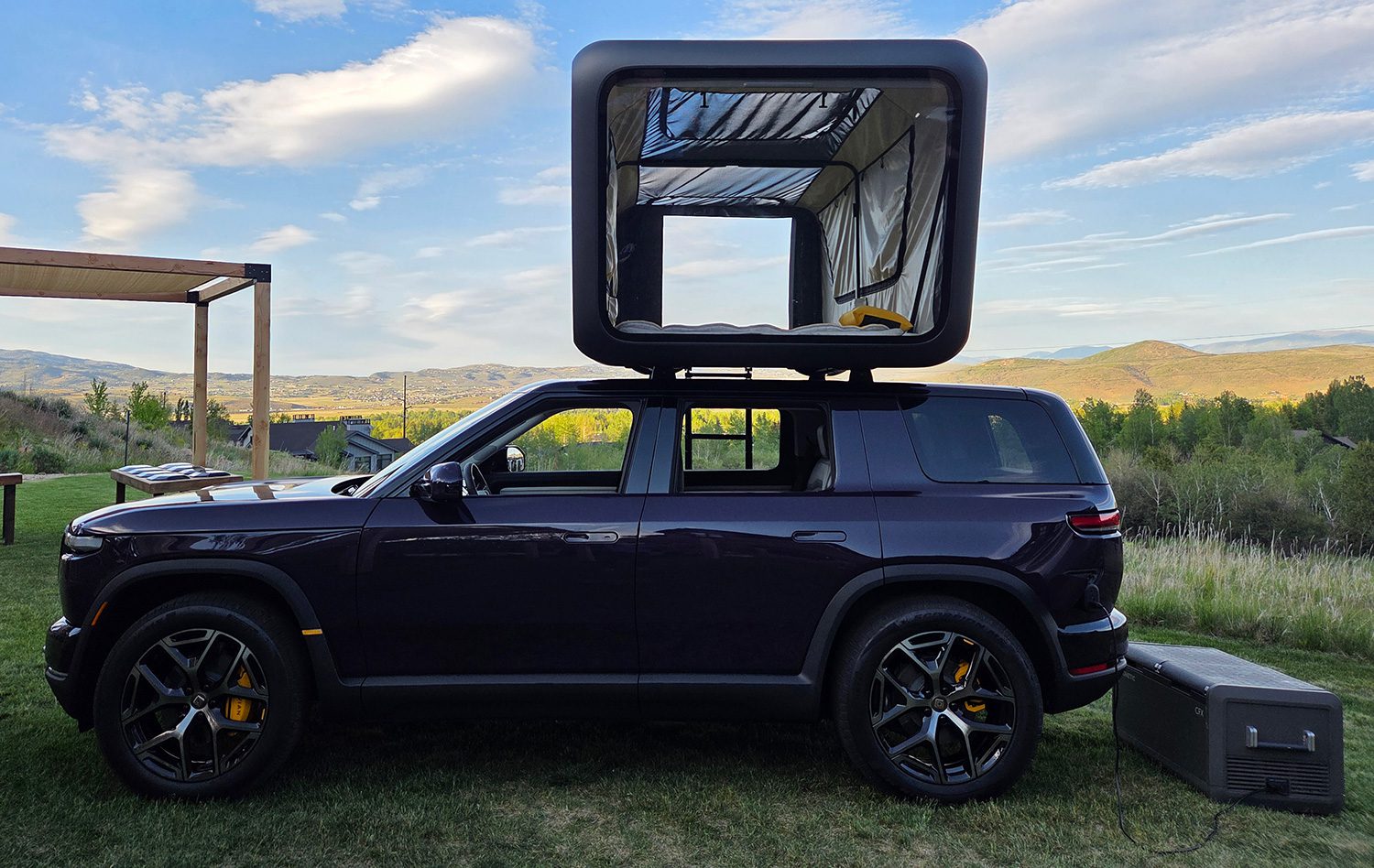
Photos by John Voelcker
A full R2 range, starting at the top
As with most makers, the first versions of the new R2 are the top trim and priciest. The R2 Performance with Launch Package is the one now shipping, at around $60,000. Then, later this year, the R2 range expands with more premium configurations. Standard models with rear-wheel-drive from $49,985 will follow early in 2027, with a range estimated by Rivian at up to 345 miles.
Finally, the base R2 launches in the summer of 2027 at $46,485 and up. (All prices include the mandatory $1,495 delivery fee). That base model has an estimated range of 245 miles, with a battery pack of unspecified capacity. CEO Scaringe said that, as was the case for the R1, demand for the cheapest version is expected to be quite low.
Rivian provided airfare, lodging, and meals to enable Charged to bring you this first-person drive report.


















 EV Engineering Webinars & Whitepapers



 EV Tech Explained